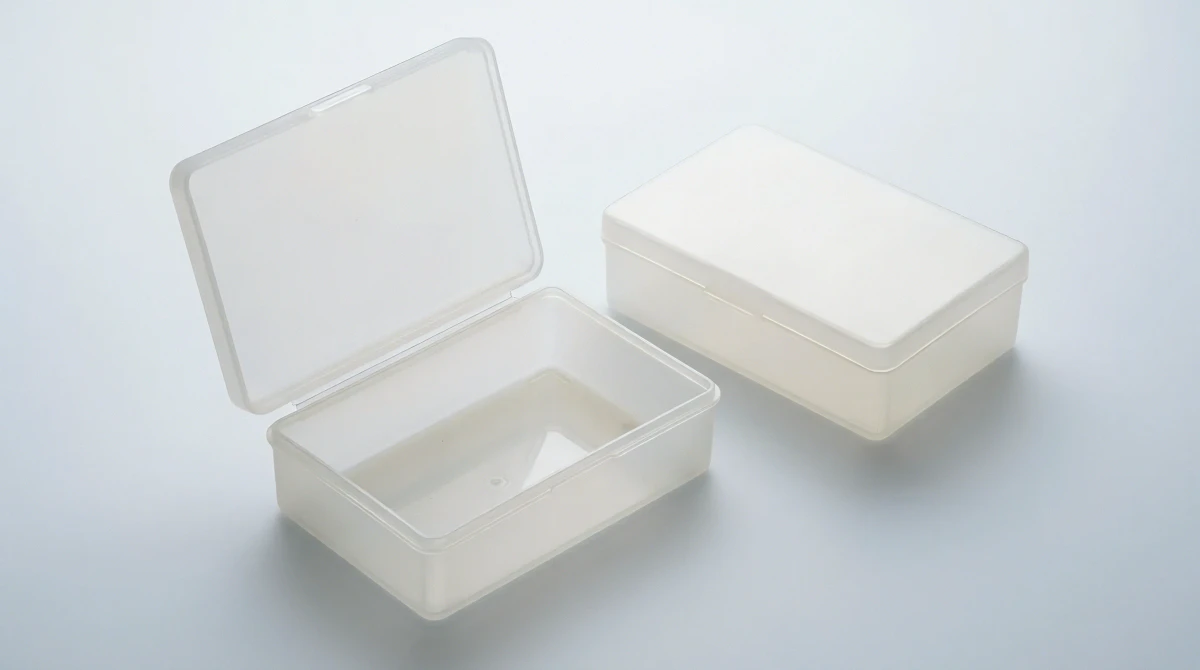
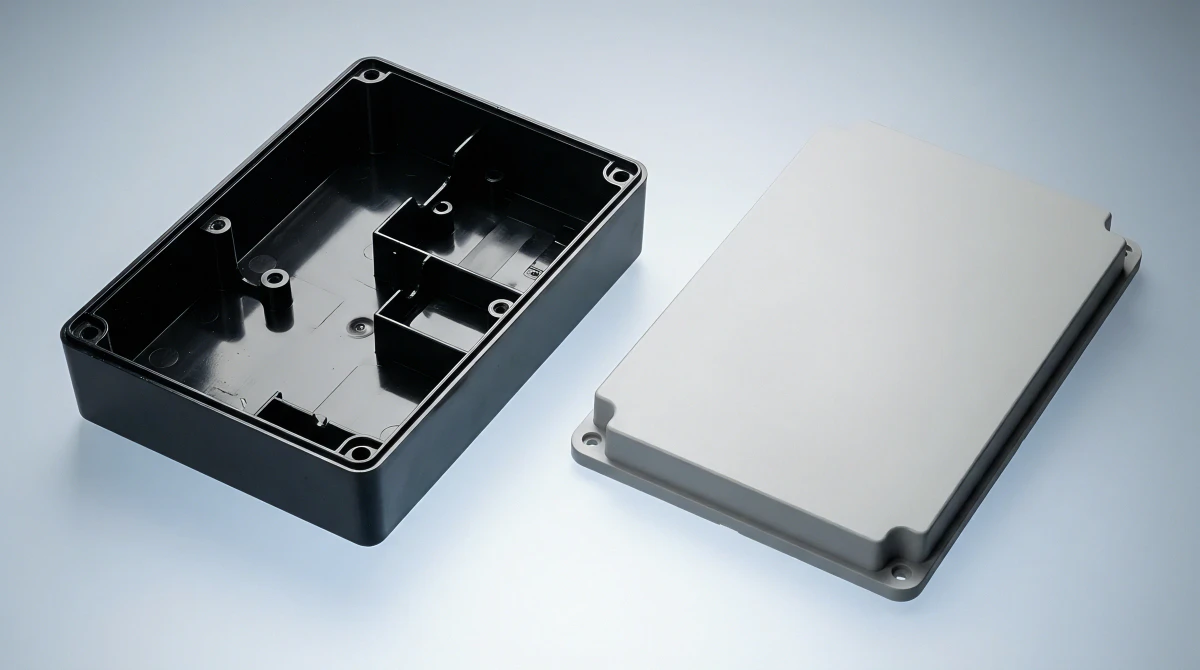
Snap Fit

A snap fit is a molded joint in which a flexible hook or bead deflects as two parts are pressed together and springs back behind a ledge to hold them, with no screw or adhesive.

Every Snap Fit article of the Injection Molding Resources, newest first, each written from published standards, research and makers’ data.

Meaning

A snap fit is a molded joint in which a flexible hook or bead deflects as two parts are pressed together and springs back behind a ledge to hold them, with no screw or adhesive. Its design is set by the strain the material can take at the root of the hook and by the friction between the mating surfaces.

Permissible Strain

Bayer’s snap-fit design guide gives permissible short-term strains at 23 °C (73 °F) for its own engineering resins: 2.5 % for Bayblend PC/ABS, 3.5 % for Makroblend polycarbonate blends and 4 % for unreinforced Makrolon polycarbonate. For joints that are separated and rejoined often, it uses about 60 % of those values, which brings PC/ABS to about 1.5 %. The guide gives no strain limit for polypropylene, so a PP latch is designed on the figure the grade’s maker provides.
Read More

Friction

The same guide lists friction coefficients against steel, which set the force needed to assemble a snap fit: 0.25 to 0.30 for polypropylene, with a factor of 1.5 for PP against PP; 0.45 to 0.55 for polycarbonate; 0.50 to 0.65 for ABS, with a factor of 1.2 for ABS against ABS.

Effect on the Mold

A snap fit’s hook is formed over a hole in the opposite wall, where core and cavity steel shut off against each other. Boulder Engineering Studio notes that this shut-off needs around 3° to 5° of draft to limit wear, so the hole is drawn larger than the hook needs even when the hook’s own faces carry a light texture and little draft.

Snap Latches on Hinged Lids

A latch on a polypropylene lid twists the living hinge whenever it is opened from one corner, and the highest stress develops at the hinge ends. The MIT design note on living hinges answers with thickened or radiused hinge ends and a thin film across each end that orients on the first flex and stops a tear from starting.
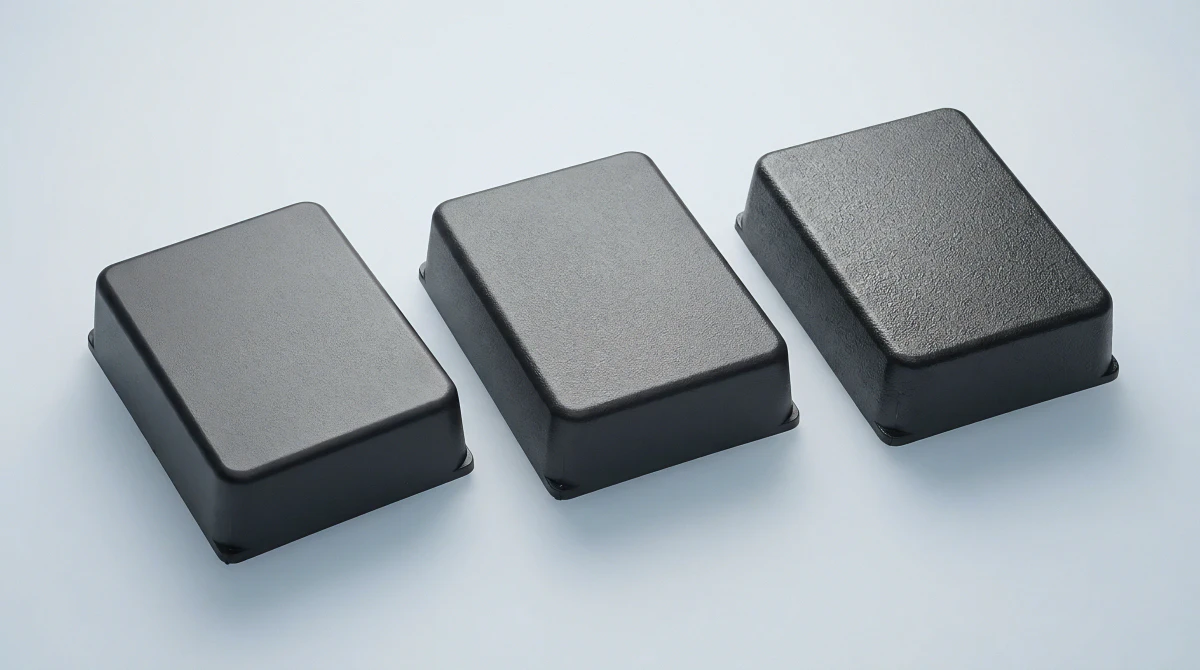
Draft Angle by Texture Depth on Injection Molded Parts

How much draft a textured wall needs for its depth, under which conditions each published figure holds, and how the mold and the part are checked.

How Much Draft a Texture Depth NeedsStandex Engraving Mold-Tech's technical data sheet gives the current recommendation from the texture maker: 1° of draft for every 0.013 to 0.015 mm (0.0005 to 0.0006 in) of texture depth. Per 0.025 mm (0.001 in) that works out to between 1.7° and 2°.

Polypropylene for Living Hinges in Injection Molding

Polypropylene for living hinges read from design guides and molding columns: grade choice, hinge dimensions, gating across the web, cooling and the tests that prove a hinge.

Why Polypropylene Makes a Living HingeThe MIT design note explains the mechanism. When a partly oriented polypropylene web is cold drawn on its first flex, it stretches by ratios of 2 or 3 to 1, and its tensile strength rises sharply.

ABS and PC/ABS Blends in Injection Molding

ABS and PC/ABS read from the makers' datasheets: drying, processing windows, shrinkage, snap-fit strain, impact and when the blend earns its stricter dryer.

How ABS and PC/ABS Differ in Injection MoldingABS is a terpolymer, and Moldflow's material page describes its structure: a continuous phase of styrene-acrylonitrile with a dispersed phase of polybutadiene rubber. Acrylonitrile brings hardness and chemical and heat resistance, styrene brings processability, gloss and strength, and butadiene brings toughness and impact strength.

Request an Injection Molding Quote

Send the 2D drawing and the 3D file, with the quantity and the stage of the project. An engineer replies within 1 working day.

The quote form, the mutual NDA and the private folder for your files are on Protolis Atelier, with Injection Molding chosen.

Request a Quote