Boss

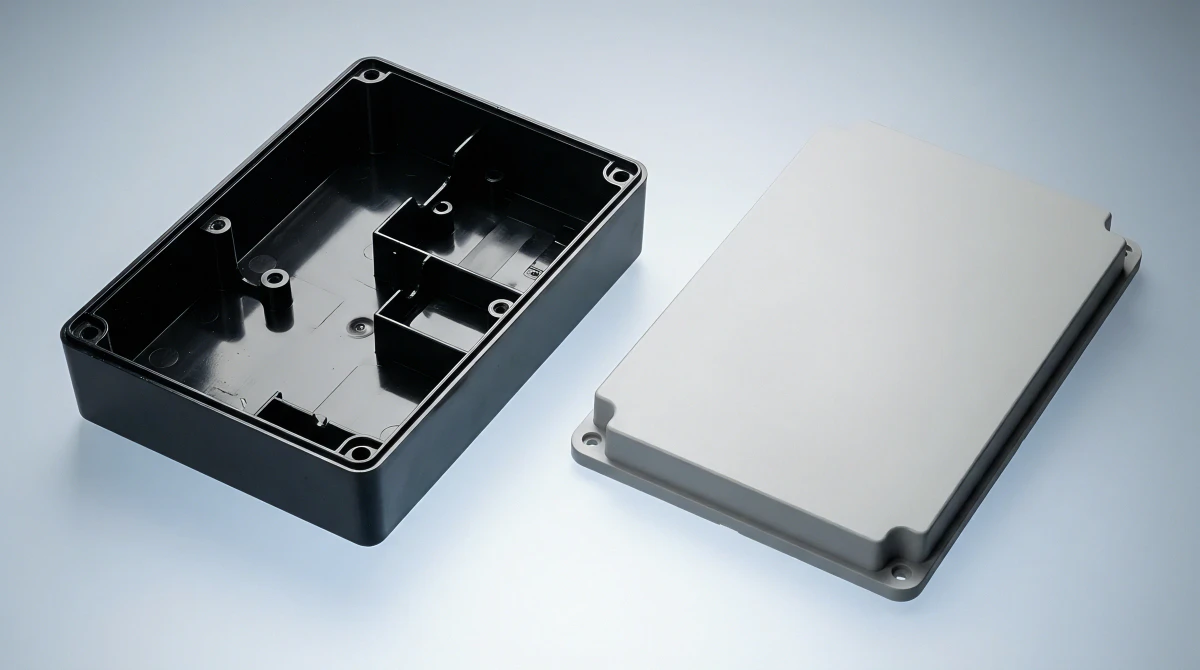
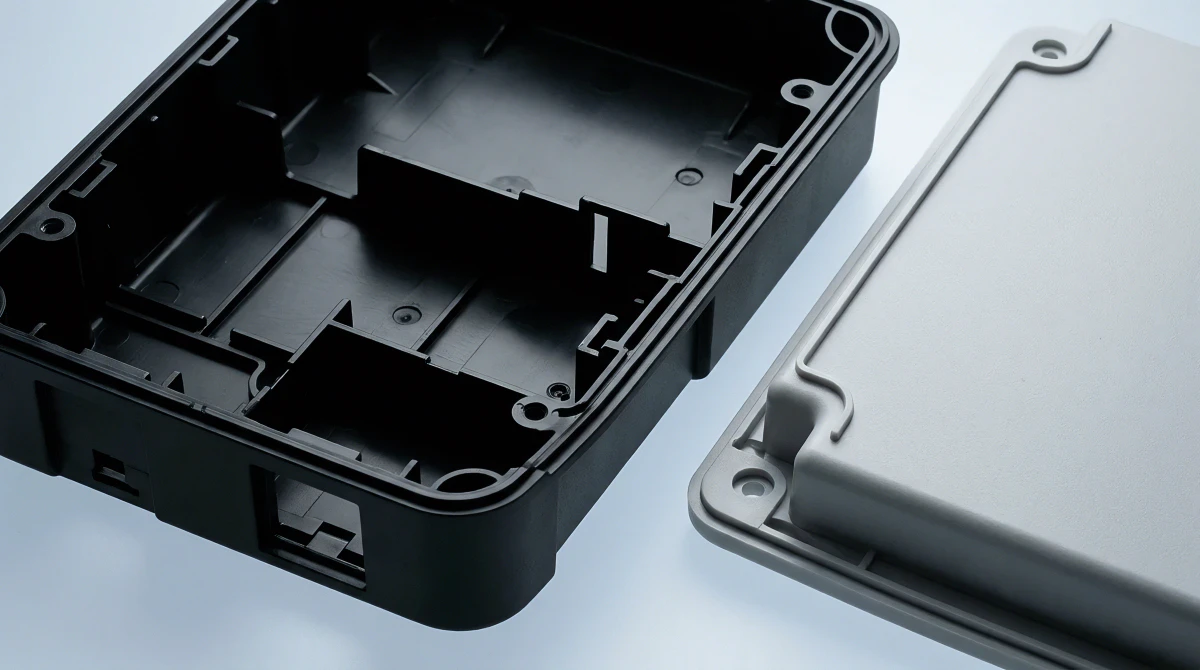
A boss is a raised feature on a molded part that carries a screw, often thicker than the wall around it.

Every Boss article of the Injection Molding Resources, newest first, each written from published standards, research and makers’ data.

Meaning

A boss is a raised feature on a molded part that carries a screw, often thicker than the wall around it. Its thickness makes it slow to pack and slow to cool. Its load makes it a creep problem. Its small size makes it a flame-rating question.

Packing

A thick boss shrinks more than the wall beside it unless packing feeds it. DuPont’s plot shows packing time per millimeter rising with thickness. A 6 mm boss therefore needs more than three times the hold of a 2 mm rib. For acetal packed correctly, the remaining thermal shrinkage becomes independent of thickness, so ribs and bosses shrink evenly.
Read More

Restraint and Shrinkage

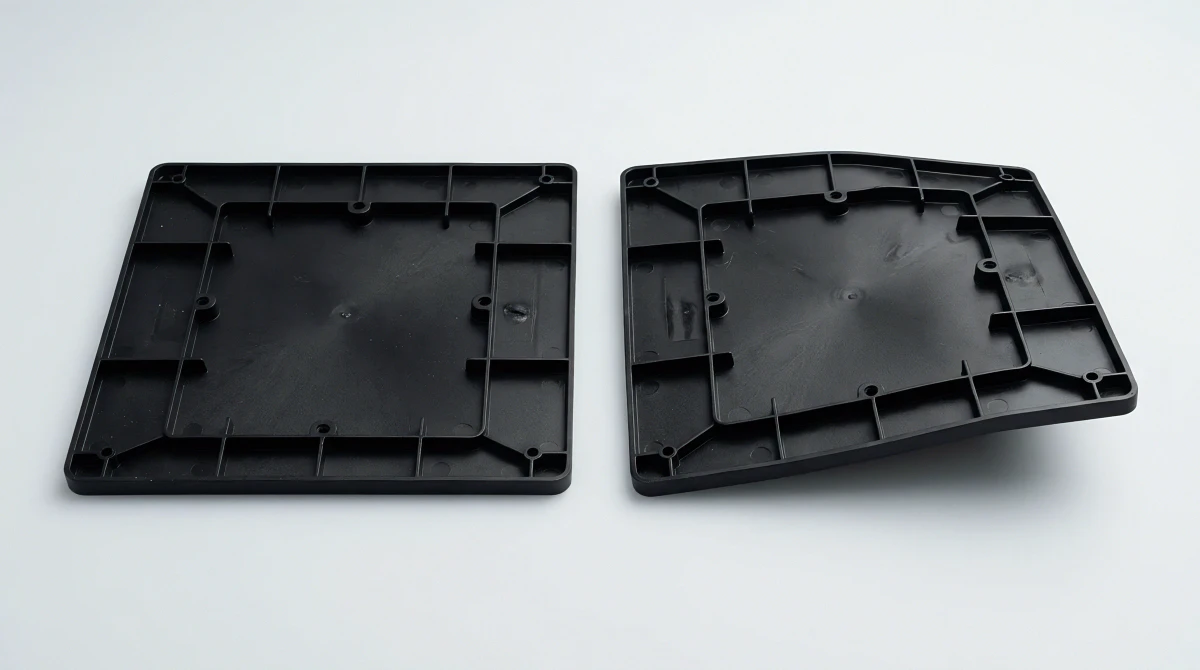
A printed shrinkage pair is a weaker estimate for a part with thick bosses. Bosses and ribs restrain the walls they join. A restrained feature shrinks less than the free value ISO 294-4 reports.

Draft

DuPont recommends 0.5° to 1° of draft per side for ribs, bosses and sides in nylon. The guide allows up to 2° for softer, more elastic resins. A part that sticks to the cavity half points to draft, polish or temperature.

Load

A screw boss carries steady load. In acetal it is judged on the 1,000-hour creep modulus of 1,600 MPa and on the expansion of 1.0E-4 per °C against the screw’s own. In polycarbonate it is checked on the 1,000-hour modulus and on the -30 °C Charpy value of 14 kJ/m².

Flame Rating

A UL 94 rating belongs to a thickness. Thin ribs and bosses can fall below the thinnest wall the listing covers. There the printed rating is no evidence, and the drawing settles it before the tool is cut.

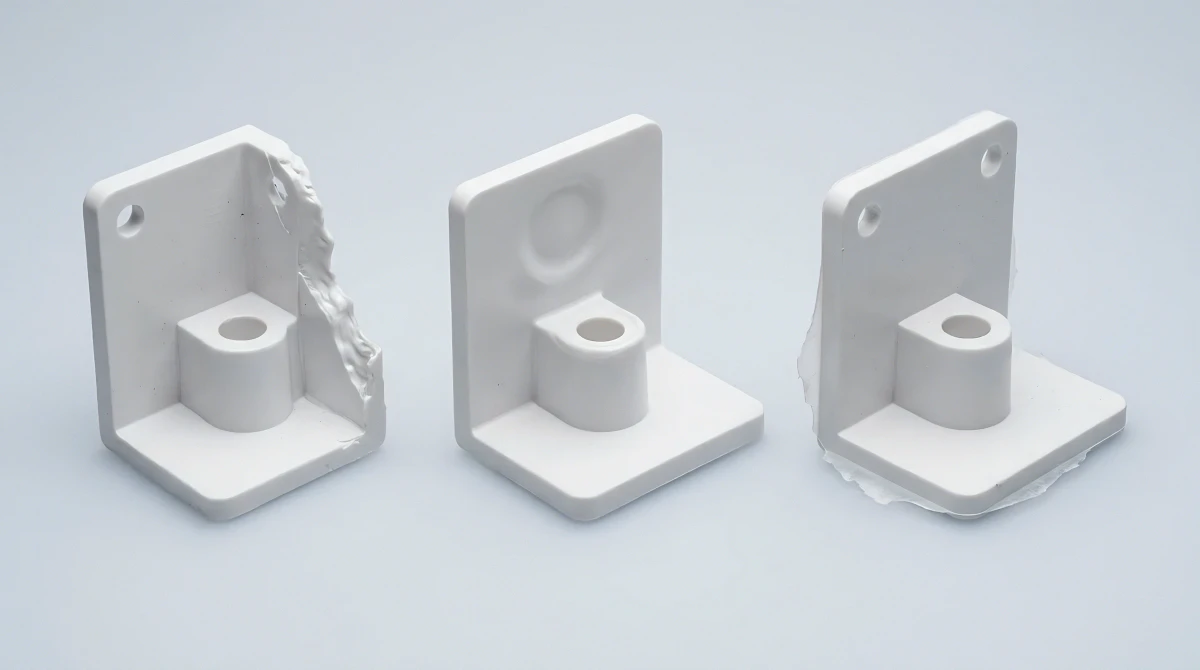
Short Shot, Sink and Flash in Injection Molding Traced to Their Cause

Short shots, sinks and flash traced to the melt volume, pressure and steel behind them, with the checks that find the cause before a setting is moved.

What Short Shots, Sink and Flash Have in CommonA short shot is a part the cavity never finished. BASF's troubleshooting brochure for engineering thermoplastics describes it as a part not completely formed, mainly in the areas furthest from the gate or in thin walls.
Draft Angle by Texture Depth on Injection Molded Parts

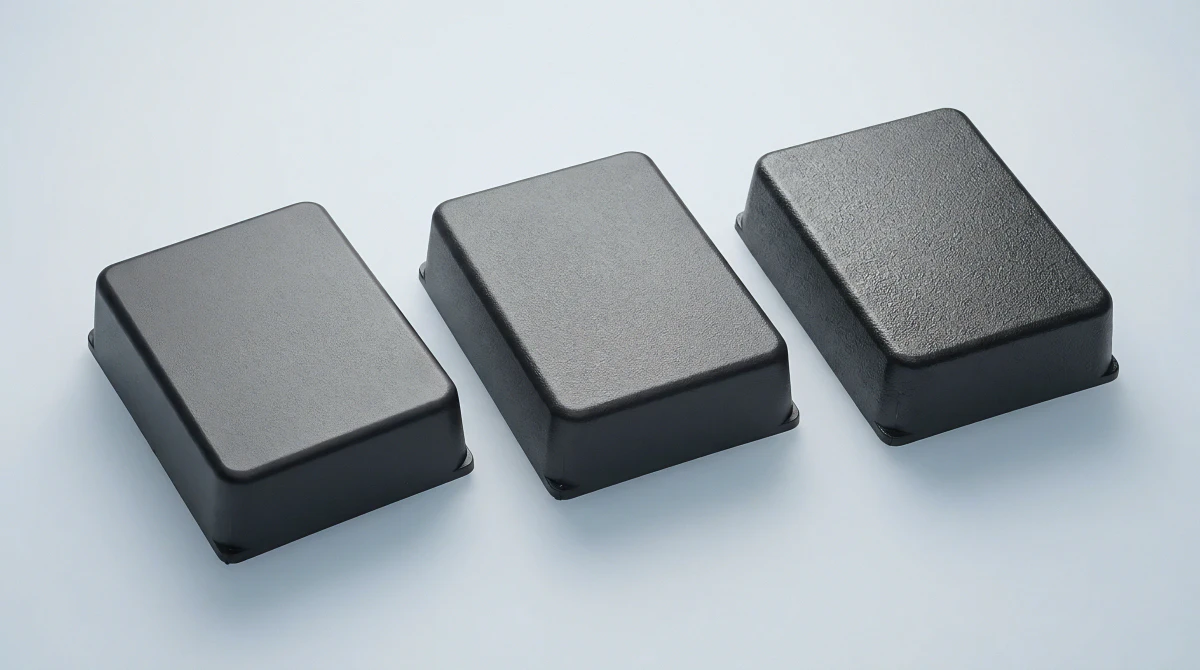
How much draft a textured wall needs for its depth, under which conditions each published figure holds, and how the mold and the part are checked.

How Much Draft a Texture Depth NeedsStandex Engraving Mold-Tech's technical data sheet gives the current recommendation from the texture maker: 1° of draft for every 0.013 to 0.015 mm (0.0005 to 0.0006 in) of texture depth. Per 0.025 mm (0.001 in) that works out to between 1.7° and 2°.

Polypropylene for Living Hinges in Injection Molding

Polypropylene for living hinges read from design guides and molding columns: grade choice, hinge dimensions, gating across the web, cooling and the tests that prove a hinge.

Why Polypropylene Makes a Living HingeThe MIT design note explains the mechanism. When a partly oriented polypropylene web is cold drawn on its first flex, it stretches by ratios of 2 or 3 to 1, and its tensile strength rises sharply.

ABS and PC/ABS Blends in Injection Molding

ABS and PC/ABS read from the makers' datasheets: drying, processing windows, shrinkage, snap-fit strain, impact and when the blend earns its stricter dryer.

How ABS and PC/ABS Differ in Injection MoldingABS is a terpolymer, and Moldflow's material page describes its structure: a continuous phase of styrene-acrylonitrile with a dispersed phase of polybutadiene rubber. Acrylonitrile brings hardness and chemical and heat resistance, styrene brings processability, gloss and strength, and butadiene brings toughness and impact strength.

Injection Molding Shrinkage Along and Across the Flow by Material

Molding shrinkage read by direction and condition for three resins, with the process settings that move it and the way a first sample turns it into a cavity allowance.

Shrinkage of Polycarbonate, Glass-Filled Nylon 66 and Acetal Along and Across the FlowISO 294-4:2018 sets out the method for measuring mold shrinkage and post-mold shrinkage of injection molded thermoplastic test specimens, parallel and normal to the direction of melt flow. Resin makers print the result in two lines, one per direction.

UL 94 Flammability Ratings Explained for Molded Plastic Parts

The UL 94 classes read as a buyer needs them: what each test does, how three common resin sheets print a rating, and what a supplier should show.

What UL 94 Measures and What It Is NotUL 94 is a family of small-scale flame tests on strips and plaques of plastic, run under laboratory conditions. UL's own page on combustion tests for plastics groups the classifications into twelve: HB, V-0, V-1 and V-2, 5VA and 5VB, VTM-0, VTM-1 and VTM-2, and HF-1, HF-2 and HBF for foams.

Request an Injection Molding Quote

Send the 2D drawing and the 3D file, with the quantity and the stage of the project. An engineer replies within 1 working day.

The quote form, the mutual NDA and the private folder for your files are on Protolis Atelier, with Injection Molding chosen.

Request a Quote