First Article

A first article is a part measured against the drawing after tool corrections and signed off before the run, at least on critical dimensions.

Every First Article article of the Injection Molding Resources, newest first, each written from published standards, research and makers’ data.

Meaning

A first article is a part measured against the drawing after tool corrections and signed off before the run, at least on critical dimensions. It confirms the tool, not the lot. Its report records the settings that produced it, so later lots can be compared with it. A report that gives measurements without settings cannot show whether the result will repeat.

Sequence

First articles come after the correction loops of a mold trial. The tool is cut, the first shots set the process and a part weight study fixes the hold time. Corrections go into the tool or the settings, and the shots are repeated. Then first articles are measured and sent for approval, and the approved settings are written down. The first-shot records feed that inspection, where dimensions are read against the drawing.
Read More

Record Content

A first article records the measured dimensions, the number of parts measured and the cavity each came from. It records the melt temperature, mold temperature, fill time and transfer position. It carries the hold time and the weight study behind it, with the part weight at the plateau. It states the cooling time and how long after ejection the parts were measured. It names the resin grade, the lot and the drying record.

Correction Order

DuPont’s Delrin tips give the order for a first article out of tolerance. Gate design and process conditions are checked first, and the cavity is corrected only if dimensions still miss. Process settings are not bent to chase a dimension. A first article reached by an unrepeatable setting will not repeat in the lot.

Reference

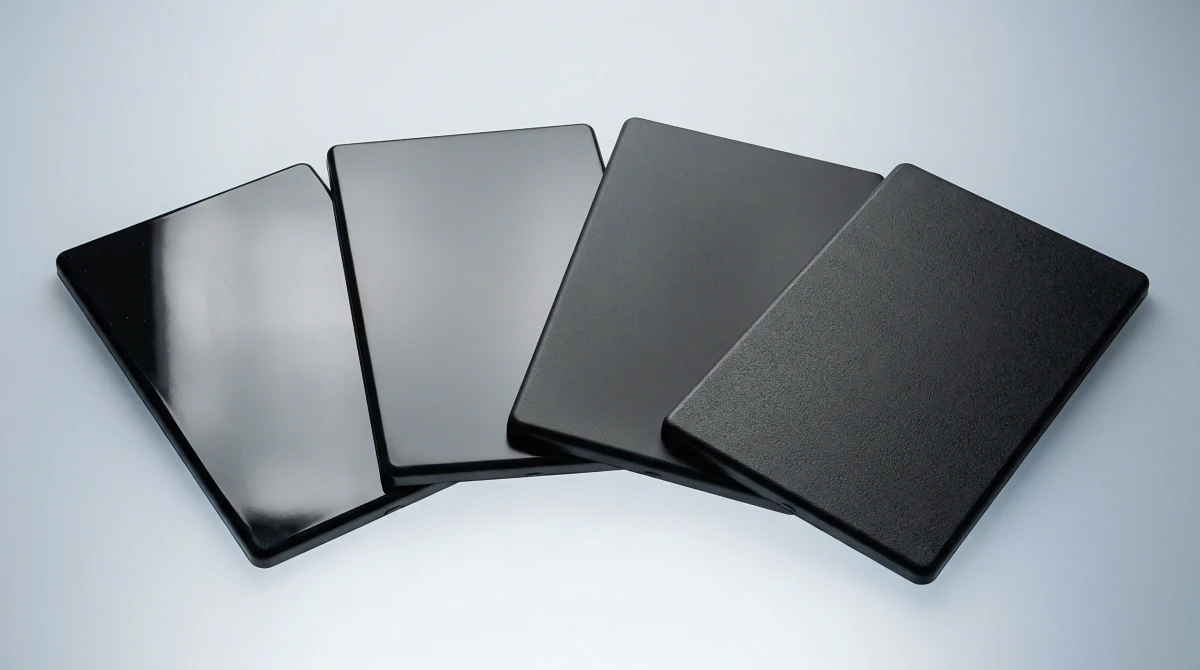
A measured first article closes items that ISO 20457 leaves outside its scope. Each is agreed before the production tool is finished. For appearance, a sample plate or a first article settles disputes that a roughness number cannot.

Later Use

The first article report and the run records show a tool nearing its end. A dimension drifting one way across lots, or weight off the old plateau, is read against it. A buyer keeps the settings sheet with the report.
Color Matching Molded Parts With Masterbatch in a Production Run

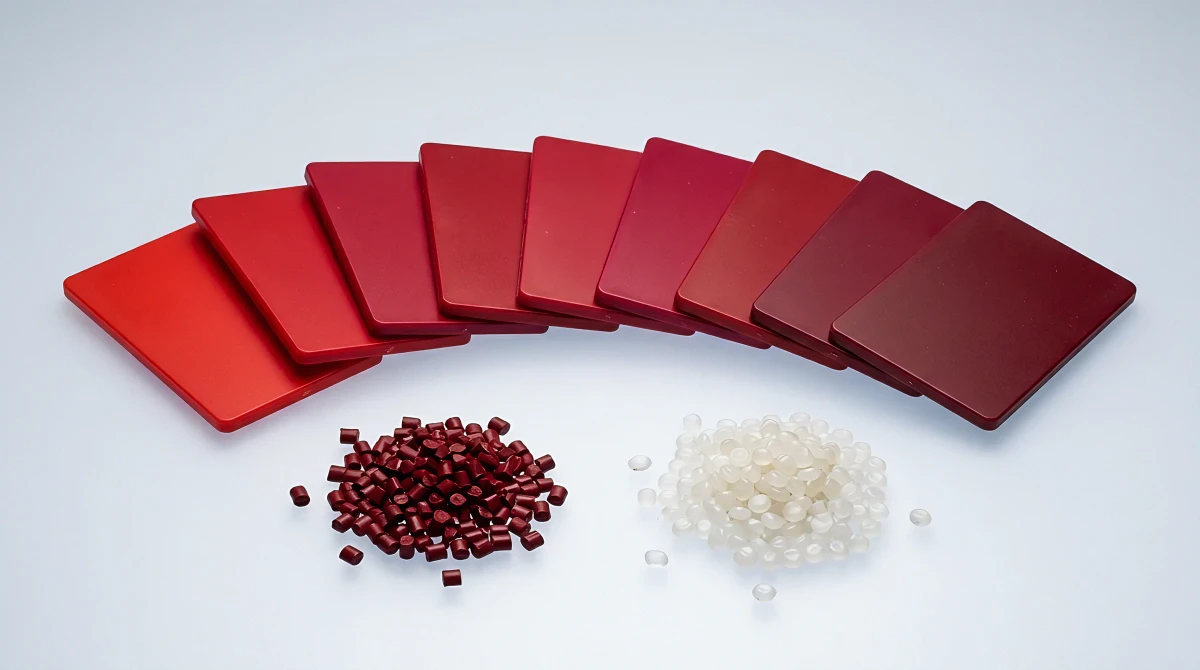
How masterbatch color is matched, dosed, distributed and measured so that every lot of a molded part matches the standard agreed at the first article.

How Masterbatch Color Is Held Across a RunThree things have to stay constant for color to hold. The masterbatch has to be the same formulation at the same let-down ratio, the melt has to distribute it evenly, and the part has to be measured the same way each time.

Gate Location and Gate Freeze in Injection Molding

Where a gate goes, how big it is and how long it stays open, with the weight study that sets hold time from the gate itself.

How Gate Location and Gate Freeze Shape a Molded PartAutodesk's Moldflow design rules open with the claim that gate position strongly affects material orientation and warpage, and that changing the gate is sometimes the only way to control orientation. Every gate injects under the same pressure, and the aim of gating is to avoid overpacking some paths while others are still filling, because unequal packing gives unequal shrinkage.

Cycle Time and Parts per Hour in a Bridge Injection Molding Run

A cycle is the sum of fill, hold, cooling and press motions, and a supplier's number is only as good as the pack and cooling times behind it.

What Sets Cycle Time and Parts per HourA molding cycle is a loop of seven moves: the mold closes, the cavity fills, the pack and hold phase runs, the part cools, the mold opens, the part is ejected, and the screw recovers for the next shot. Recovery runs while the part cools, which is why DuPont's nylon guide asks for screw speeds adjusted so that screw retraction time is shorter than the cooling phase.

How to Start Up an Injection Mold and Take the First Shots

A new mold is started cold on purpose, filled in stages with short shots, and read for vents, gates and heat before any process is fixed.

The Start-Up Sequence from a Cold Barrel to the First ShotEight moves take a machine from cold to its first complete part. The first four prepare the melt, the next three shape the shot, and the last one is a decision: whether the part describes the tool or only the settings.

SPI Mold Finish Grades A-1 to D-3 for Injection Molded Parts

The SPI finish grades read for a buyer, with what each method gives, how texture costs draft, and how a finish is written and kept on an aluminum tool.

What the Twelve SPI Finish Grades SpecifyThe SPI system names a finish by a letter and a number. Its letter gives the finishing method, A for diamond buff, B for grit paper, C for stone and D for dry blast, while the number runs from 1, the finest within a letter, to 3, the coarsest.

ISO 20457 Tolerances for Plastic Molded Parts Read for the Buyer

How ISO 20457 is worded for plastic molded parts, what a supplier signs when a drawing cites it, and which items stay outside it for the order to settle.

What ISO 20457 Covers for Injection Molded PartsAccording to the abstract published by the Swedish Institute for Standards (SIS), ISO 20457 specifies possible manufacturing tolerances for plastic moulded parts, and it covers all integral features with general tolerances, using a surface profile tolerance within a specified datum system. It applies to injection moulding, injection compression moulding, transfer moulding, compression moulding and rotational moulding of non-porous parts in thermoplastics, thermoplastic elastomers and thermosets.

Request an Injection Molding Quote

Send the 2D drawing and the 3D file, with the quantity and the stage of the project. An engineer replies within 1 working day.

The quote form, the mutual NDA and the private folder for your files are on Protolis Atelier, with Injection Molding chosen.

Request a Quote