Flash

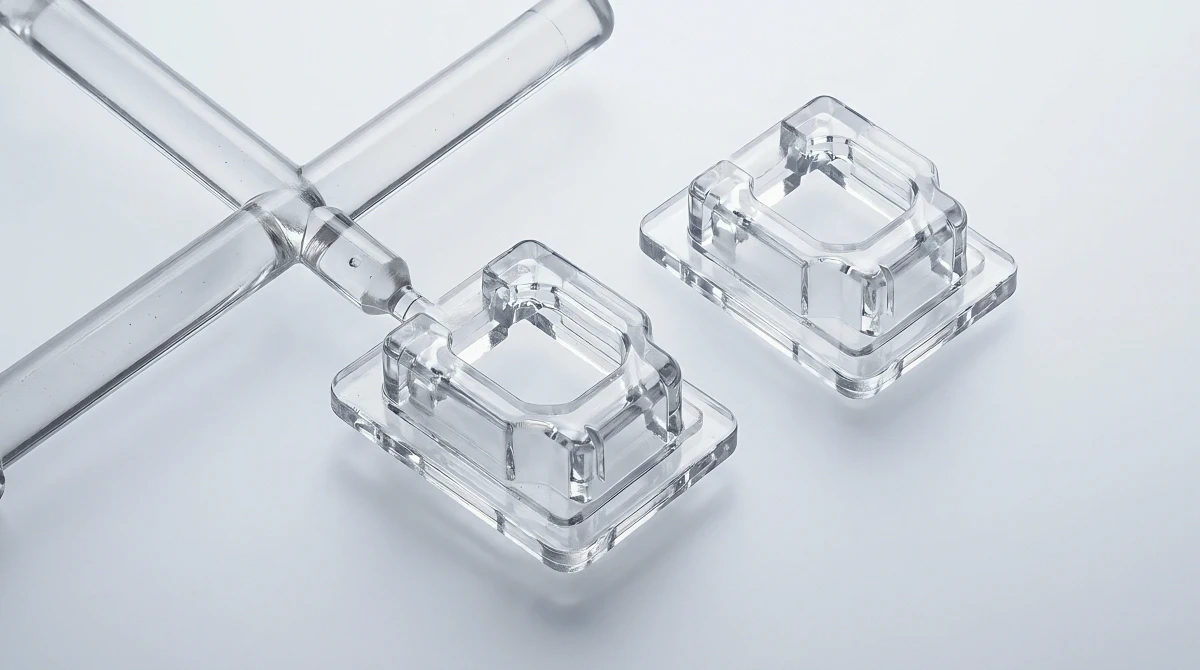
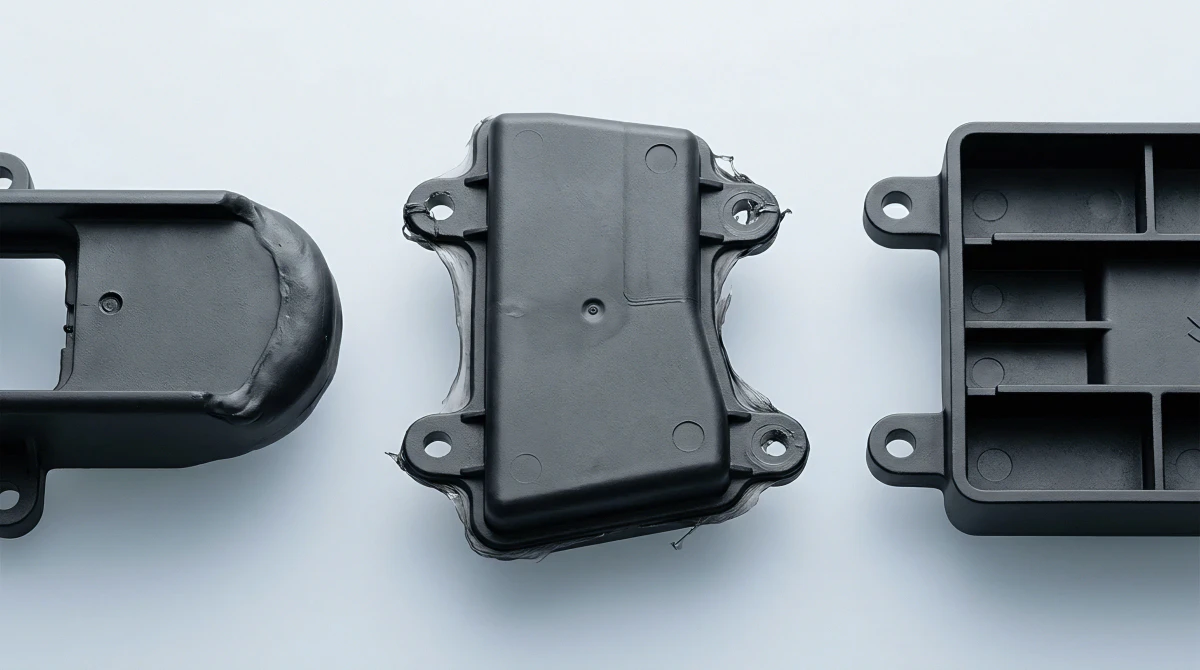
Flash is a thin fin of plastic that escapes the cavity at a parting line, shut-off, vent or ejector pin.

Every Flash article of the Injection Molding Resources, newest first, each written from published standards, research and makers’ data.

Meaning

Flash is a thin fin of plastic that escapes the cavity at a parting line, shut-off, vent or ejector pin. It shows that pressure exceeded what the closed tool could hold there. On a worn tool it is often the first sign of wear. On a new tool it points to pressure or a vent cut too deep.

Cause

DuPont’s nylon guide reads flash at the parting line as excess pressure, a worn or contaminated shut-off, or a vent that is too deep. The first change is the pack or hold pressure. Shut-off condition and vent depth are checked second. For low-viscosity grades where flash has to stay minimal, vents start shallow and are deepened as required. Cutting a vent deeper is easier than welding it back.
Read More

Resin Family

A poor process over-packs an amorphous resin, and the error shows as flash and stress near the gate. A semi-crystalline resin under-packs and shows sink, voids and size instead.

Wear Signal

Flash that appears where earlier lots were clean is a pattern of a wearing tool. So is flash at a parting line or ejector pin that was clean in the first shots. On a glass-filled resin, wear at gates and shutoffs shows as a changed gate vestige and flash before it shows on a polished face. None of these alone calls for a new tool, because an aluminum shut-off can be recut or inserted.

Lot Record

A lot record that notes where flash first appeared lets a buyer see the wear pattern while there is time to plan the next tool.
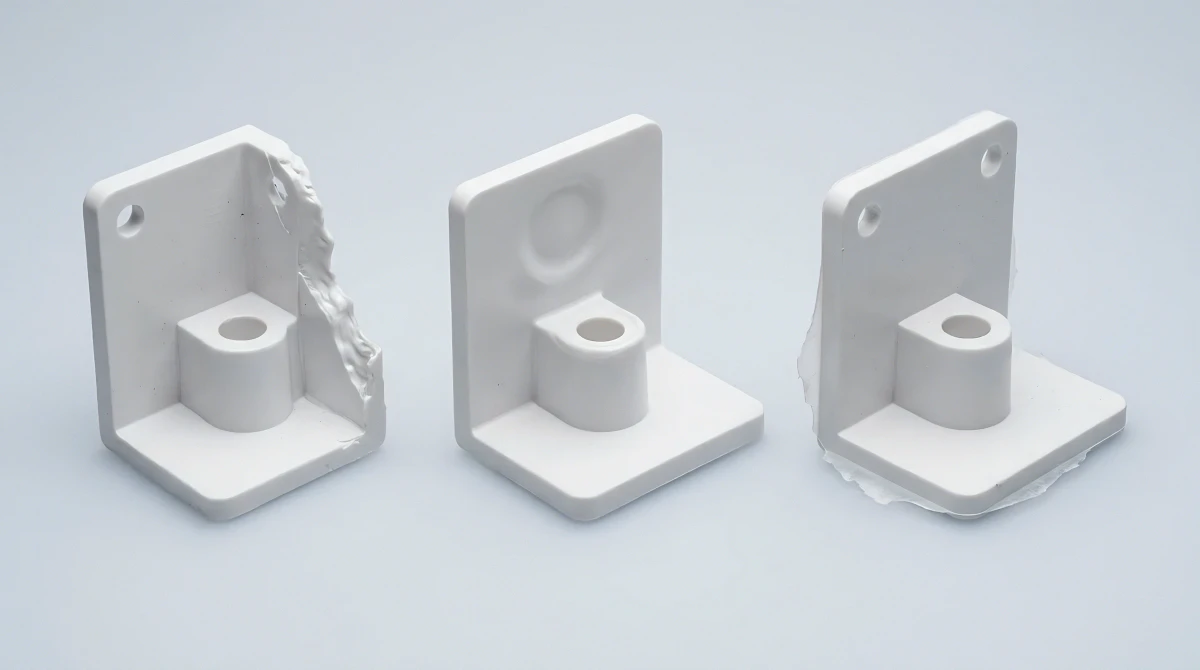
Short Shot, Sink and Flash in Injection Molding Traced to Their Cause

Short shots, sinks and flash traced to the melt volume, pressure and steel behind them, with the checks that find the cause before a setting is moved.

What Short Shots, Sink and Flash Have in CommonA short shot is a part the cavity never finished. BASF's troubleshooting brochure for engineering thermoplastics describes it as a part not completely formed, mainly in the areas furthest from the gate or in thin walls.

Gate Location and Gate Freeze in Injection Molding

Where a gate goes, how big it is and how long it stays open, with the weight study that sets hold time from the gate itself.

How Gate Location and Gate Freeze Shape a Molded PartAutodesk's Moldflow design rules open with the claim that gate position strongly affects material orientation and warpage, and that changing the gate is sometimes the only way to control orientation. Every gate injects under the same pressure, and the aim of gating is to avoid overpacking some paths while others are still filling, because unequal packing gives unequal shrinkage.

Polypropylene for Living Hinges in Injection Molding

Polypropylene for living hinges read from design guides and molding columns: grade choice, hinge dimensions, gating across the web, cooling and the tests that prove a hinge.

Why Polypropylene Makes a Living HingeThe MIT design note explains the mechanism. When a partly oriented polypropylene web is cold drawn on its first flex, it stretches by ratios of 2 or 3 to 1, and its tensile strength rises sharply.

How Many Parts One Aluminum Injection Mold Gives

A mold's life is a toolmaker's rating for a stated resin and cavity count, converted into parts per tool and then into tools per quantity.

What Sets the Number of Parts One Aluminum Mold GivesThree things set it, and they act together. One is the alloy and where in the plate the cavity sits.

How to Start Up an Injection Mold and Take the First Shots

A new mold is started cold on purpose, filled in stages with short shots, and read for vents, gates and heat before any process is fixed.

The Start-Up Sequence from a Cold Barrel to the First ShotEight moves take a machine from cold to its first complete part. The first four prepare the melt, the next three shape the shot, and the last one is a decision: whether the part describes the tool or only the settings.

SPI Mold Finish Grades A-1 to D-3 for Injection Molded Parts

The SPI finish grades read for a buyer, with what each method gives, how texture costs draft, and how a finish is written and kept on an aluminum tool.

What the Twelve SPI Finish Grades SpecifyThe SPI system names a finish by a letter and a number. Its letter gives the finishing method, A for diamond buff, B for grit paper, C for stone and D for dry blast, while the number runs from 1, the finest within a letter, to 3, the coarsest.

Request an Injection Molding Quote

Send the 2D drawing and the 3D file, with the quantity and the stage of the project. An engineer replies within 1 working day.

The quote form, the mutual NDA and the private folder for your files are on Protolis Atelier, with Injection Molding chosen.

Request a Quote