Surface Finish

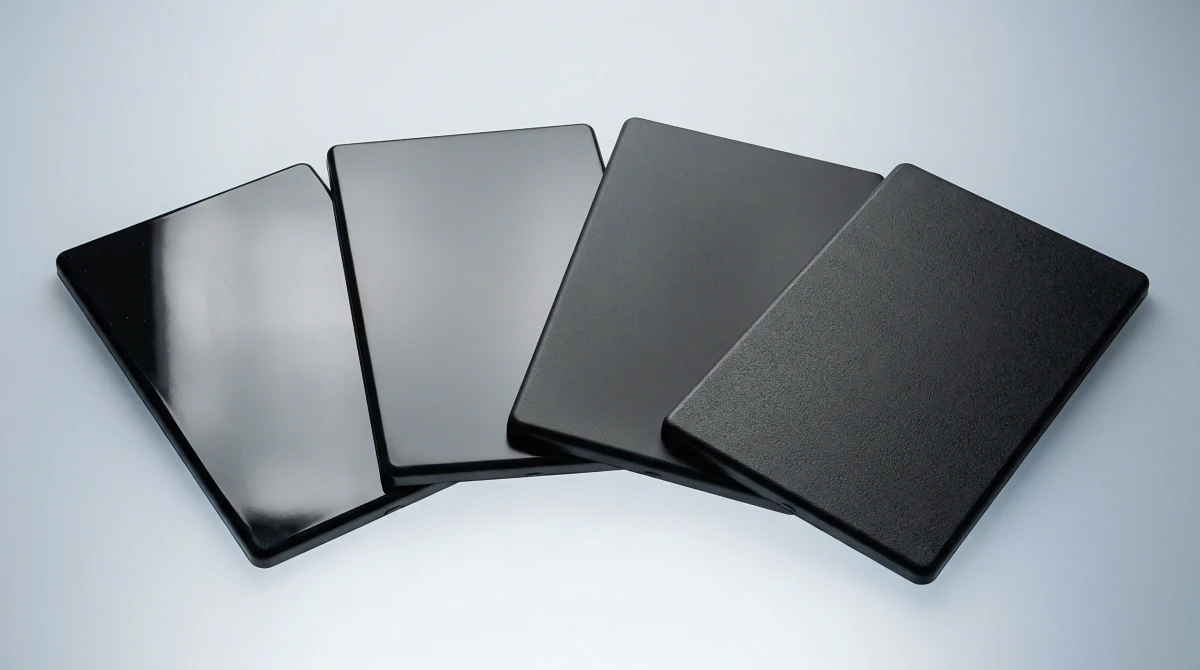
Surface finish is the texture and gloss of a molded part's faces, set by the cavity polish and by how well the melt copies it.

Every Surface Finish article of the Injection Molding Resources, newest first, each written from published standards, research and makers’ data.

Meaning

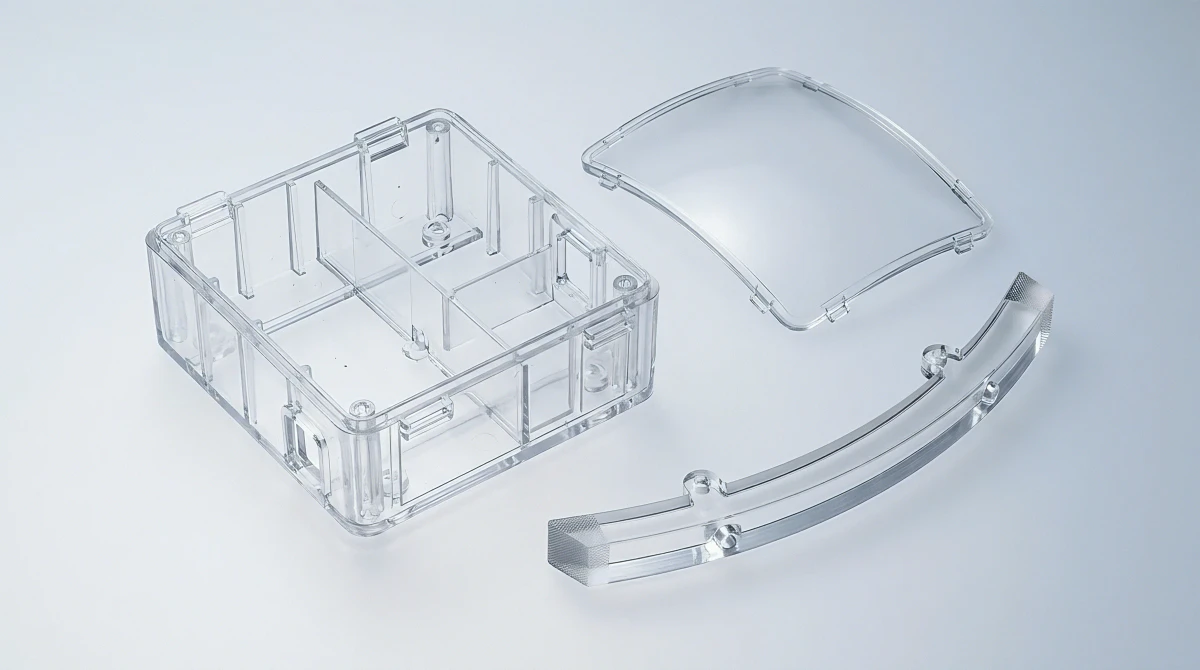
Surface finish is the texture and gloss of a molded part’s faces, set by the cavity polish and by how well the melt copies it. The SPI grades name the cavity side. The mold temperature and fill speed decide the part side. For clear parts the finish is part of the function.

Cavity Side

The SPI scale starts at A-1, a diamond buff at an Ra of 0.012 to 0.025 µm. It ends at D-3, a dry blast at 3.2 to 18 µm. A-1 and A-2 are listed for optically clear and transparent parts. A molded surface copies the cavity surface, so a clear part is only as clear as the polish it was molded against. Makrolon 2407’s 89 percent transmittance at 2 mm describes a bar from a polished tool. A part from a B-grade cavity will not reach it.
Read More

Process Side

DuPont’s nylon guide reports that reinforced resins molded near 100 °C (210 °F) improve surface finish, mold filling and frosting. A glass nylon part’s surface is set by the process at least as much as by the cavity. An A-2 grade on glass-filled nylon buys a polish the fibers will partly undo.

Aluminum Tools

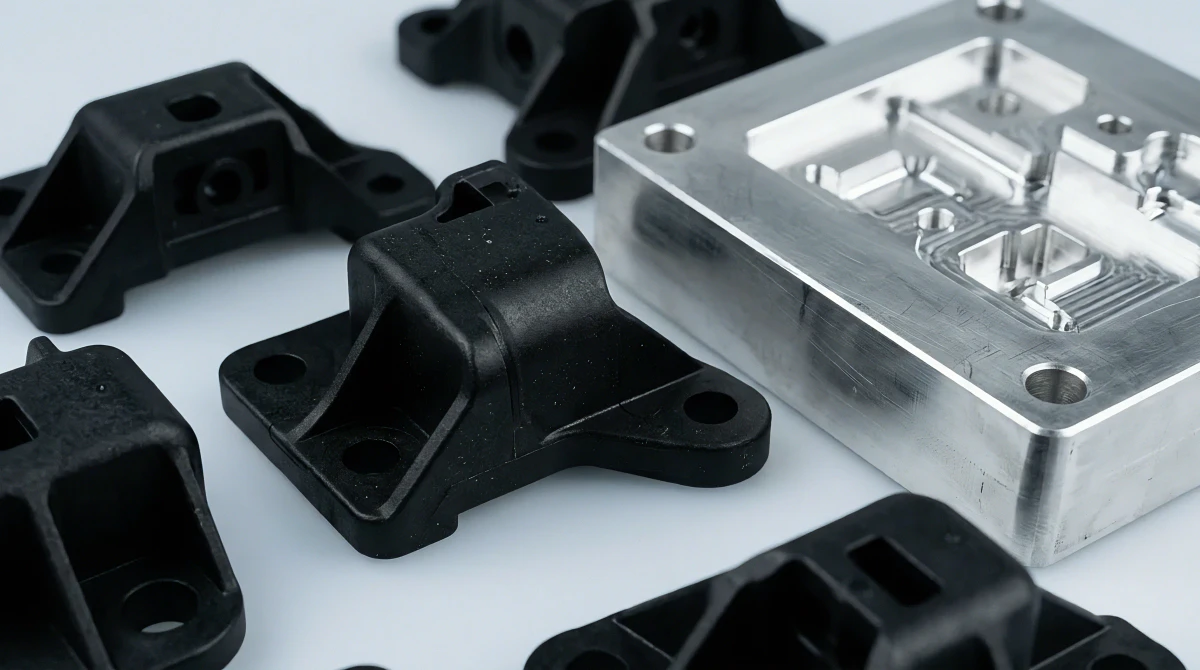
The sources opened for the articles do not state which polish grade a given aluminum alloy accepts or how long it holds. A nickel-boron coating of 5 to 8 µm sits over or under the polish, so the order is agreed. Galling from excessive temperature and pressure damages the cavity surface the part copies.

Drawing Note

A finish is written as grade, face, texture depth and reference, with a sample plate settling disputes. A finish wears with every shot, so its upkeep is stated too.
ABS and PC/ABS Blends in Injection Molding

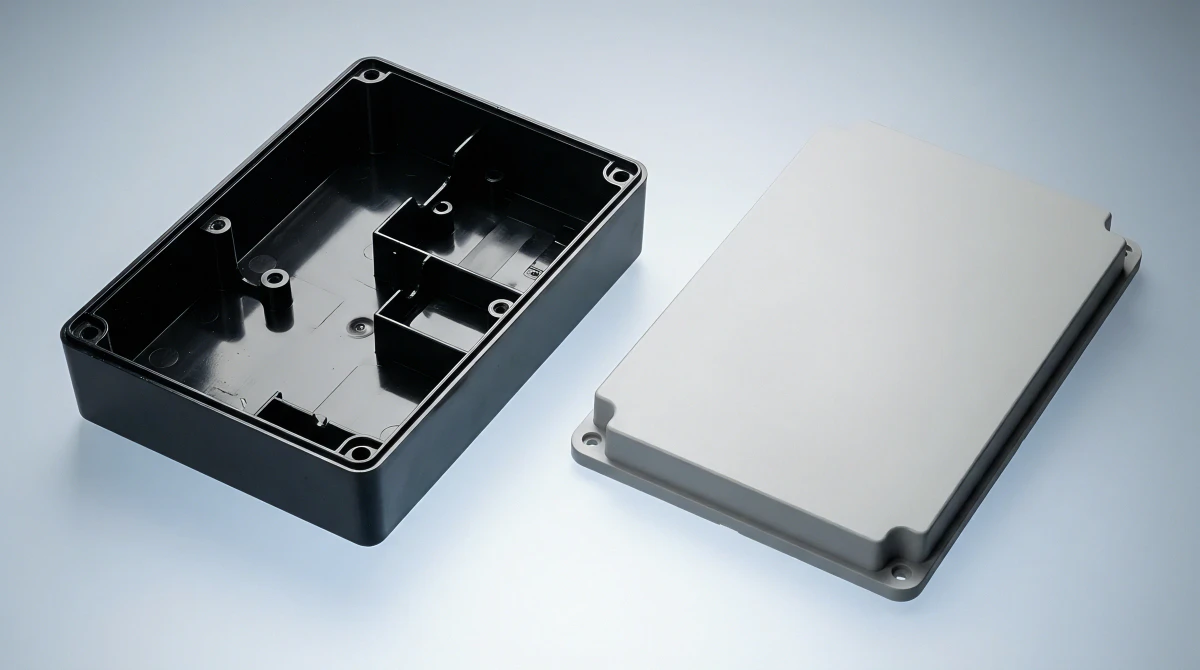
ABS and PC/ABS read from the makers' datasheets: drying, processing windows, shrinkage, snap-fit strain, impact and when the blend earns its stricter dryer.

How ABS and PC/ABS Differ in Injection MoldingABS is a terpolymer, and Moldflow's material page describes its structure: a continuous phase of styrene-acrylonitrile with a dispersed phase of polybutadiene rubber. Acrylonitrile brings hardness and chemical and heat resistance, styrene brings processability, gloss and strength, and butadiene brings toughness and impact strength.

SPI Mold Finish Grades A-1 to D-3 for Injection Molded Parts

The SPI finish grades read for a buyer, with what each method gives, how texture costs draft, and how a finish is written and kept on an aluminum tool.

What the Twelve SPI Finish Grades SpecifyThe SPI system names a finish by a letter and a number. Its letter gives the finishing method, A for diamond buff, B for grit paper, C for stone and D for dry blast, while the number runs from 1, the finest within a letter, to 3, the coarsest.

Polycarbonate Injection Molding Properties for Clear and Tough Parts

Polycarbonate read from the maker's sheets for a buyer: what it molds like when dry and hot, how thin walls fill, and what to ask of an aluminum tool.

Makrolon 2407 Properties in Metric and Inch UnitsMakrolon 2407 is a low-viscosity, general-purpose, UV-stabilized, easy-release polycarbonate with a melt volume-flow rate of 19 cm³/10 min at 300 °C and 1.2 kg under ISO 1133. Its ISO short name is ISO 7391-PC,MLR,(,,)-18-9.

Glass-Filled Nylon 66 in Injection Molding and What It Does to an Aluminum Tool

How a glass-reinforced nylon behaves dry and conditioned, in the press and on an aluminum tool, and what its datasheet leaves for the buyer to settle.

Properties of 30 Percent Glass-Filled Nylon 66 Dry and ConditionedPA66 with 30 percent glass is one of the most common reinforced engineering grades, and BASF's Ultramid A3WG6 LT BK, a laser-transparent black grade whose sheet is dated 09/2026, is a clear example of how the family reads. The sheet names the polymer PA66-GF30 and gives its typical values for uncolored product at 23 °C.

Request an Injection Molding Quote

Send the 2D drawing and the 3D file, with the quantity and the stage of the project. An engineer replies within 1 working day.

The quote form, the mutual NDA and the private folder for your files are on Protolis Atelier, with Injection Molding chosen.

Request a Quote