Shutoff

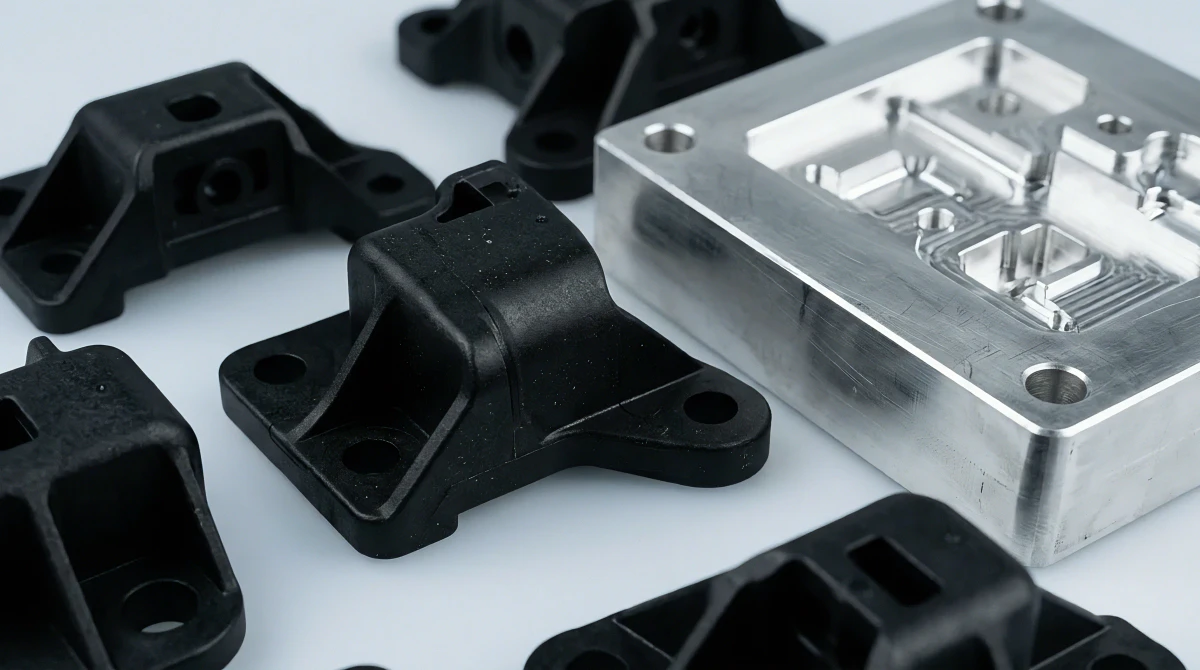
A shutoff is a closing face in a mold, slide-by shutoffs included, and in an aluminum tool it wears among the first places.

Every Shutoff article of the Injection Molding Resources, newest first, each written from published standards, research and makers’ data.

Meaning

A shutoff is a closing face in a mold, slide-by shutoffs included, and in an aluminum tool it wears among the first places. A worn shutoff shows as flash.

Wear

Filled resins wear out the shutoffs and the gate area first, according to a Plastics Technology article on aluminum tooling. Slide-by shutoffs with minimal draft are the first places to show wear. Glass-filled flash is itself abrasive. Unfilled acetal puts little abrasive wear on shutoffs.
Read More

Protection

The article recommends steel or other inserts in high-wear areas such as slide-by shutoffs with minimal draft. Inserting is preferred to welding, which can leave pitting and metal softer than the surrounding aluminum. A nickel-boron coat of 5 to 8 µm (0.0002 to 0.0003 in) brings the surface to 50 to 56 HRC.

Inspection

Gates and shutoffs are wear items in an aluminum tool and are checked every time the tool leaves the press. The tool is cleaned after every run, often every five to seven days of running. A buyer ordering glass nylon asks whether the gate and shutoff areas are inserted or coated. The next question is how their dimensions are checked at each cleaning. DuPont also reads parting-line flash as a contaminated shut-off, not only a worn one. An aluminum shutoff can be recut or inserted when it wears.

Effect on the Part

Wear at the shutoffs shows on the part as flash before it shows on a polished face. A glass-filled part’s changed gate vestige often appears at the same time. In a lot record, flash at a shut-off that was clean in the first shots marks a wearing tool.

How Tightly Acetal Parts Hold Dimension in Injection Molding

Acetal dimension spread measured on one part under four press settings, with the gate and cooling rules behind it and a tolerance budget for a 50 mm feature.

Outer Diameter Spread Under Four Packing and Cooling SettingsThe test part in DuPont's tips is a tribological sample used for wear and friction testing, a part whose outer diameter has to be as dimensionally precise as possible. DuPont molded it under four settings, measured the outer diameter and reported the mean with its variation.
SPI Mold Finish Grades A-1 to D-3 for Injection Molded Parts

The SPI finish grades read for a buyer, with what each method gives, how texture costs draft, and how a finish is written and kept on an aluminum tool.

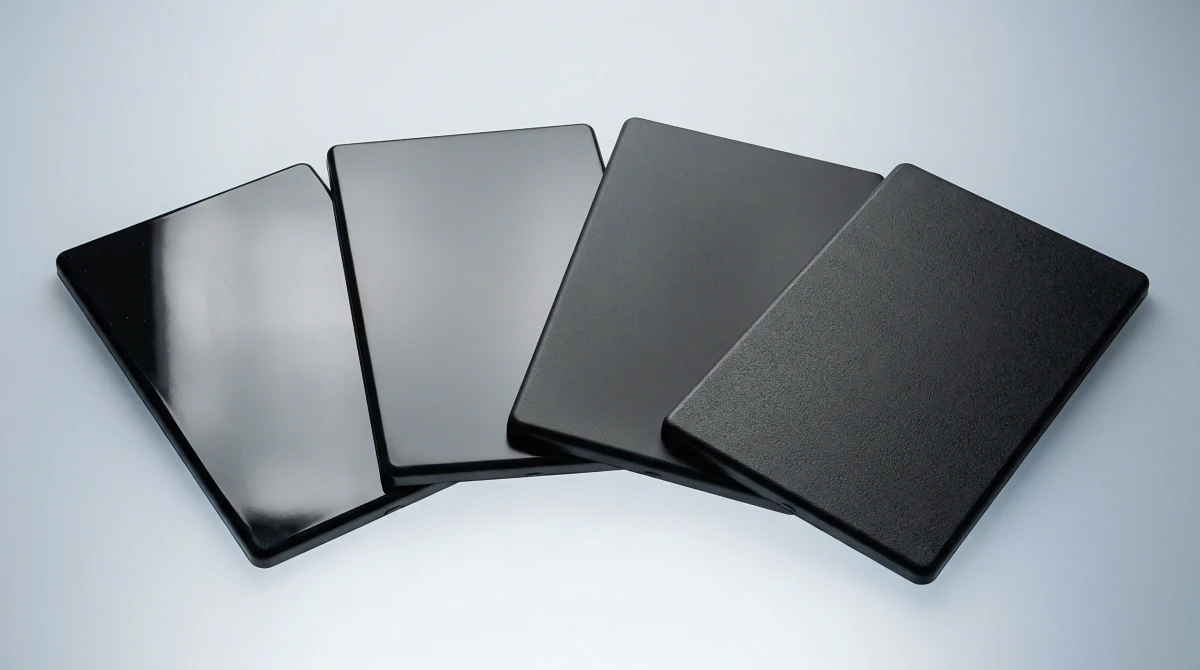
What the Twelve SPI Finish Grades SpecifyThe SPI system names a finish by a letter and a number. Its letter gives the finishing method, A for diamond buff, B for grit paper, C for stone and D for dry blast, while the number runs from 1, the finest within a letter, to 3, the coarsest.

Glass-Filled Nylon 66 in Injection Molding and What It Does to an Aluminum Tool

How a glass-reinforced nylon behaves dry and conditioned, in the press and on an aluminum tool, and what its datasheet leaves for the buyer to settle.

Properties of 30 Percent Glass-Filled Nylon 66 Dry and ConditionedPA66 with 30 percent glass is one of the most common reinforced engineering grades, and BASF's Ultramid A3WG6 LT BK, a laser-transparent black grade whose sheet is dated 09/2026, is a clear example of how the family reads. The sheet names the polymer PA66-GF30 and gives its typical values for uncolored product at 23 °C.

Request an Injection Molding Quote

Send the 2D drawing and the 3D file, with the quantity and the stage of the project. An engineer replies within 1 working day.

The quote form, the mutual NDA and the private folder for your files are on Protolis Atelier, with Injection Molding chosen.

Request a Quote