Meaning
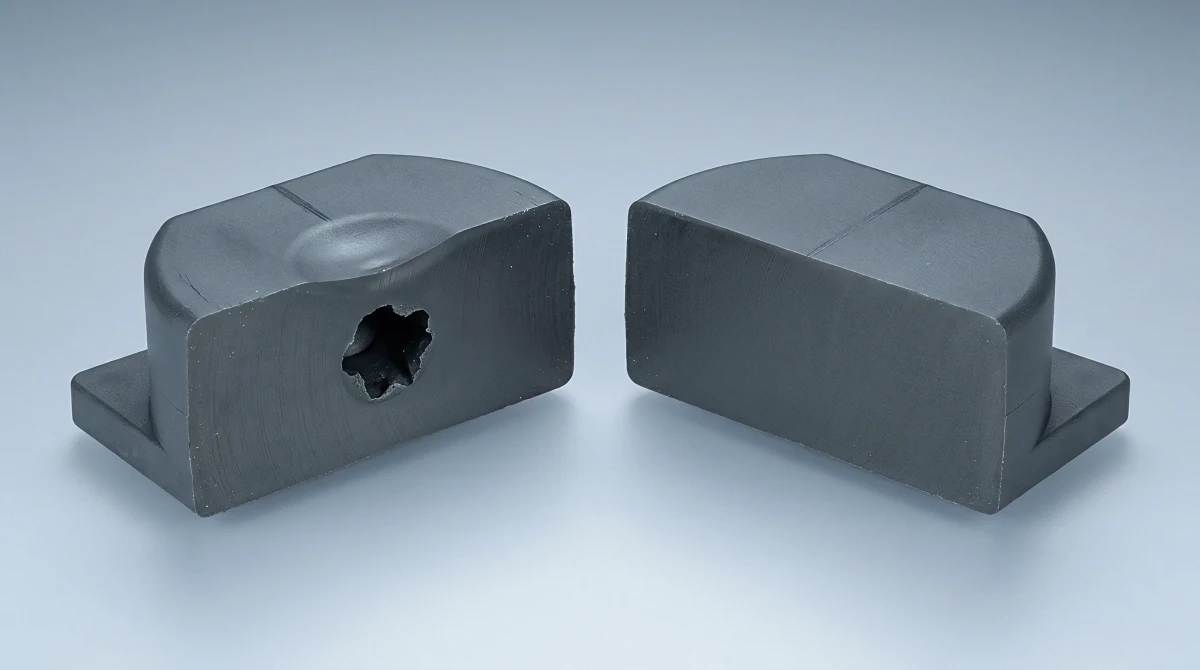
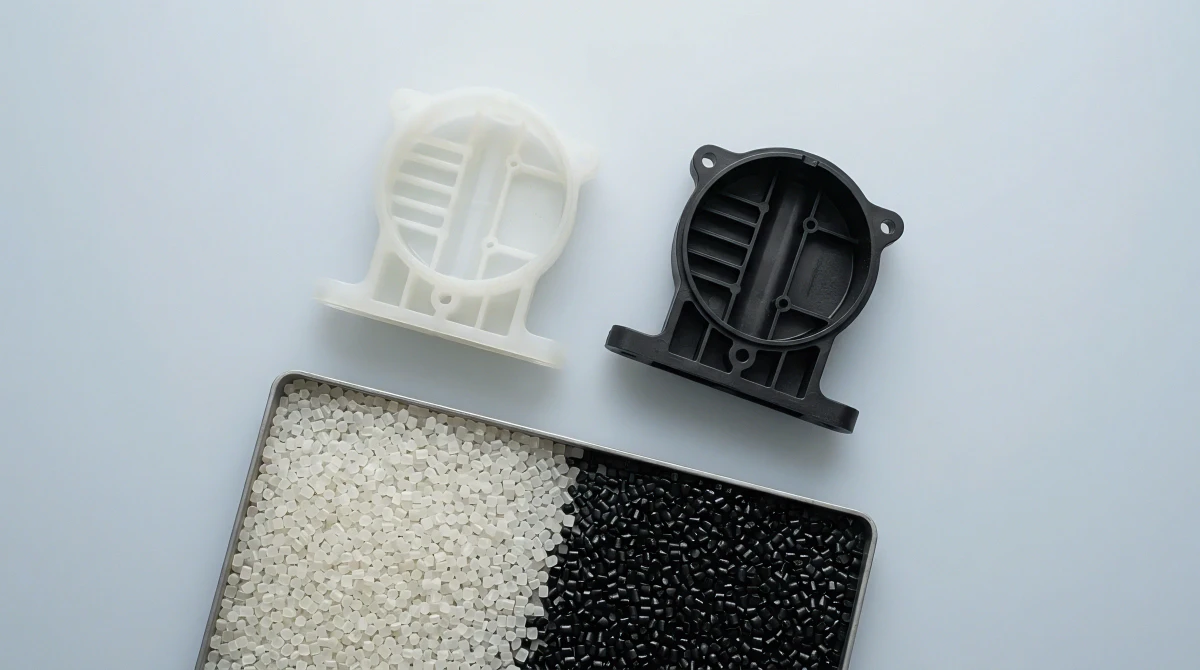
Wall thickness is the nominal section of a molded part between its two faces, the dimension that sets fill, cooling time, shrinkage and flame class. Thermoplastics conduct heat poorly, so heat leaves a wall slowly. A thick part, DuPont notes, takes far longer to cool than a thin one. For most parts, cooling is the largest block of the cycle, and it grows quickly with the wall.Fill and Flow
For polycarbonate fill, the wall outranks every machine setting. For Covestro’s thermally conductive grades, 1.5 mm (0.059 in) is about the thinnest practical nominal wall. Going from 1.5 to 2.0 mm lengthens the flow path by 50 to 100 percent. A designer who cannot add wall can only add melt temperature, and melt temperature has a ceiling.Read More
Effect on Shrinkage
DuPont’s nylon guide shows shrinkage rising with thickness at a fixed mold temperature and pressure. A thick section cools slowly and crystallizes more. Packing time per millimeter also rises as the wall gets thicker. A wall twice as thick needs more than twice the packing time.Uniform Wall
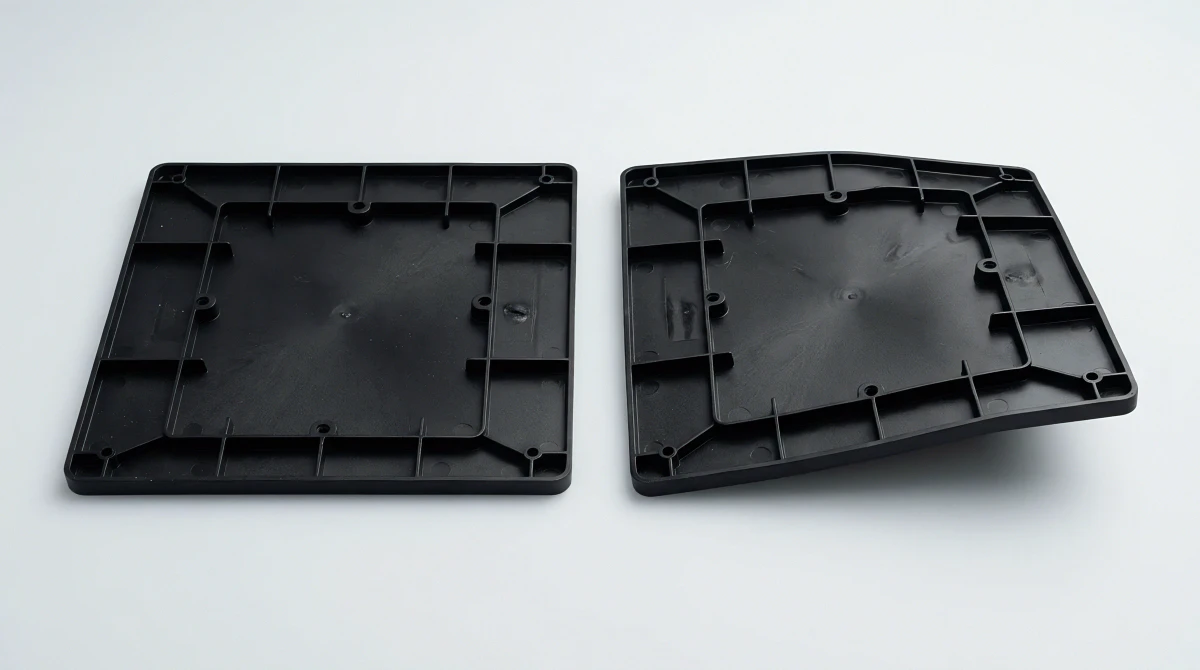
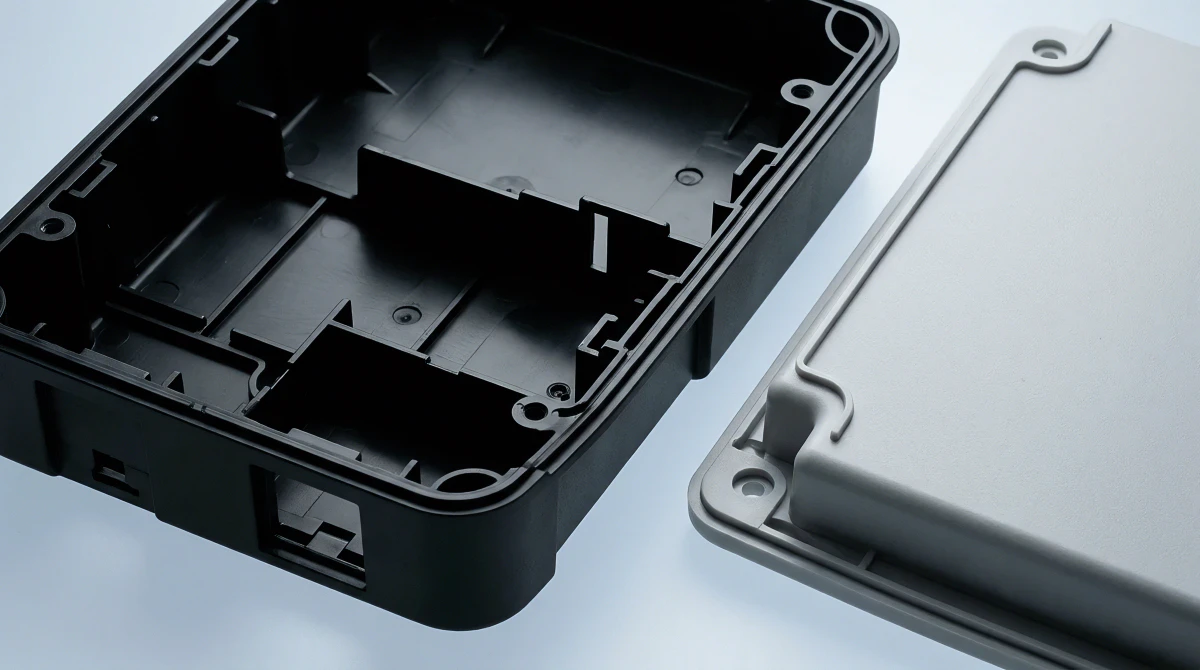
A part with thick and thin areas shrinks unevenly unless packing fills the crystallization loss. For acetal packed correctly, DuPont finds the remaining thermal shrinkage independent of thickness. DuPont’s nylon guide still asks for uniform walls, with thick sections cored out.Flame Class
A UL 94 class belongs to a material at a thickness. Makrolon 2407 is V-2 at 0.75 mm and HB at 2.7 mm, so its class falls as the wall rises. A part’s thin ribs and bosses can fall below the thinnest listed wall. The printed rating is then no evidence for them, and the drawing names the wall its flame class refers to.Cycle Arithmetic
A cycle measured on one wall belongs to that part. A cycle taken from a different wall, resin or tool metal moves the cooling interval that makes up most of the total.