Annealing

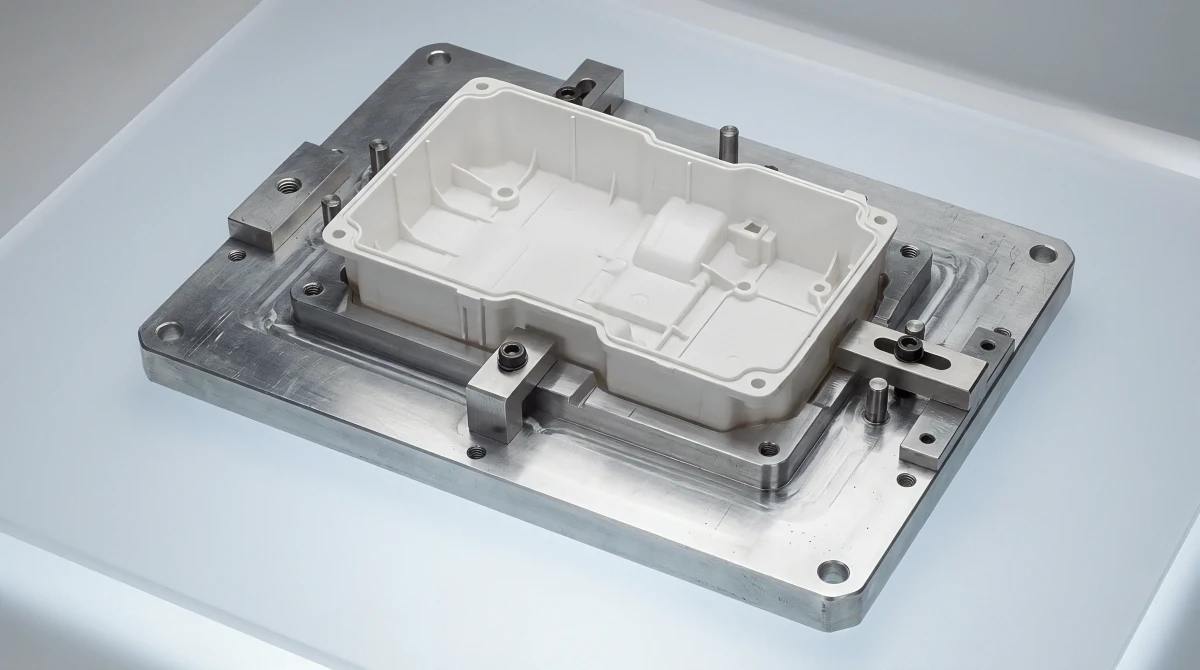
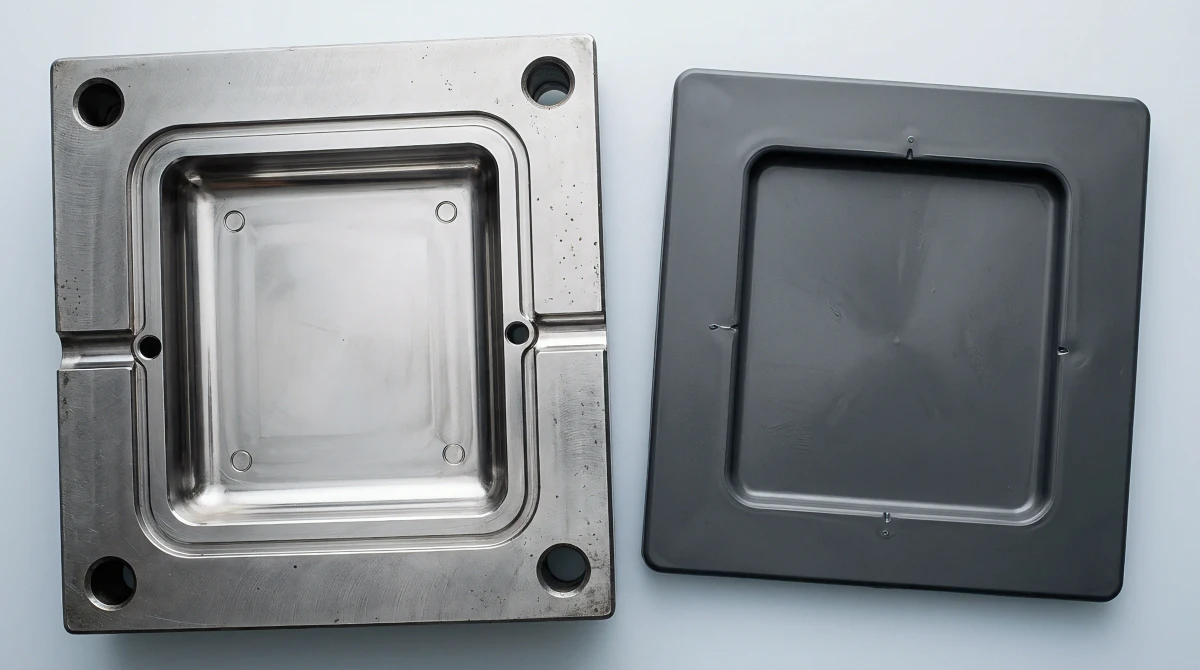
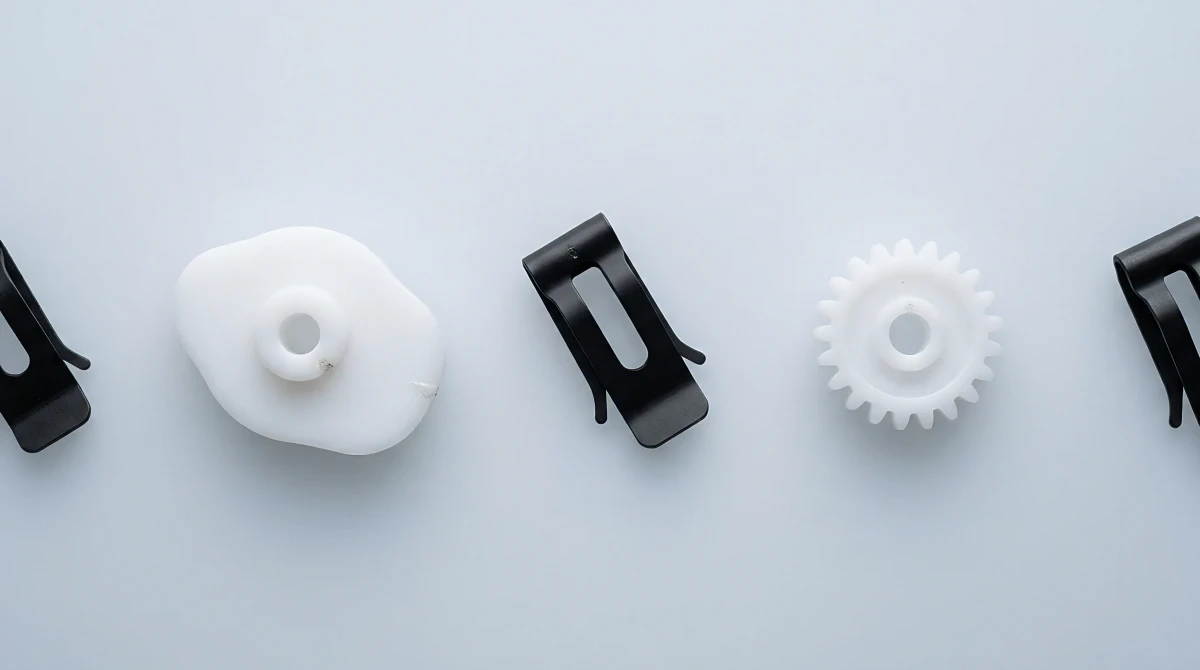
Annealing is a heat treatment after molding that holds a part at a set temperature and time to relieve stress and settle its size.

Every Annealing article of the Injection Molding Resources, newest first, each written from published standards, research and makers’ data.

Meaning

Annealing is a heat treatment after molding that holds a part at a set temperature and time to relieve stress and settle its size. For acetal the Delrin 500P sheet lists it as optional. It changes the part, so an annealed dimension is measured after the step, not before. It also raises the heat deflection temperature.

Typical Range

DuPont gives 160 °C (320 °F) for 30 minutes per millimeter of wall for Delrin 500P. A 4 mm (0.16 in) wall therefore spends 120 minutes in the oven. Heat deflection at 1.8 MPa rises from 95 °C unannealed to 110 °C annealed on the same sheet.
Read More

Failure Mode

A part that hangs in an oven at 160 °C is held only by its own geometry. A complex, thin or long part can warp there. DuPont’s nylon guide advises lower annealing temperatures and times for complex parts, found by trials. The same caution applies to acetal.

Effect on Size

For nylon, DuPont defines post-mold shrinkage through annealing. The part is annealed for a stated time at a stated temperature and then measured at 23 ± 2 °C. Annealing shrinkage falls as mold temperature rises and is larger for thin walls. A nylon part annealed after molding therefore sits smaller than one measured straight from the press.

Drawing Callout

A drawing that asks for an annealed dimension states the annealing conditions. It also states the time between annealing and measurement and the temperature of measurement. Measured hot out of the oven, a part reads differently from the same part at 23 °C the next morning. On a 49.6 mm (1.95 in) acetal dimension that difference is 0.005 mm per degree. The drawing says which state counts, before or after the treatment.
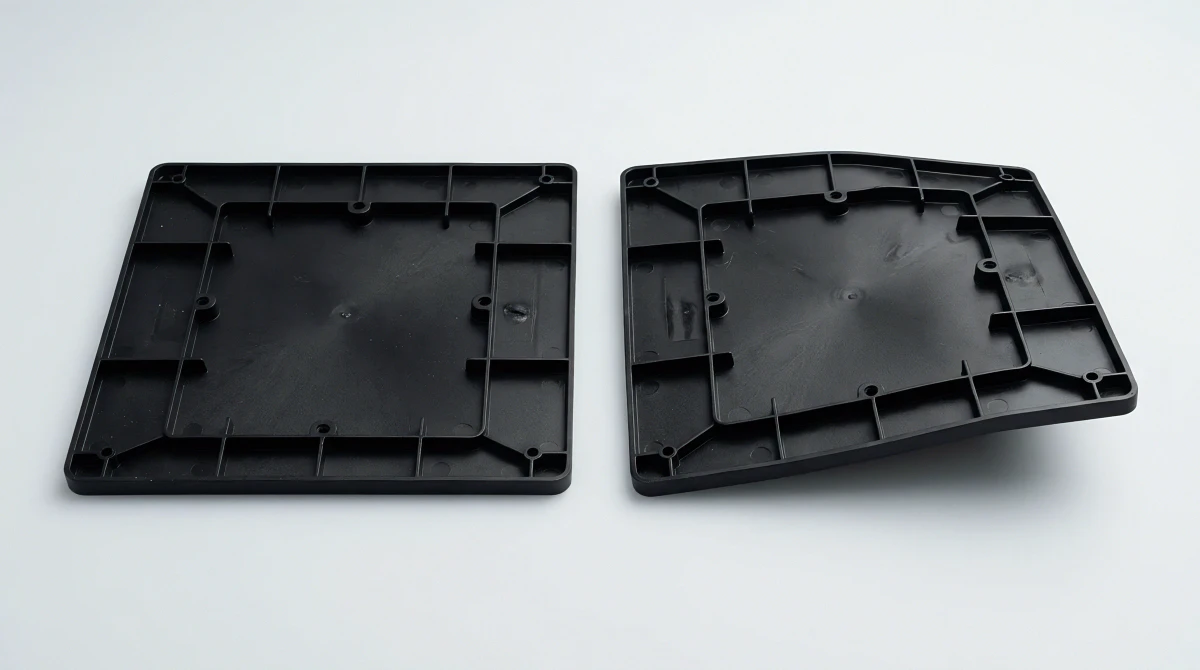
How Temperature Changes the Size of a Molded Plastic Part at the Gauge

How coefficients of expansion turn a few degrees of gauge temperature into hundredths of a millimeter, by resin and direction, and what a drawing should state.

Linear Thermal Expansion of Polycarbonate, Glass-Filled Nylon and AcetalLinear thermal expansion is reported on datasheets as a coefficient, the length change per unit length per degree. The three makers print it by the ISO or TMA method, and they differ in how finely they split it.

Injection Molding Shrinkage Along and Across the Flow by Material

Molding shrinkage read by direction and condition for three resins, with the process settings that move it and the way a first sample turns it into a cavity allowance.

Shrinkage of Polycarbonate, Glass-Filled Nylon 66 and Acetal Along and Across the FlowISO 294-4:2018 sets out the method for measuring mold shrinkage and post-mold shrinkage of injection molded thermoplastic test specimens, parallel and normal to the direction of melt flow. Resin makers print the result in two lines, one per direction.

How Tightly Acetal Parts Hold Dimension in Injection Molding

Acetal dimension spread measured on one part under four press settings, with the gate and cooling rules behind it and a tolerance budget for a 50 mm feature.

Outer Diameter Spread Under Four Packing and Cooling SettingsThe test part in DuPont's tips is a tribological sample used for wear and friction testing, a part whose outer diameter has to be as dimensionally precise as possible. DuPont molded it under four settings, measured the outer diameter and reported the mean with its variation.

Acetal Homopolymer Injection Molding Properties and Gate Rules

Delrin 500P read from the maker's sheet and molding tips: why acetal shrinks and needs a packed gate, how hot the melt may run, and what to check on an aluminum tool.

Delrin 500P Properties in Metric and Inch UnitsDelrin 500P NC010 is a medium-viscosity acetal homopolymer, and Delrin prints its ISO values as the reference beside 500CPE on its own product data sheet. The grade has a melt mass-flow rate of 15 g/10 min at 190 °C and 2.16 kg under ISO 1133.

Request an Injection Molding Quote

Send the 2D drawing and the 3D file, with the quantity and the stage of the project. An engineer replies within 1 working day.

The quote form, the mutual NDA and the private folder for your files are on Protolis Atelier, with Injection Molding chosen.

Request a Quote