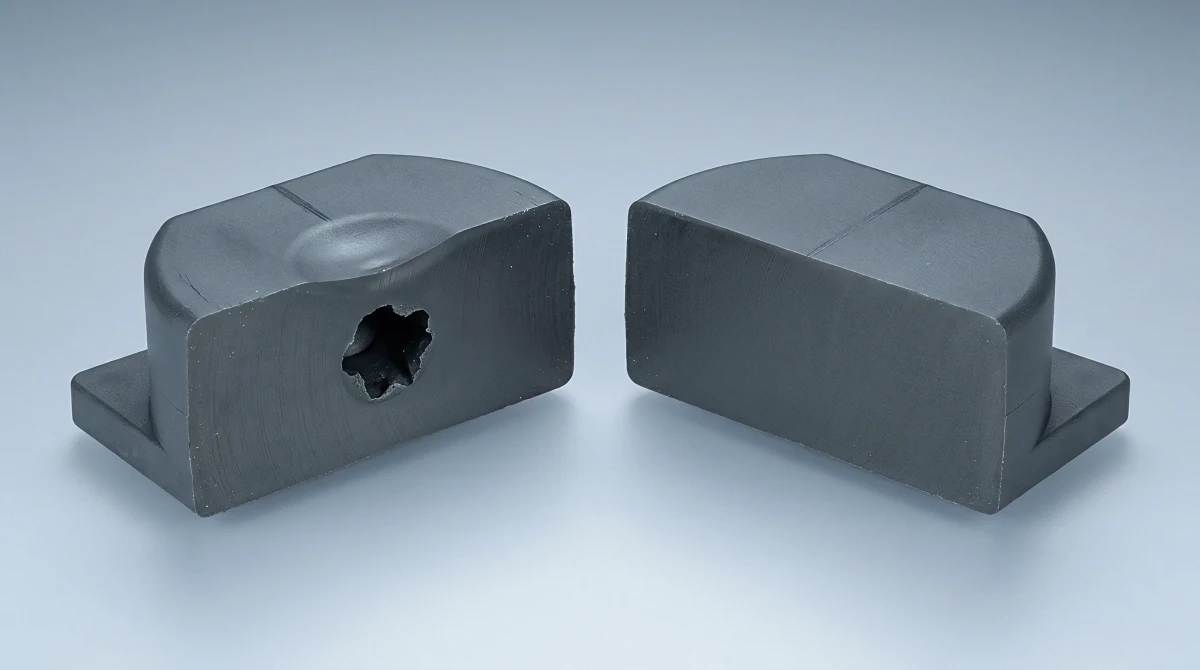
Ejection

Ejection is the step that releases a finished part from the open mold.

Every Ejection article of the Injection Molding Resources, newest first, each written from published standards, research and makers’ data.

Meaning

Ejection is the step that releases a finished part from the open mold. It closes the cycle together with opening and closing the mold. When a part leaves decides how much it cools under the restraint of the cavity. How it is handled after leaving decides whether parts from one lot cool alike.

Eject Hot

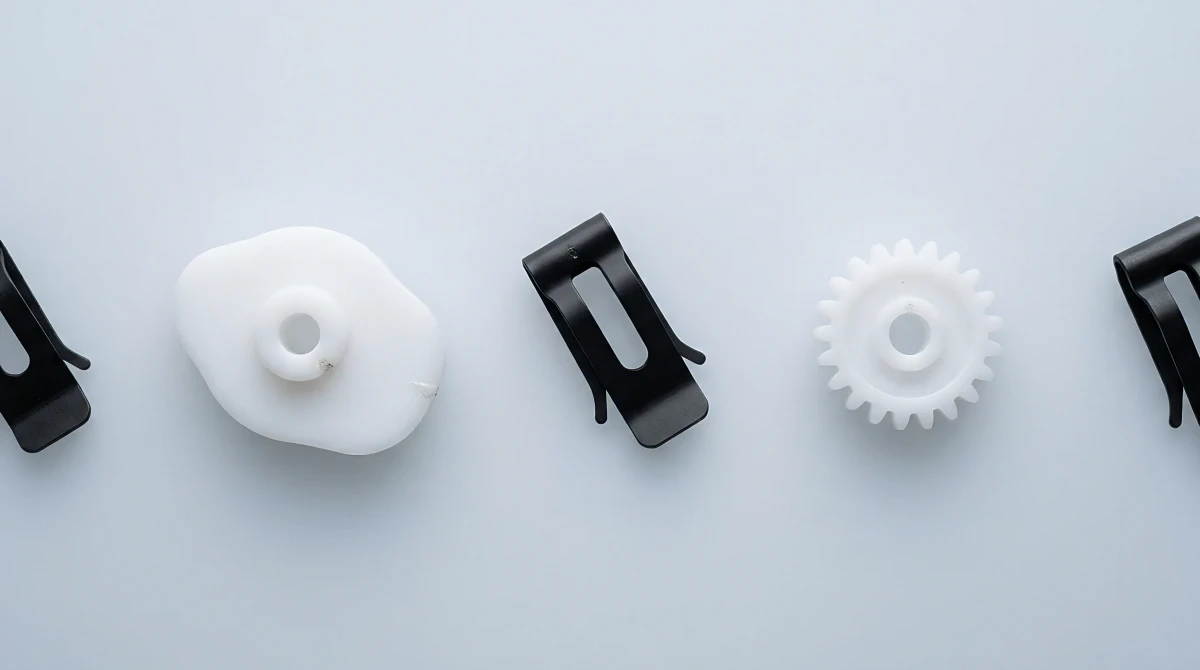
DuPont’s advice for acetal surprises molders trained on amorphous resins. Once packing has finished, acetal is crystallized and solid and needs no further cooling in the mold. The part is ejected soon after pack-out and cools slowly in air. Its wear-test part gave the tightest spread, ±0.02 mm on a 49.6 mm (1.95 in) diameter, with 2 seconds of cooling. The DuPont nylon guide holds the same for crystalline nylon after the hold time.
Read More

Cooling Need

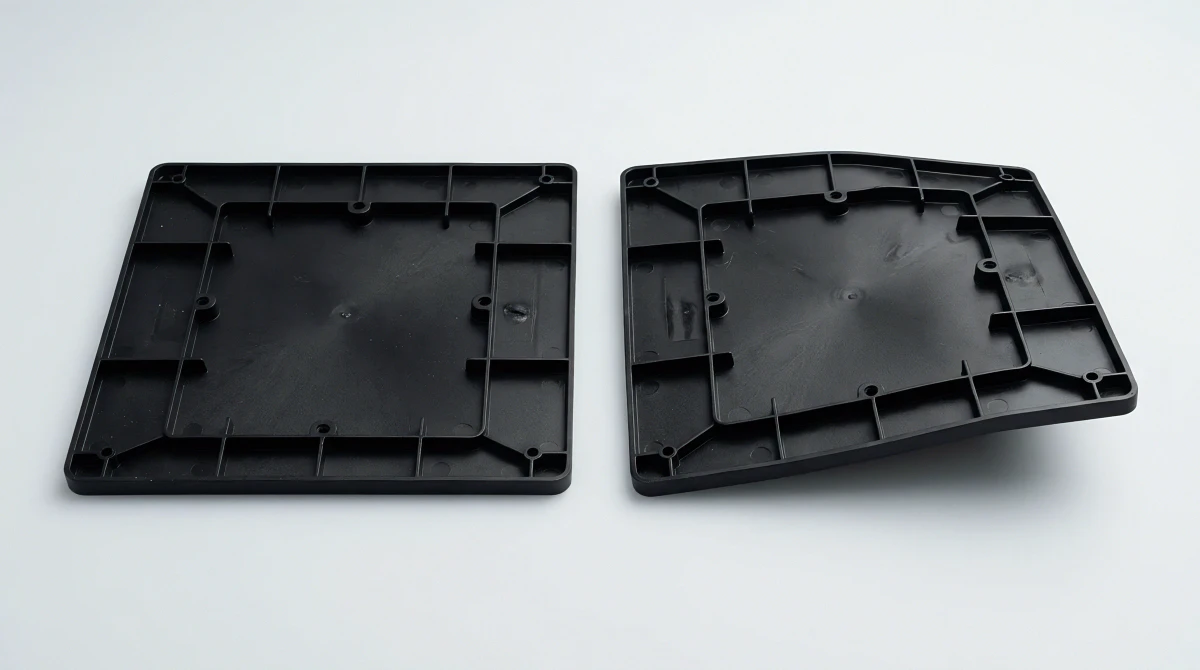
An amorphous resin needs time in the mold before it is stiff enough to leave. That makes its cycle longer than acetal’s, which packs and then leaves. A crystalline part kept in the cavity is held by the walls and cores while it shrinks. The restraint gives uneven shrinkage and visible warpage.

Container

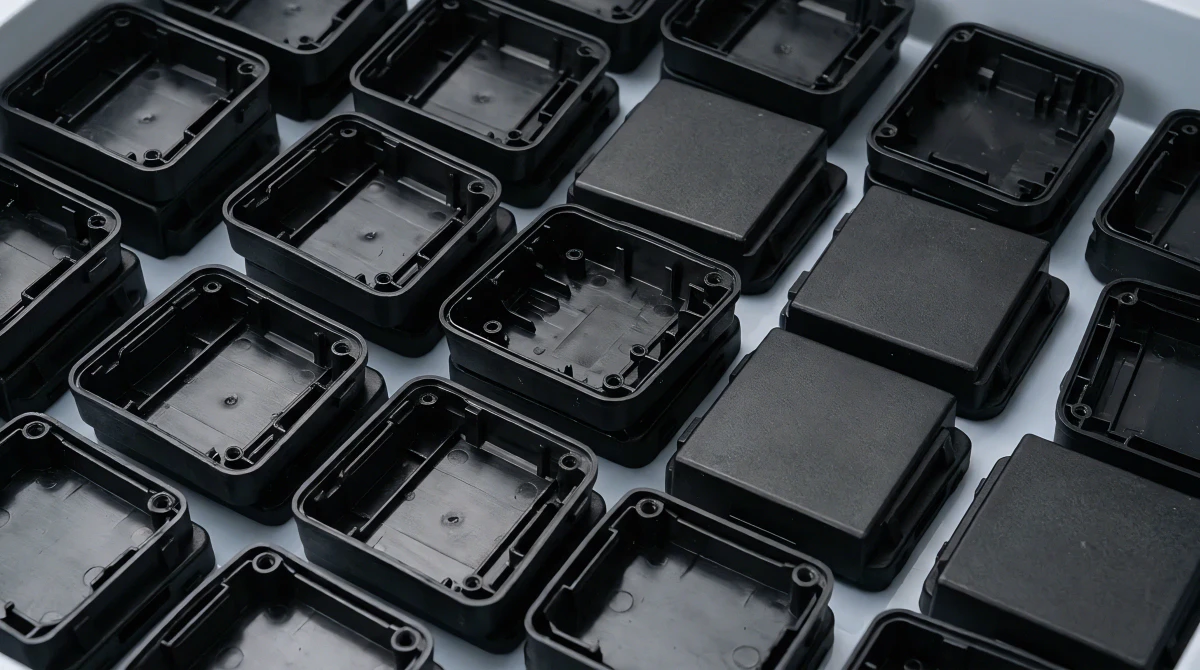
DuPont prefers ejecting onto a conveyor before parts go into a bulk package. A box or bag creates a temperature gradient through its height. Parts at the top and the bottom may then differ in size. A lot measured from the top of a bulk bag and from the bottom may not agree for that reason alone.

Press Time

Opening, ejecting and closing are set by the press, the stroke and the part’s shape. The dry cycle time is a published press figure. On thermally conductive polycarbonate, high melt heat warms the mold locally and causes sticking and ejection difficulty. A second saved at cooling can then come back as a longer ejection.

Short Shots

During a mold trial the first transfer position leaves a short shot with no pack pressure. The exception is a part so incomplete that ejection would be unsafe. Short shots are ejected lightly and laid out in a row to show the flow front.

Measurement Timing

The first article notes the interval between ejection and measurement. A dimension read on a warm part differs from the same part at 23 °C.

Mold Maintenance and Spare Inserts Across a Bridge Injection Molding Run

How a bridge mold is cleaned, inspected and fitted with inserts across a run, so that wear is recorded, predicted and met with spares instead of stoppages.

What a Bridge Mold Needs Between LotsThe aluminum maintenance column is plain on the first rule: an aluminum mold is taken apart and cleaned thoroughly after every run of parts, and cleaned again before storage, however short the run. It can often run five to seven days before it needs cleaning, the author notes, though some resins and some molds with actions need it after two to three days.
Color Matching Molded Parts With Masterbatch in a Production Run

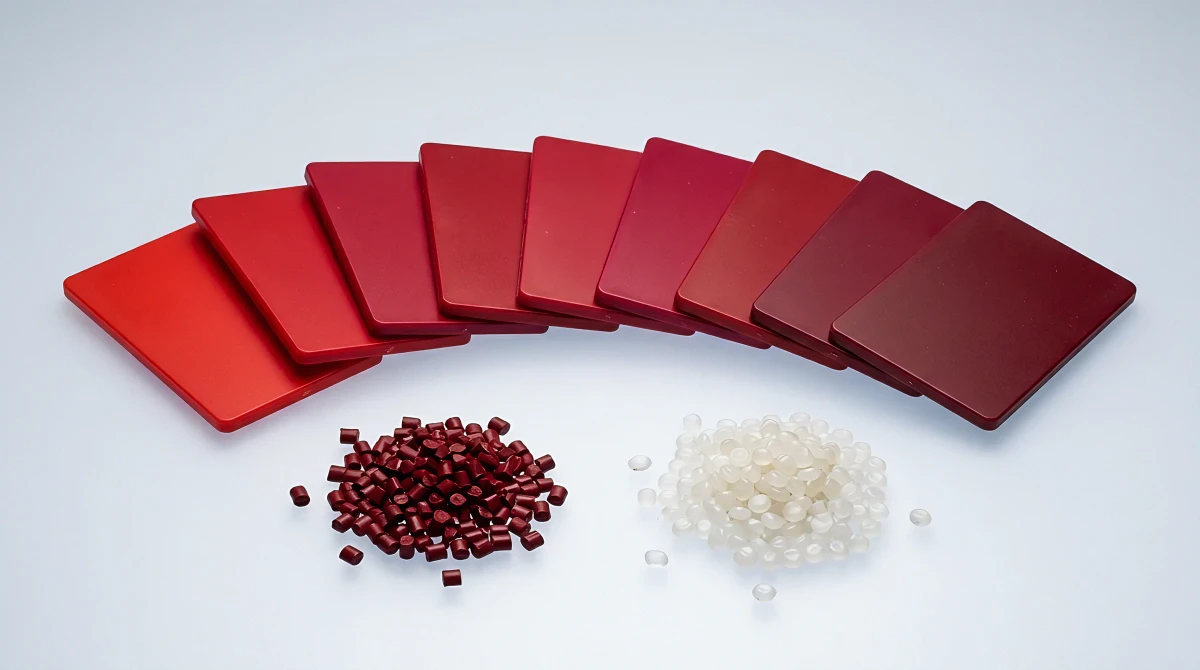
How masterbatch color is matched, dosed, distributed and measured so that every lot of a molded part matches the standard agreed at the first article.

How Masterbatch Color Is Held Across a RunThree things have to stay constant for color to hold. The masterbatch has to be the same formulation at the same let-down ratio, the melt has to distribute it evenly, and the part has to be measured the same way each time.

Short Shot, Sink and Flash in Injection Molding Traced to Their Cause

Short shots, sinks and flash traced to the melt volume, pressure and steel behind them, with the checks that find the cause before a setting is moved.

What Short Shots, Sink and Flash Have in CommonA short shot is a part the cavity never finished. BASF's troubleshooting brochure for engineering thermoplastics describes it as a part not completely formed, mainly in the areas furthest from the gate or in thin walls.

Draft Angle by Texture Depth on Injection Molded Parts

How much draft a textured wall needs for its depth, under which conditions each published figure holds, and how the mold and the part are checked.

How Much Draft a Texture Depth NeedsStandex Engraving Mold-Tech's technical data sheet gives the current recommendation from the texture maker: 1° of draft for every 0.013 to 0.015 mm (0.0005 to 0.0006 in) of texture depth. Per 0.025 mm (0.001 in) that works out to between 1.7° and 2°.

Polypropylene for Living Hinges in Injection Molding

Polypropylene for living hinges read from design guides and molding columns: grade choice, hinge dimensions, gating across the web, cooling and the tests that prove a hinge.

Why Polypropylene Makes a Living HingeThe MIT design note explains the mechanism. When a partly oriented polypropylene web is cold drawn on its first flex, it stretches by ratios of 2 or 3 to 1, and its tensile strength rises sharply.

Cycle Time and Parts per Hour in a Bridge Injection Molding Run

A cycle is the sum of fill, hold, cooling and press motions, and a supplier's number is only as good as the pack and cooling times behind it.

What Sets Cycle Time and Parts per HourA molding cycle is a loop of seven moves: the mold closes, the cavity fills, the pack and hold phase runs, the part cools, the mold opens, the part is ejected, and the screw recovers for the next shot. Recovery runs while the part cools, which is why DuPont's nylon guide asks for screw speeds adjusted so that screw retraction time is shorter than the cooling phase.

How Tightly Acetal Parts Hold Dimension in Injection Molding

Acetal dimension spread measured on one part under four press settings, with the gate and cooling rules behind it and a tolerance budget for a 50 mm feature.

Outer Diameter Spread Under Four Packing and Cooling SettingsThe test part in DuPont's tips is a tribological sample used for wear and friction testing, a part whose outer diameter has to be as dimensionally precise as possible. DuPont molded it under four settings, measured the outer diameter and reported the mean with its variation.

Acetal Homopolymer Injection Molding Properties and Gate Rules

Delrin 500P read from the maker's sheet and molding tips: why acetal shrinks and needs a packed gate, how hot the melt may run, and what to check on an aluminum tool.

Delrin 500P Properties in Metric and Inch UnitsDelrin 500P NC010 is a medium-viscosity acetal homopolymer, and Delrin prints its ISO values as the reference beside 500CPE on its own product data sheet. The grade has a melt mass-flow rate of 15 g/10 min at 190 °C and 2.16 kg under ISO 1133.

Request an Injection Molding Quote

Send the 2D drawing and the 3D file, with the quantity and the stage of the project. An engineer replies within 1 working day.

The quote form, the mutual NDA and the private folder for your files are on Protolis Atelier, with Injection Molding chosen.

Request a Quote