Mold Temperature

Mold temperature is the temperature held on the cavity surfaces of a mold while it runs, set by the cooling circuit.

Every Mold Temperature article of the Injection Molding Resources, newest first, each written from published standards, research and makers’ data.

Meaning

Mold temperature is the temperature held on the cavity surfaces of a mold while it runs, set by the cooling circuit. Resin makers print a window for it beside the melt temperature. It sets how fast the part freezes, how fully a semi-crystalline resin crystallizes and how well the surface copies the cavity. A test specimen behind a datasheet was molded at one mold temperature, and a production part may run at another.

Typical Range

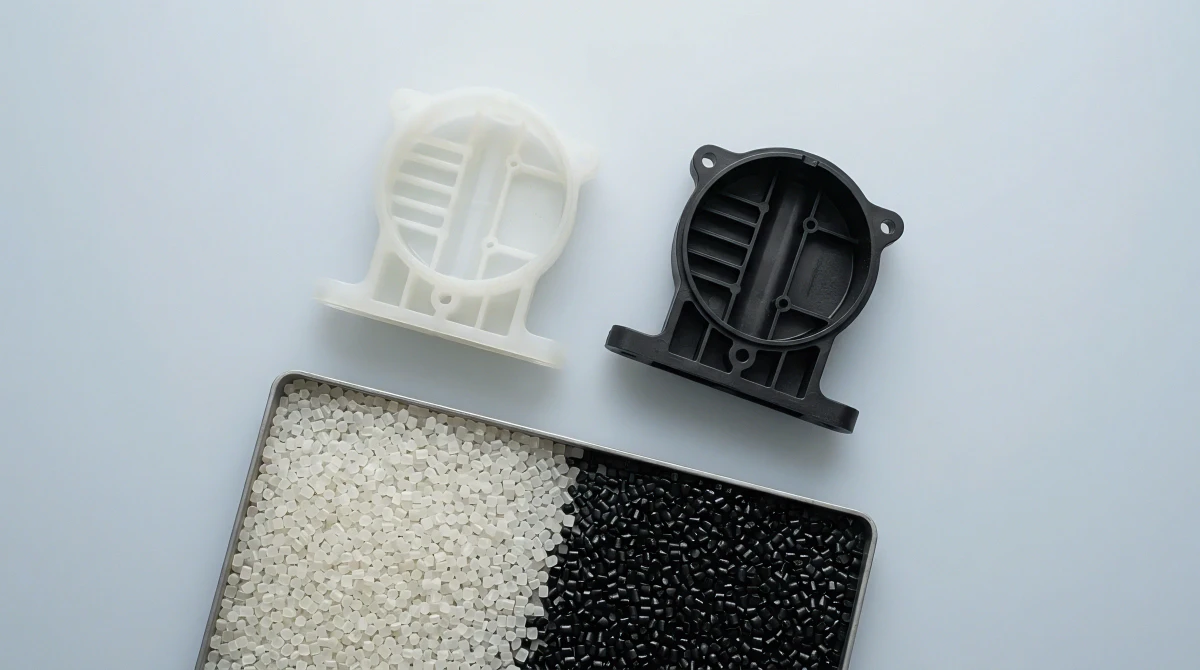
Delrin 500P acetal runs at 80 to 100 °C (176 to 212 °F), with 90 °C (194 °F) as the optimum. Reinforced Zytel nylons run at 70 to 120 °C (155 to 250 °F), with 100 °C (210 °F) preferred. Unreinforced nylon takes a mold about 30 °C (50 °F) cooler. Makrolon 2407 polycarbonate allows 70 to 110 °C (158 to 230 °F). Its specimens for the datasheet were molded at 80 °C. Covestro’s thermally conductive grades take 65 to 100 °C (150 to 212 °F).
Read More

Effect on Shrinkage

DuPont’s nylon guide shows shrinkage rising with mold temperature, charted for a 3 mm part held at 90 MPa (13,050 psi). A hotter mold slows cooling and lets the polymer crystallize more before it freezes. The same guide gives the reverse for post-mold shrinkage, which is high for a part molded cold and low for one molded hot. A cold mold can also leave severe internal stress, which can lead to premature failure. A part that sat at 70 °C in the tool can therefore change size later in a hot vehicle. The size of a nylon part at the press is not its size a day later.

Surface

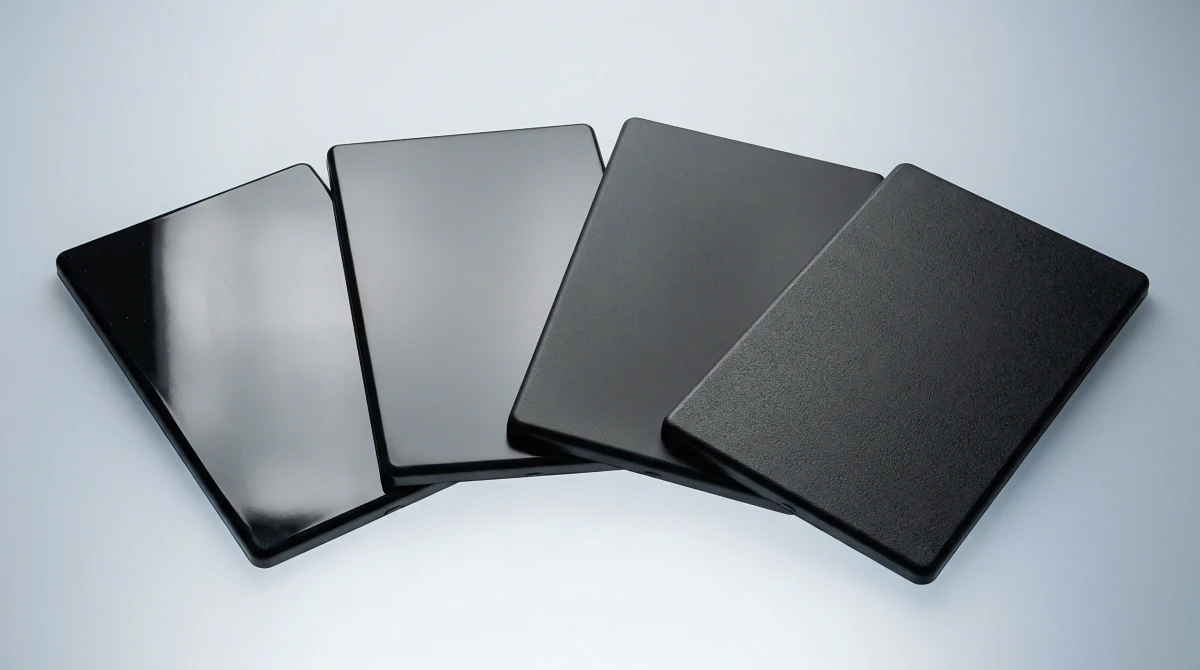
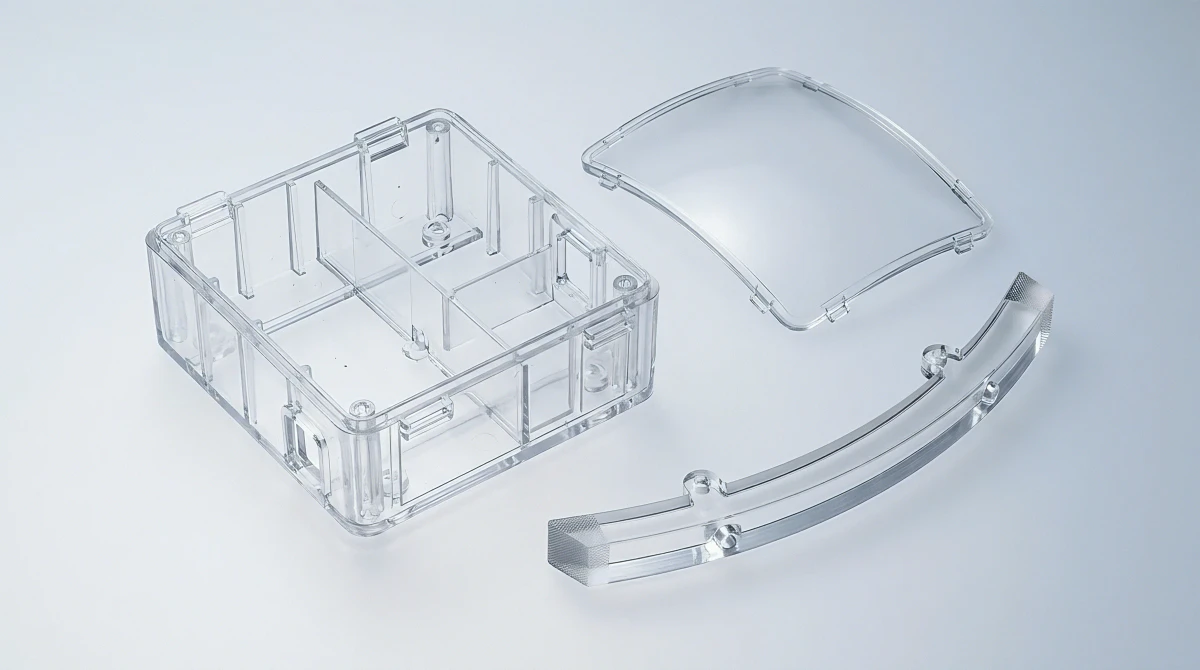
Reinforced nylon molded near 100 °C (210 °F) improves surface finish, mold filling, frosting and dimensional stability. A glass-filled surface is set by mold temperature and fill speed at least as much as by the cavity polish. A frosted glass nylon part points first to a cold cavity wall or a slow fill. On clear polycarbonate the polish sets the surface. How much the part copies from a polished wall at 70 to 110 °C is settled on the first samples, not on the sheet.

Sticking and Flow

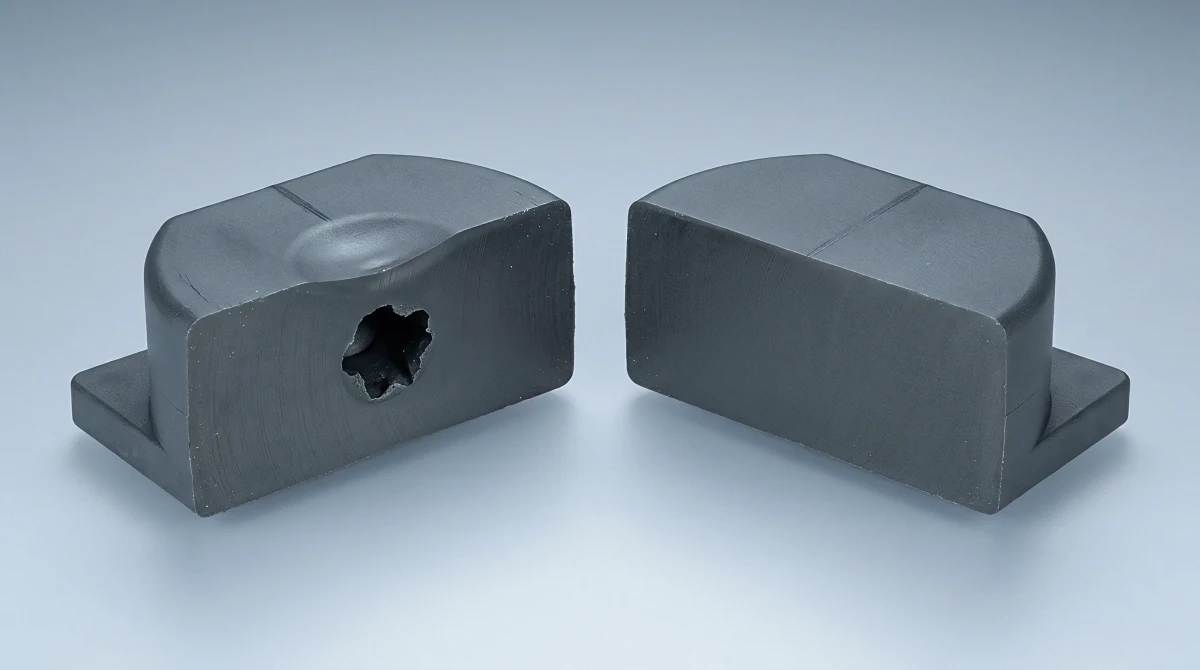
Too much mold heat makes a part stick. Covestro reports that excessive mold temperature on its thermally conductive polycarbonate gives slight delamination, sticking and residue. It suggests 65 to 82 °C (150 to 180 °F) to avoid that. For the same grades mold temperature barely changes flow length. Covestro also uses different temperatures on the two mold halves to hold the part on the chosen side. For Covestro’s thermally conductive polycarbonate, melt temperature buys flow length and mold temperature barely does. The thinnest practical nominal wall for those grades is 1.5 mm (0.06 in). A designer short of flow therefore reaches for melt heat or wall, not for a hotter mold.

Tool Duty

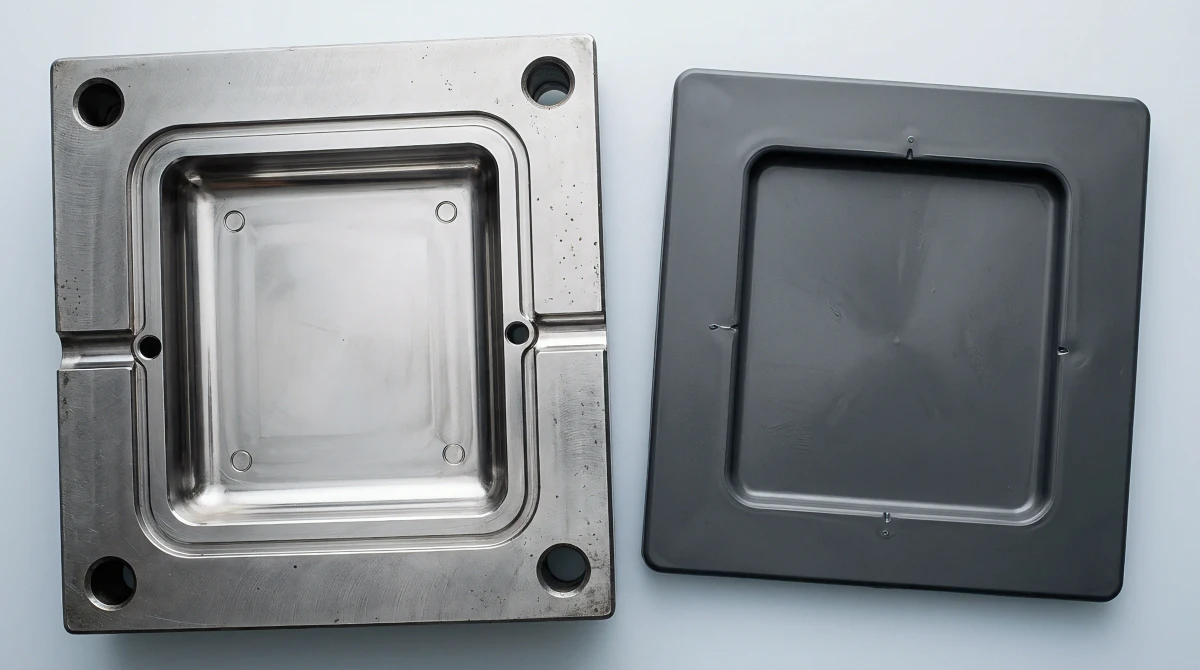
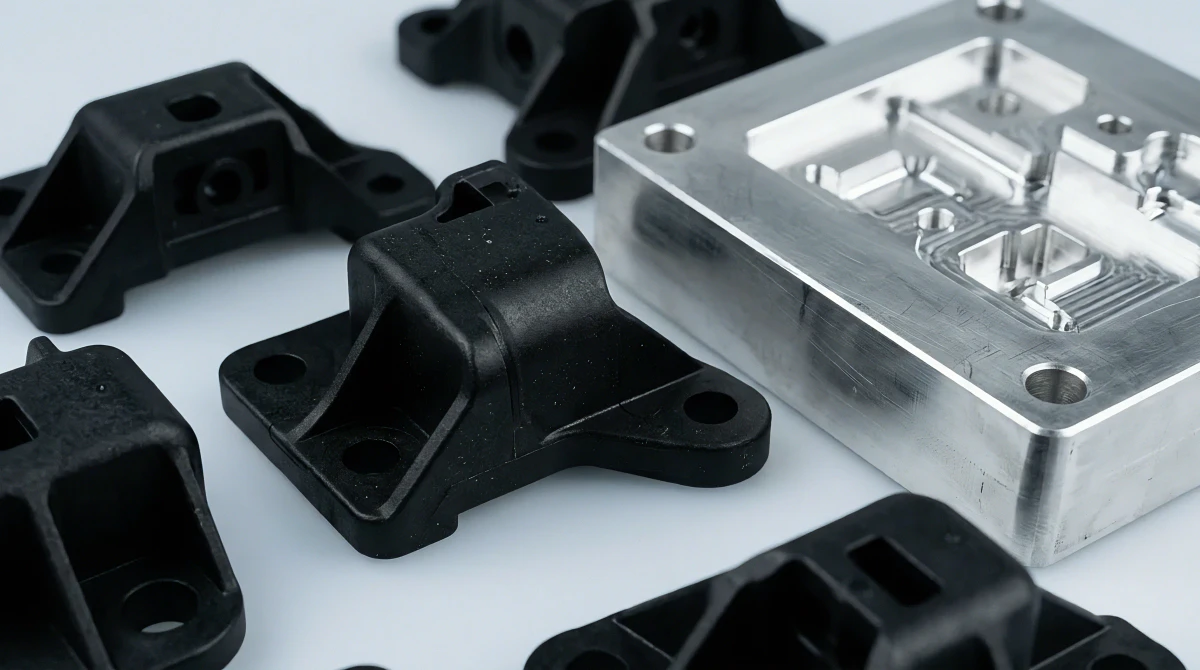
Mold temperature sets the thermal duty of the tool. Reinforced nylon at 100 to 120 °C (210 to 250 °F) is a harder duty than polycarbonate at 65 to 82 °C. An aluminum tool conducts heat 4 to 5 times as well as P-20 steel, so its cavity responds quickly to the cooling circuit. The trade literature counts that among the reasons for a wider process window than steel. It also warns that excessive temperature damages an aluminum tool through galling. Among aluminum mold alloys, thyssenkrupp singles out Weldural and 2024-T351 for coping with long exposure to heat better than most heat-treated grades.

Ejection and Record

Mold temperature works with time. Acetal is ejected hot after packing and cooled in air, and its tool still runs at 80 to 100 °C. An amorphous resin such as polycarbonate needs time in the mold to become stiff, so its cooling circuit matters most. The mold temperature belongs on the first article record with the melt temperature, fill time and transfer position. During a hold time study it is kept constant, so that only the hold time changes. First samples for a shrinkage correction are molded with the mold at the production value. A shrinkage figure taken at another mold temperature is a figure for another process.
Short Shot, Sink and Flash in Injection Molding Traced to Their Cause

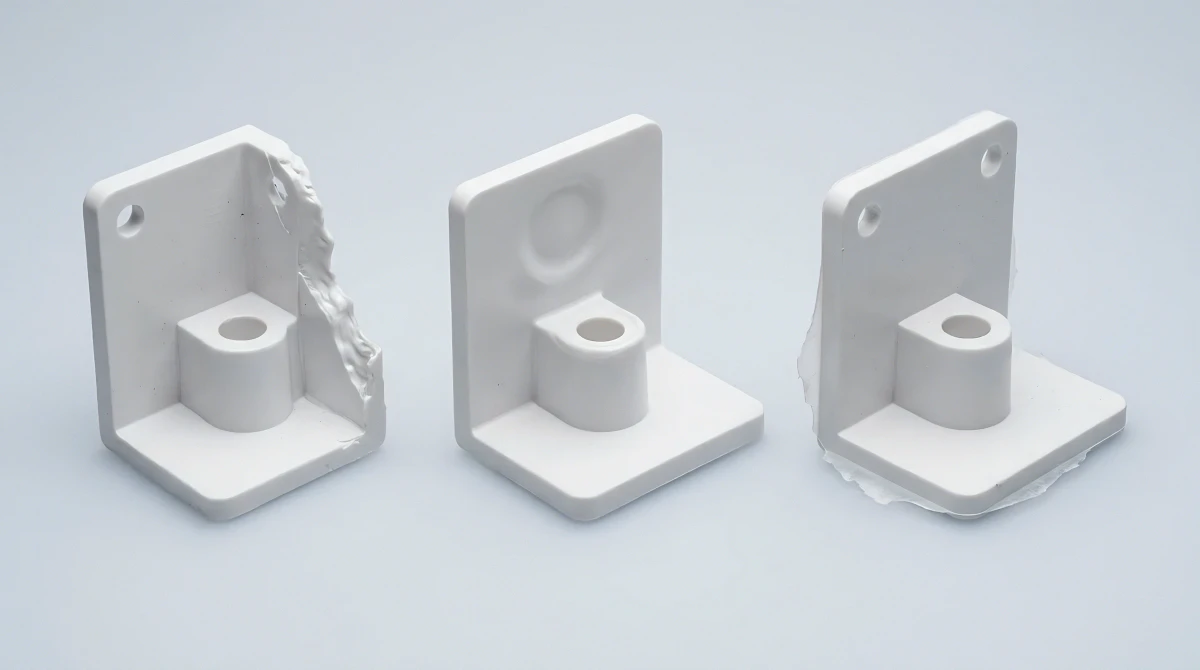
Short shots, sinks and flash traced to the melt volume, pressure and steel behind them, with the checks that find the cause before a setting is moved.

What Short Shots, Sink and Flash Have in CommonA short shot is a part the cavity never finished. BASF's troubleshooting brochure for engineering thermoplastics describes it as a part not completely formed, mainly in the areas furthest from the gate or in thin walls.

Polypropylene for Living Hinges in Injection Molding

Polypropylene for living hinges read from design guides and molding columns: grade choice, hinge dimensions, gating across the web, cooling and the tests that prove a hinge.

Why Polypropylene Makes a Living HingeThe MIT design note explains the mechanism. When a partly oriented polypropylene web is cold drawn on its first flex, it stretches by ratios of 2 or 3 to 1, and its tensile strength rises sharply.

ABS and PC/ABS Blends in Injection Molding

ABS and PC/ABS read from the makers' datasheets: drying, processing windows, shrinkage, snap-fit strain, impact and when the blend earns its stricter dryer.

How ABS and PC/ABS Differ in Injection MoldingABS is a terpolymer, and Moldflow's material page describes its structure: a continuous phase of styrene-acrylonitrile with a dispersed phase of polybutadiene rubber. Acrylonitrile brings hardness and chemical and heat resistance, styrene brings processability, gloss and strength, and butadiene brings toughness and impact strength.

How Many Parts One Aluminum Injection Mold Gives

A mold's life is a toolmaker's rating for a stated resin and cavity count, converted into parts per tool and then into tools per quantity.

What Sets the Number of Parts One Aluminum Mold GivesThree things set it, and they act together. One is the alloy and where in the plate the cavity sits.

Drying Resin and Setting Melt Temperature Before the First Injection Molded Part

Pellets are dried to a measured moisture limit, held there to the hopper, and melted inside a window that the resin maker prints.

What Dry Resin and a Correct Melt Temperature ProtectWater in a nylon melt is not a surface problem. DuPont explains that water carried into the melt triggers hydrolysis, which breaks the polymer down, costs toughness and strength, and makes the melt flow more easily.

Injection Molding Shrinkage Along and Across the Flow by Material

Molding shrinkage read by direction and condition for three resins, with the process settings that move it and the way a first sample turns it into a cavity allowance.

Shrinkage of Polycarbonate, Glass-Filled Nylon 66 and Acetal Along and Across the FlowISO 294-4:2018 sets out the method for measuring mold shrinkage and post-mold shrinkage of injection molded thermoplastic test specimens, parallel and normal to the direction of melt flow. Resin makers print the result in two lines, one per direction.

SPI Mold Finish Grades A-1 to D-3 for Injection Molded Parts

The SPI finish grades read for a buyer, with what each method gives, how texture costs draft, and how a finish is written and kept on an aluminum tool.

What the Twelve SPI Finish Grades SpecifyThe SPI system names a finish by a letter and a number. Its letter gives the finishing method, A for diamond buff, B for grit paper, C for stone and D for dry blast, while the number runs from 1, the finest within a letter, to 3, the coarsest.

Polycarbonate Injection Molding Properties for Clear and Tough Parts

Polycarbonate read from the maker's sheets for a buyer: what it molds like when dry and hot, how thin walls fill, and what to ask of an aluminum tool.

Makrolon 2407 Properties in Metric and Inch UnitsMakrolon 2407 is a low-viscosity, general-purpose, UV-stabilized, easy-release polycarbonate with a melt volume-flow rate of 19 cm³/10 min at 300 °C and 1.2 kg under ISO 1133. Its ISO short name is ISO 7391-PC,MLR,(,,)-18-9.

Glass-Filled Nylon 66 in Injection Molding and What It Does to an Aluminum Tool

How a glass-reinforced nylon behaves dry and conditioned, in the press and on an aluminum tool, and what its datasheet leaves for the buyer to settle.

Properties of 30 Percent Glass-Filled Nylon 66 Dry and ConditionedPA66 with 30 percent glass is one of the most common reinforced engineering grades, and BASF's Ultramid A3WG6 LT BK, a laser-transparent black grade whose sheet is dated 09/2026, is a clear example of how the family reads. The sheet names the polymer PA66-GF30 and gives its typical values for uncolored product at 23 °C.

Acetal Homopolymer Injection Molding Properties and Gate Rules

Delrin 500P read from the maker's sheet and molding tips: why acetal shrinks and needs a packed gate, how hot the melt may run, and what to check on an aluminum tool.

Delrin 500P Properties in Metric and Inch UnitsDelrin 500P NC010 is a medium-viscosity acetal homopolymer, and Delrin prints its ISO values as the reference beside 500CPE on its own product data sheet. The grade has a melt mass-flow rate of 15 g/10 min at 190 °C and 2.16 kg under ISO 1133.

Request an Injection Molding Quote

Send the 2D drawing and the 3D file, with the quantity and the stage of the project. An engineer replies within 1 working day.

The quote form, the mutual NDA and the private folder for your files are on Protolis Atelier, with Injection Molding chosen.

Request a Quote