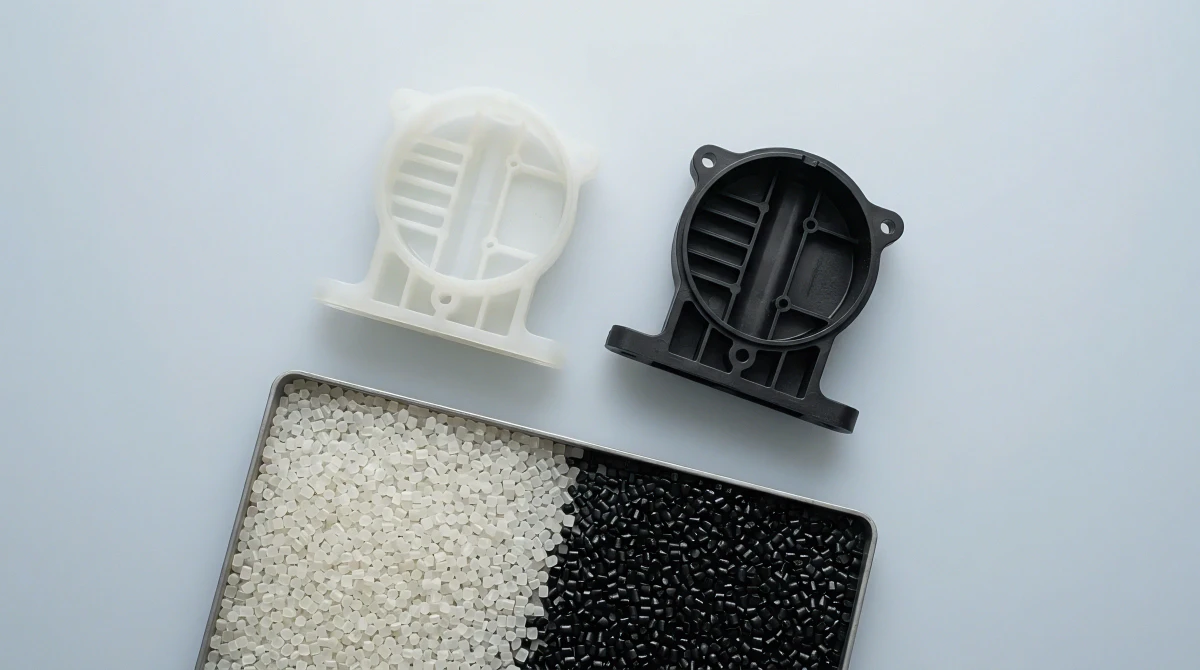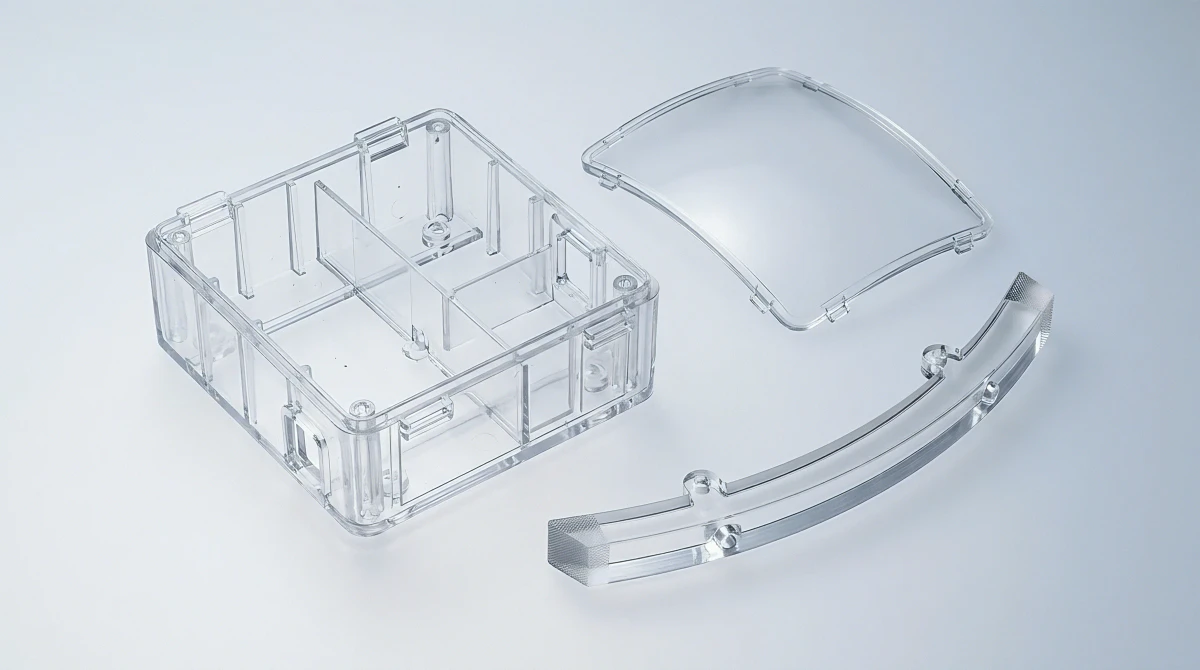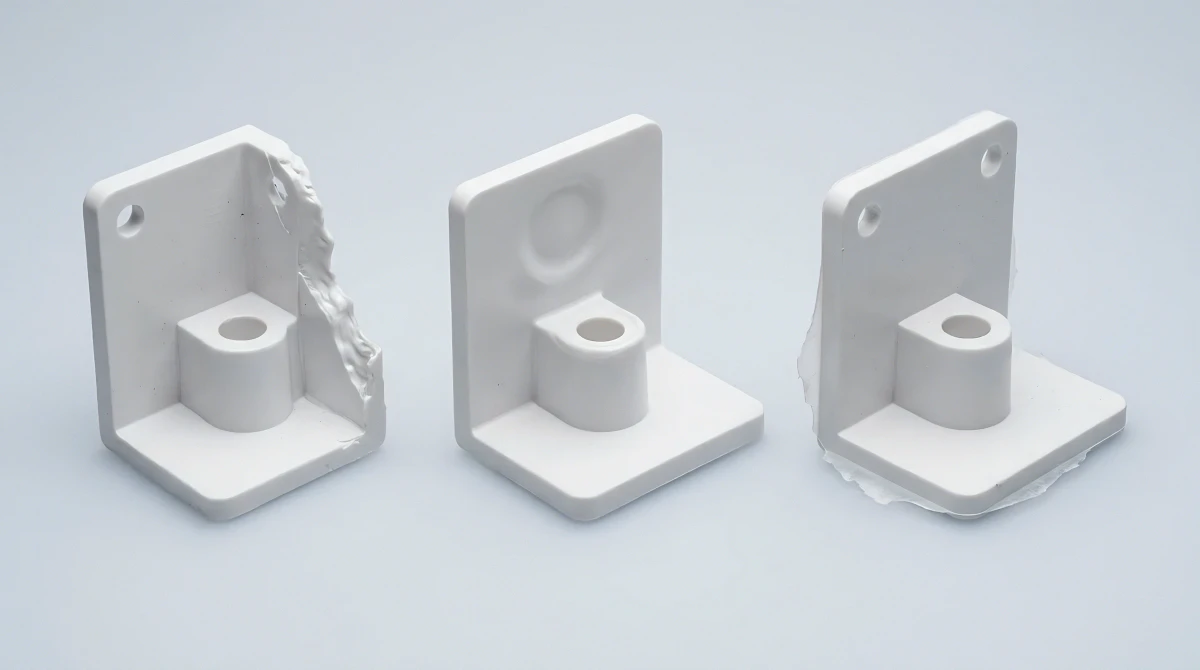
Flow Length

Flow length is the distance the melt travels from the gate to the last point it fills, set mostly by wall thickness and melt temperature.

Every Flow Length article of the Injection Molding Resources, newest first, each written from published standards, research and makers’ data.

Meaning

Flow length is the distance the melt travels from the gate to the last point it fills, set mostly by wall thickness and melt temperature. A thin wall at the end of a long flow path is the hard case. In polycarbonate, no machine setting moves fill as much as the wall does. When flow length runs short, the part fills short.

Wall Effect

Covestro’s studies on its conductive polycarbonate are the cleanest published statement. Going from a 1.5 to a 2.0 mm (0.059 to 0.079 in) wall lengthens the flow path by 50 to 100 percent. The gain depends on processing conditions and grade. A wall of 1.5 mm is about the thinnest practical nominal wall for those grades.
Read More

Melt and Mold

A hotter melt buys flow length, and that is the only lever left when the wall cannot grow. Melt temperature has a ceiling, because too much heat warms the mold locally and the part sticks. For Covestro’s conductive grades, mold temperature barely changes flow length.

Design Case

Take a polycarbonate part whose flow path runs 150 mm (5.9 in). At a 1.2 mm wall its far end is hard to fill. At 2.0 mm it fills with a hold pressure inside the resin’s range.

Gate Placement

For long flow lengths in glass nylon, DuPont places the gate so the melt strikes a core or a wall. That breaks up fiber orientation along the path.

Cycle Table

In a cycle breakdown, fill time belongs to the resin’s viscosity, the gate size and the wall. The Makrolon TC step from 1.5 to 2.0 mm sits in that row.

Short Shot, Sink and Flash in Injection Molding Traced to Their Cause

Short shots, sinks and flash traced to the melt volume, pressure and steel behind them, with the checks that find the cause before a setting is moved.

What Short Shots, Sink and Flash Have in CommonA short shot is a part the cavity never finished. BASF's troubleshooting brochure for engineering thermoplastics describes it as a part not completely formed, mainly in the areas furthest from the gate or in thin walls.
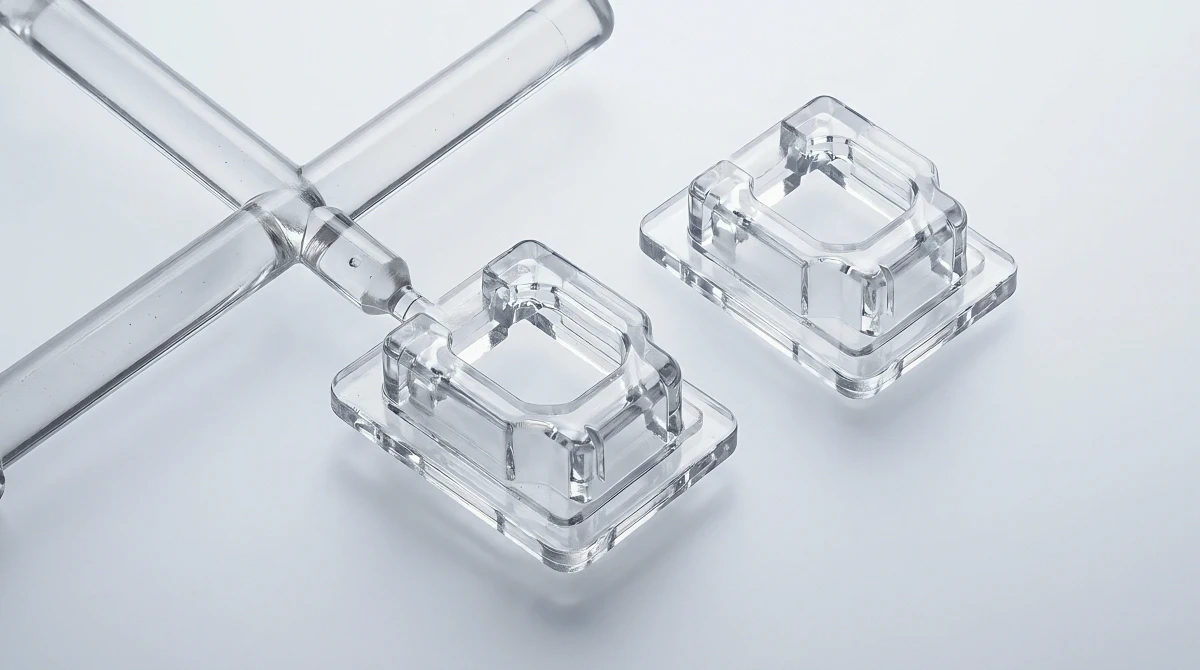
Gate Location and Gate Freeze in Injection Molding

Where a gate goes, how big it is and how long it stays open, with the weight study that sets hold time from the gate itself.

How Gate Location and Gate Freeze Shape a Molded PartAutodesk's Moldflow design rules open with the claim that gate position strongly affects material orientation and warpage, and that changing the gate is sometimes the only way to control orientation. Every gate injects under the same pressure, and the aim of gating is to avoid overpacking some paths while others are still filling, because unequal packing gives unequal shrinkage.

Cycle Time and Parts per Hour in a Bridge Injection Molding Run

A cycle is the sum of fill, hold, cooling and press motions, and a supplier's number is only as good as the pack and cooling times behind it.

What Sets Cycle Time and Parts per HourA molding cycle is a loop of seven moves: the mold closes, the cavity fills, the pack and hold phase runs, the part cools, the mold opens, the part is ejected, and the screw recovers for the next shot. Recovery runs while the part cools, which is why DuPont's nylon guide asks for screw speeds adjusted so that screw retraction time is shorter than the cooling phase.

Drying Resin and Setting Melt Temperature Before the First Injection Molded Part

Pellets are dried to a measured moisture limit, held there to the hopper, and melted inside a window that the resin maker prints.

What Dry Resin and a Correct Melt Temperature ProtectWater in a nylon melt is not a surface problem. DuPont explains that water carried into the melt triggers hydrolysis, which breaks the polymer down, costs toughness and strength, and makes the melt flow more easily.

Polycarbonate Injection Molding Properties for Clear and Tough Parts

Polycarbonate read from the maker's sheets for a buyer: what it molds like when dry and hot, how thin walls fill, and what to ask of an aluminum tool.

Makrolon 2407 Properties in Metric and Inch UnitsMakrolon 2407 is a low-viscosity, general-purpose, UV-stabilized, easy-release polycarbonate with a melt volume-flow rate of 19 cm³/10 min at 300 °C and 1.2 kg under ISO 1133. Its ISO short name is ISO 7391-PC,MLR,(,,)-18-9.

Request an Injection Molding Quote

Send the 2D drawing and the 3D file, with the quantity and the stage of the project. An engineer replies within 1 working day.

The quote form, the mutual NDA and the private folder for your files are on Protolis Atelier, with Injection Molding chosen.

Request a Quote