Flame Retardant

A flame-retardant grade is a resin compounded to reach a higher flammability class, such as UL 94 V-0, than its base grade.

Every Flame Retardant article of the Injection Molding Resources, newest first, each written from published standards, research and makers’ data.

Meaning

A flame-retardant grade is a resin compounded to reach a higher flammability class, such as UL 94 V-0, than its base grade. It is a different grade with its own datasheet and listing. The three base grades read in these resources sit in the lowest classes at the walls listed. A part that needs V-0 therefore names a flame-retardant grade in full.

Drawing Note

A drawing that says only flame retardant asks for none of the UL 94 tests. Naming UL 94 V-0 at 1.5 mm asks for one class at one wall. The rating belongs to the grade, the thickness and the color recorded for it.
Read More

Processing

DuPont runs its flame-retardant nylon grades at a melt about 15 °C (25 °F) cooler than the reinforced base grades. Heat stabilization and glass fiber do nothing for burning behavior. Zytel 70G33HS1L stays HB at 0.75 and 1.5 mm despite both. Makrolon 2407 is V-2 at 0.75 mm, so V-0 in a thin polycarbonate wall also takes a flame-retardant grade.

Acetal Warning

DuPont never mixes or processes acetal with flame-retardant resins or with halogenated polymers such as PVC. The HCl or HBr they release causes fast degradation of the acetal. A tool, barrel or hot runner that last ran a flame-retardant grade is cleaned before acetal runs in it.

Document Chain

The resin maker holds the listing and the molder buys a grade that carries it. The order names the grade with its flame-retardant suffix, the wall and the color. The UL Yellow Card number or listing entry is checked against the order.

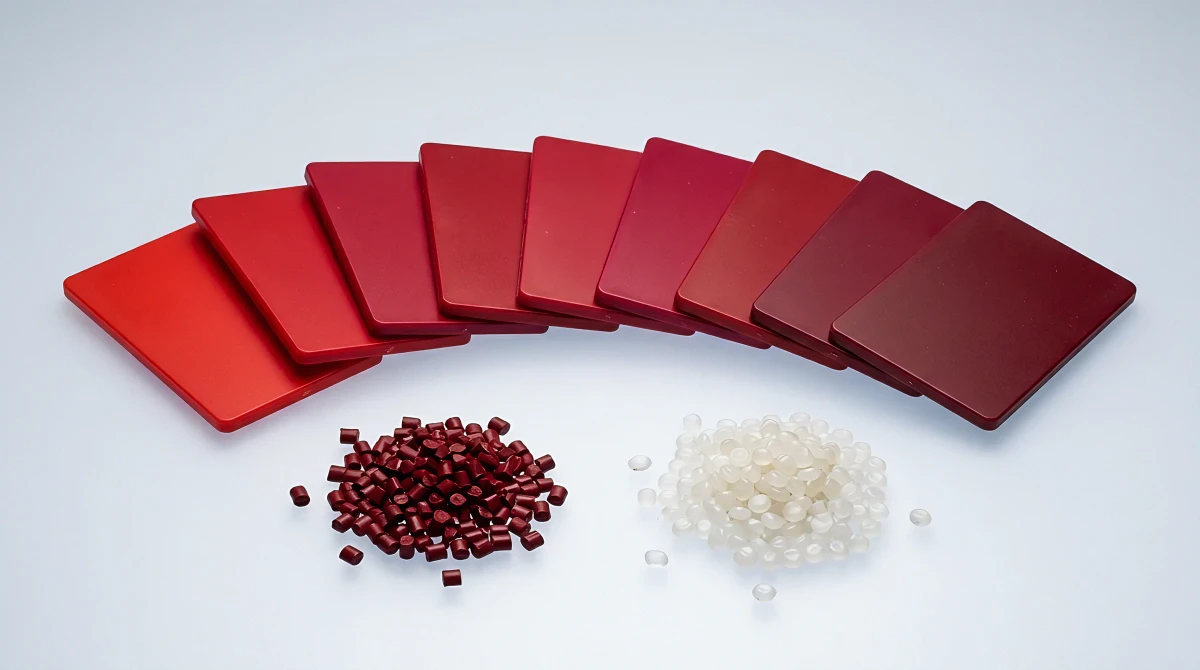
Color Matching Molded Parts With Masterbatch in a Production Run

How masterbatch color is matched, dosed, distributed and measured so that every lot of a molded part matches the standard agreed at the first article.

How Masterbatch Color Is Held Across a RunThree things have to stay constant for color to hold. The masterbatch has to be the same formulation at the same let-down ratio, the melt has to distribute it evenly, and the part has to be measured the same way each time.
IEC 60695-2-12 Glow Wire Flammability Index for Molded Parts

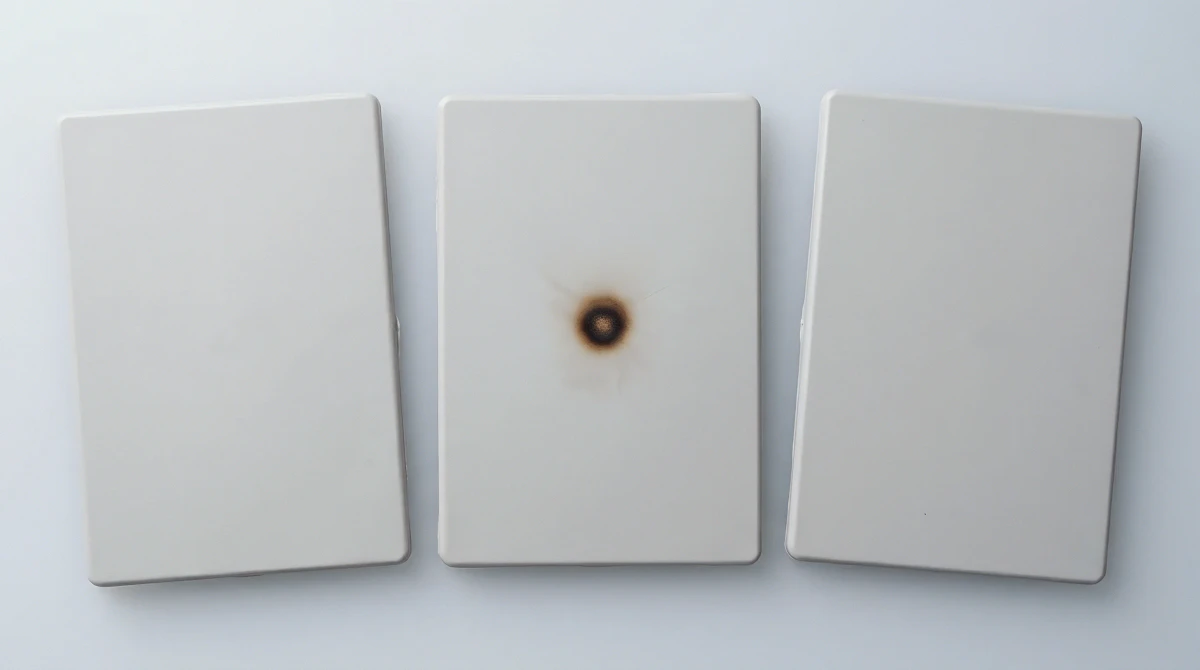
The glow wire flammability index read for a buyer: what IEC 60695-2-12 measures, how makers print it by thickness, and what a molded part's file can carry from it.

What IEC 60695-2-12 MeasuresThe scope, printed on the IEC webstore and in the 2021 preview, is short. The standard specifies the details of the glow wire test applied to specimens of solid electrical insulating materials, or other solid materials, to determine the glow wire flammability index, GWFI.

Drying Resin and Setting Melt Temperature Before the First Injection Molded Part

Pellets are dried to a measured moisture limit, held there to the hopper, and melted inside a window that the resin maker prints.

What Dry Resin and a Correct Melt Temperature ProtectWater in a nylon melt is not a surface problem. DuPont explains that water carried into the melt triggers hydrolysis, which breaks the polymer down, costs toughness and strength, and makes the melt flow more easily.

UL 94 Flammability Ratings Explained for Molded Plastic Parts

The UL 94 classes read as a buyer needs them: what each test does, how three common resin sheets print a rating, and what a supplier should show.

What UL 94 Measures and What It Is NotUL 94 is a family of small-scale flame tests on strips and plaques of plastic, run under laboratory conditions. UL's own page on combustion tests for plastics groups the classifications into twelve: HB, V-0, V-1 and V-2, 5VA and 5VB, VTM-0, VTM-1 and VTM-2, and HF-1, HF-2 and HBF for foams.

Acetal Homopolymer Injection Molding Properties and Gate Rules

Delrin 500P read from the maker's sheet and molding tips: why acetal shrinks and needs a packed gate, how hot the melt may run, and what to check on an aluminum tool.

Delrin 500P Properties in Metric and Inch UnitsDelrin 500P NC010 is a medium-viscosity acetal homopolymer, and Delrin prints its ISO values as the reference beside 500CPE on its own product data sheet. The grade has a melt mass-flow rate of 15 g/10 min at 190 °C and 2.16 kg under ISO 1133.

Request an Injection Molding Quote

Send the 2D drawing and the 3D file, with the quantity and the stage of the project. An engineer replies within 1 working day.

The quote form, the mutual NDA and the private folder for your files are on Protolis Atelier, with Injection Molding chosen.

Request a Quote