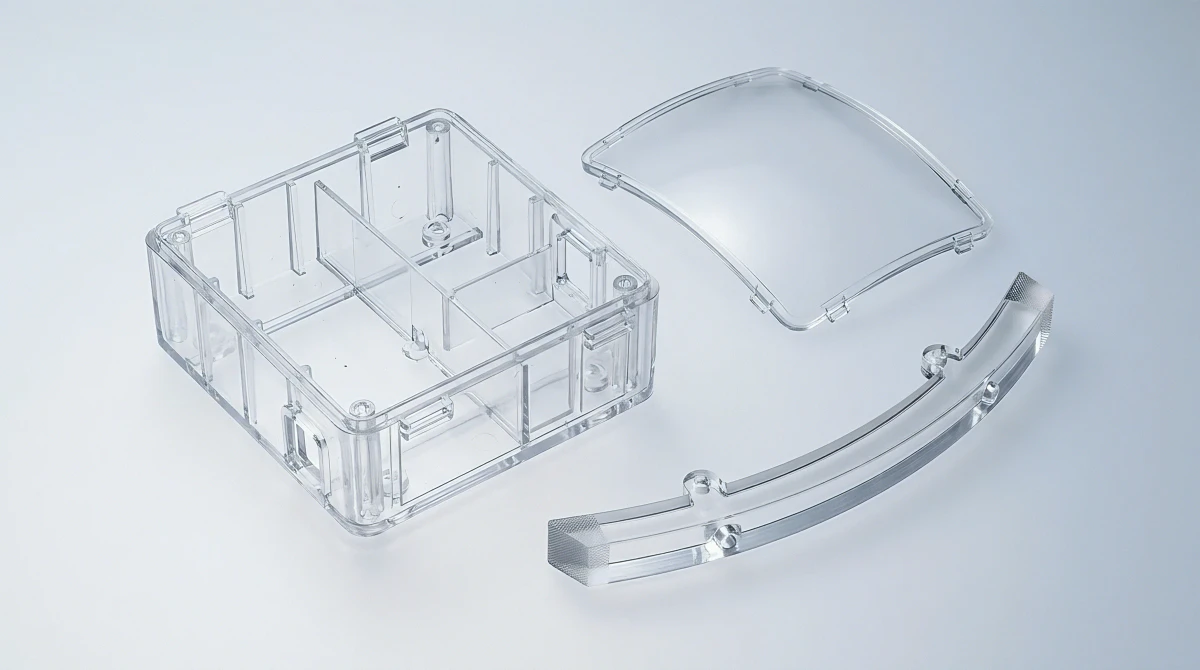
Specimen

A specimen is a test piece molded to a standard's shape and conditions, such as the plaque behind a shrinkage figure.

Every Specimen article of the Injection Molding Resources, newest first, each written from published standards, research and makers’ data.

Meaning

A specimen is a test piece molded to a standard’s shape and conditions, such as the plaque behind a shrinkage figure. Every datasheet value comes from one. A part is not a specimen, and the gap between the two is where most surprises arise. A buyer reads each value with the specimen and the conditions that made it.

Shrinkage Plaque

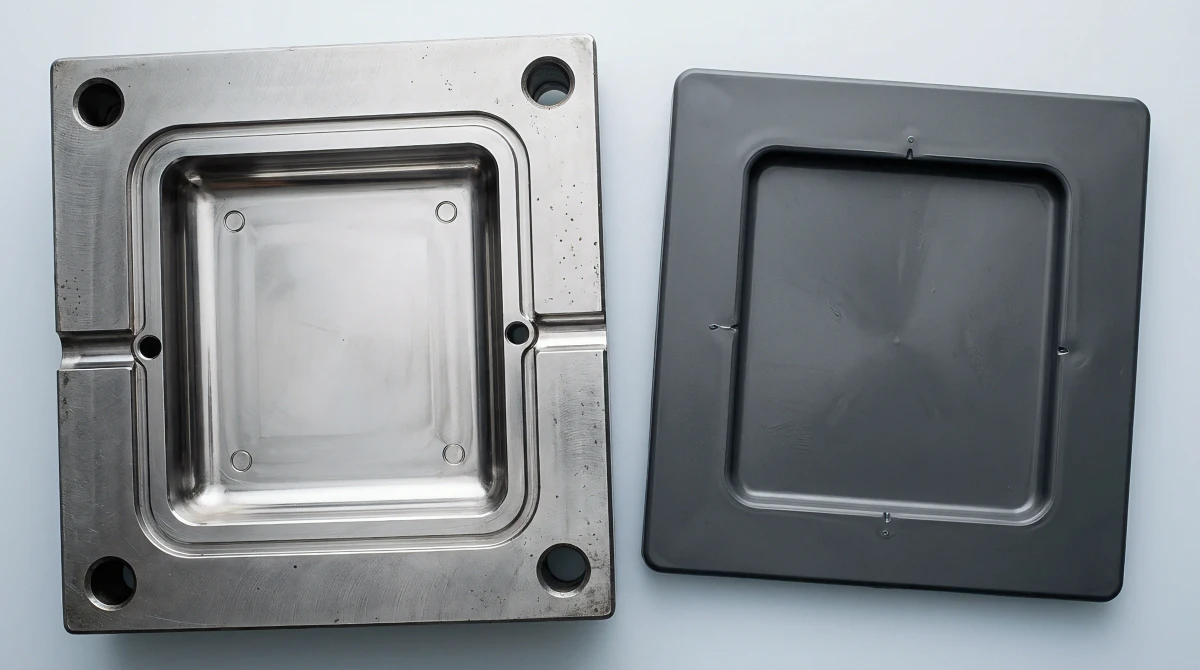
ISO 294-4 measures mold shrinkage on injection-molded thermoplastic specimens. DuPont’s nylon guide uses a fan-gated plate of 60 by 60 by 2.0 mm. It is measured at 23 °C, dry as molded, after 24 to 48 hours at 23 °C and 50 percent relative humidity. A flat part with an even wall, gated at one edge, resembles that plaque, and a part with deep ribs and several gates does not.
Read More

Molding Conditions

Covestro molds its Makrolon 2407 specimens at a 280 °C melt, an 80 °C mold and 200 mm/s injection velocity. Its production advice is a 300 °C melt and a 70 to 110 °C mold. A production part is molded at the conditions that fill it. Its shrinkage, residual stress and impact performance differ from the printed values by an amount the sheet does not quantify.

Flame Strip

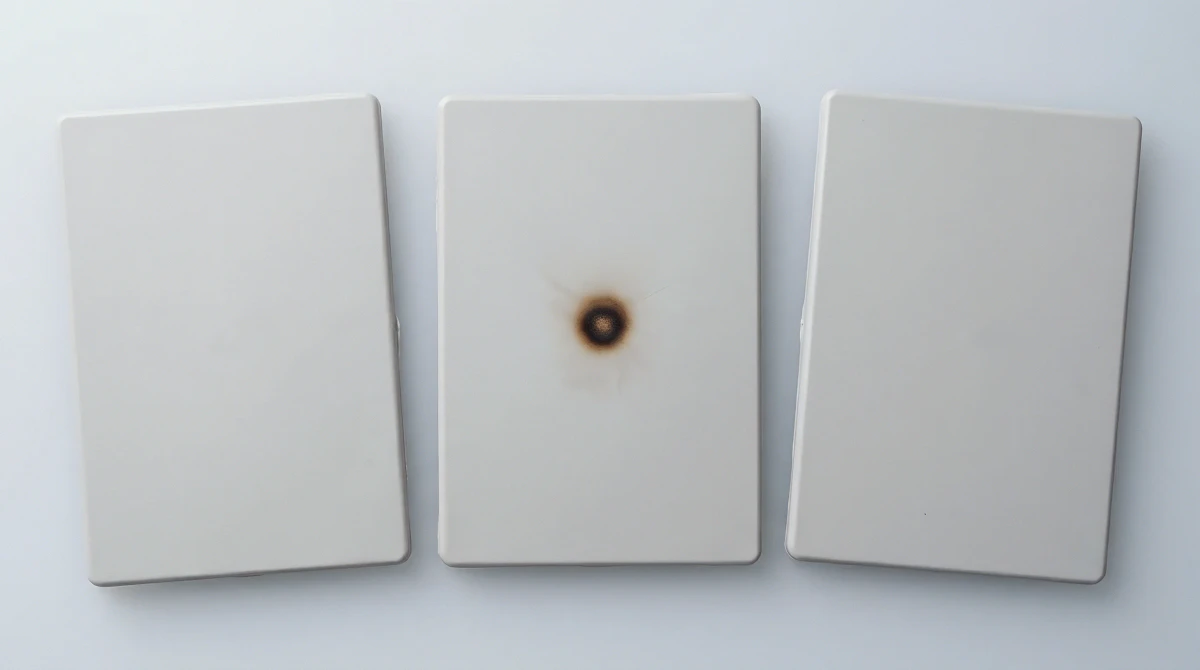
UL 94 tests strips 12.7 mm wide and 127 mm long (0.5 by 5 in), five to a set for the vertical classes. The label carries the strip’s thickness. Thin film is rolled into a cone on a 12.7 mm (0.5 in) mandrel for the VTM classes. V and 5V specimens are conditioned two days at 23 °C and also seven days at 70 °C before testing.

Transfer to the Part

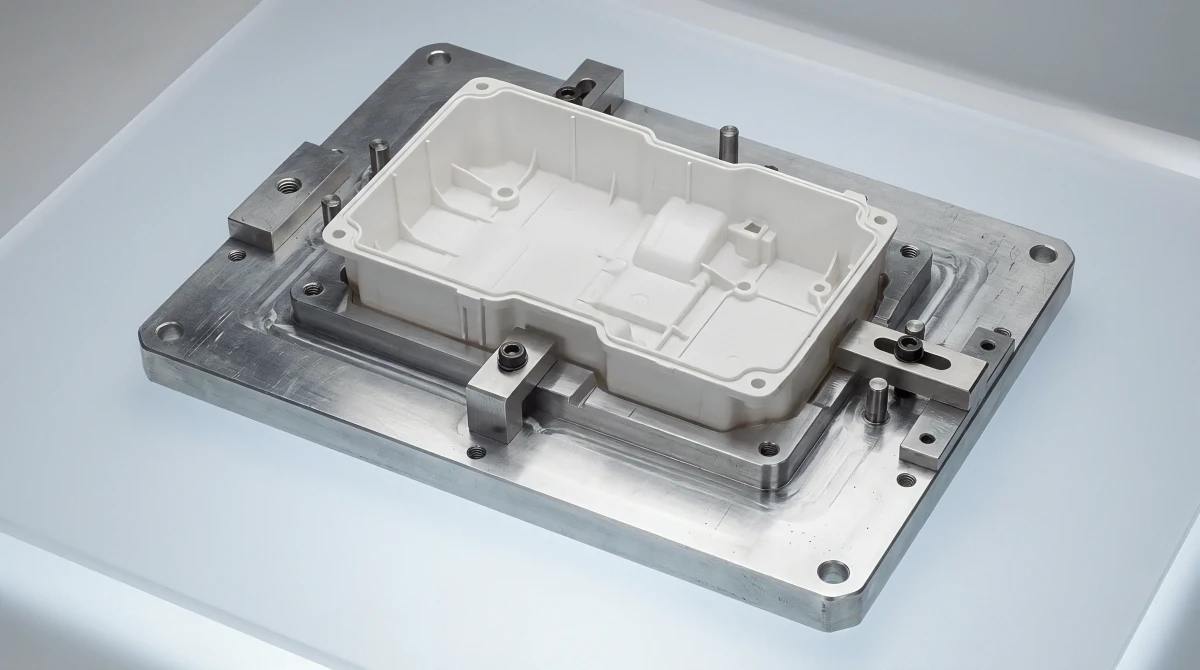
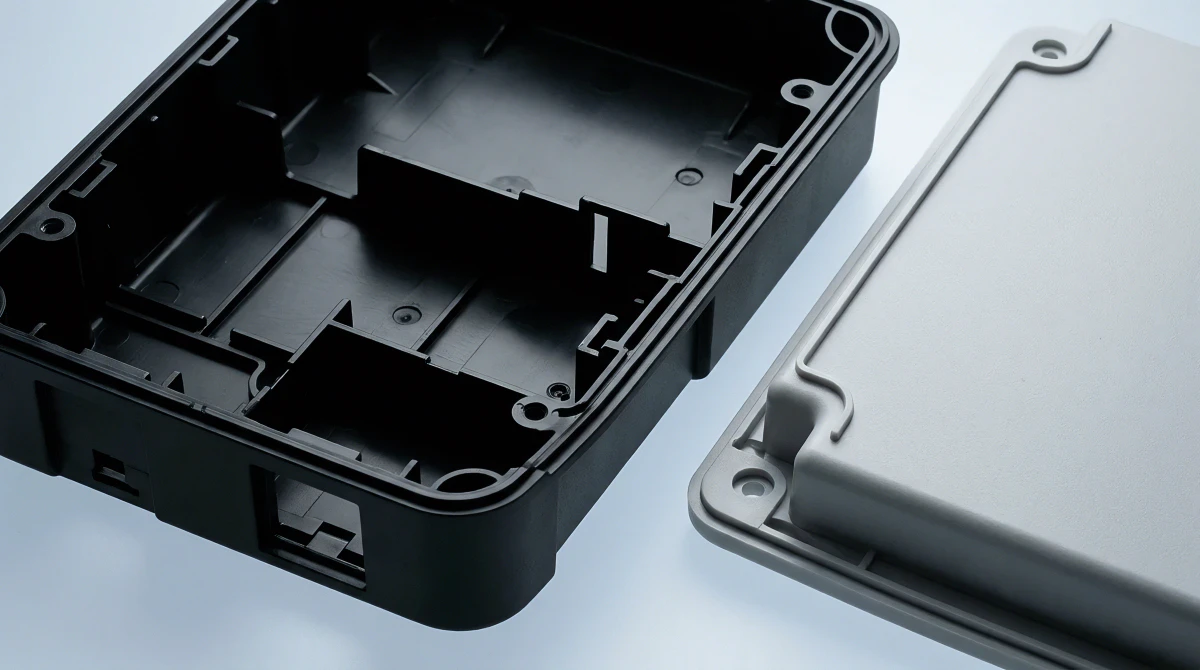
A molded enclosure has ribs, bosses, corners and a gate vestige, and none of those are in the test. A rating or a value transfers through the resin and the thickness. The transfer is weakest at thin ribs and bosses below the thinnest listed wall. The first article measured on the real part is the property that counts.
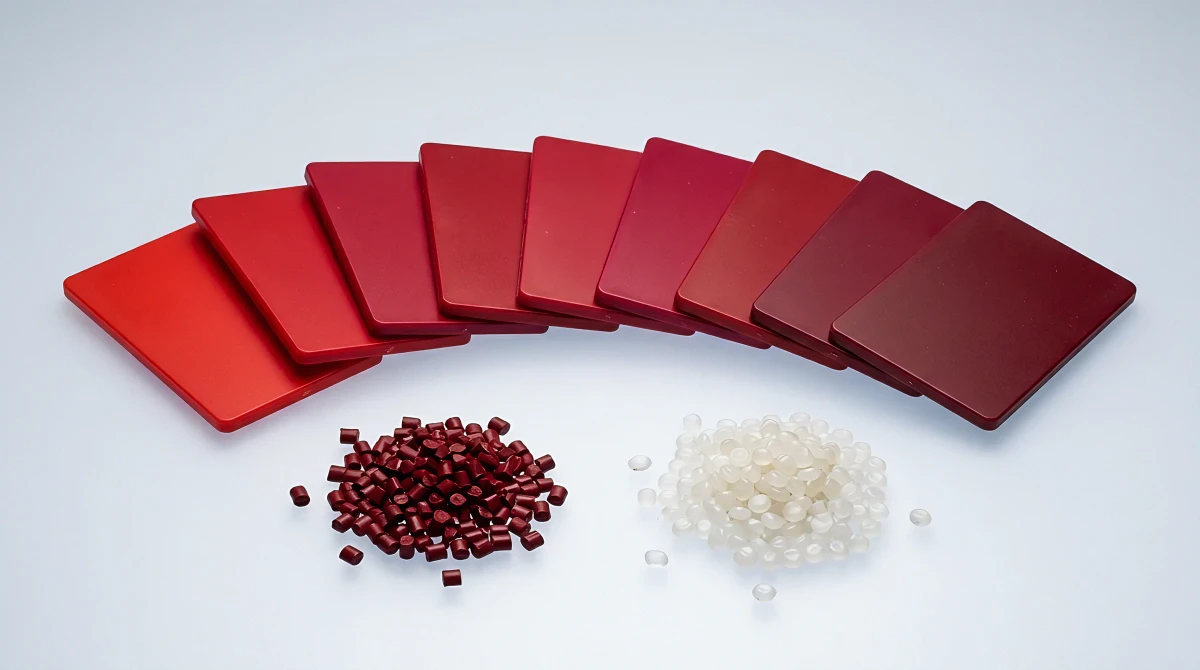
Color Matching Molded Parts With Masterbatch in a Production Run

How masterbatch color is matched, dosed, distributed and measured so that every lot of a molded part matches the standard agreed at the first article.

How Masterbatch Color Is Held Across a RunThree things have to stay constant for color to hold. The masterbatch has to be the same formulation at the same let-down ratio, the melt has to distribute it evenly, and the part has to be measured the same way each time.

IEC 60695-2-12 Glow Wire Flammability Index for Molded Parts

The glow wire flammability index read for a buyer: what IEC 60695-2-12 measures, how makers print it by thickness, and what a molded part's file can carry from it.

What IEC 60695-2-12 MeasuresThe scope, printed on the IEC webstore and in the 2021 preview, is short. The standard specifies the details of the glow wire test applied to specimens of solid electrical insulating materials, or other solid materials, to determine the glow wire flammability index, GWFI.

How Temperature Changes the Size of a Molded Plastic Part at the Gauge

How coefficients of expansion turn a few degrees of gauge temperature into hundredths of a millimeter, by resin and direction, and what a drawing should state.

Linear Thermal Expansion of Polycarbonate, Glass-Filled Nylon and AcetalLinear thermal expansion is reported on datasheets as a coefficient, the length change per unit length per degree. The three makers print it by the ISO or TMA method, and they differ in how finely they split it.

Injection Molding Shrinkage Along and Across the Flow by Material

Molding shrinkage read by direction and condition for three resins, with the process settings that move it and the way a first sample turns it into a cavity allowance.

Shrinkage of Polycarbonate, Glass-Filled Nylon 66 and Acetal Along and Across the FlowISO 294-4:2018 sets out the method for measuring mold shrinkage and post-mold shrinkage of injection molded thermoplastic test specimens, parallel and normal to the direction of melt flow. Resin makers print the result in two lines, one per direction.

UL 94 Flammability Ratings Explained for Molded Plastic Parts

The UL 94 classes read as a buyer needs them: what each test does, how three common resin sheets print a rating, and what a supplier should show.

What UL 94 Measures and What It Is NotUL 94 is a family of small-scale flame tests on strips and plaques of plastic, run under laboratory conditions. UL's own page on combustion tests for plastics groups the classifications into twelve: HB, V-0, V-1 and V-2, 5VA and 5VB, VTM-0, VTM-1 and VTM-2, and HF-1, HF-2 and HBF for foams.

Polycarbonate Injection Molding Properties for Clear and Tough Parts

Polycarbonate read from the maker's sheets for a buyer: what it molds like when dry and hot, how thin walls fill, and what to ask of an aluminum tool.

Makrolon 2407 Properties in Metric and Inch UnitsMakrolon 2407 is a low-viscosity, general-purpose, UV-stabilized, easy-release polycarbonate with a melt volume-flow rate of 19 cm³/10 min at 300 °C and 1.2 kg under ISO 1133. Its ISO short name is ISO 7391-PC,MLR,(,,)-18-9.

Request an Injection Molding Quote

Send the 2D drawing and the 3D file, with the quantity and the stage of the project. An engineer replies within 1 working day.

The quote form, the mutual NDA and the private folder for your files are on Protolis Atelier, with Injection Molding chosen.

Request a Quote