Melt Temperature

Melt temperature is the temperature of the molten plastic itself, read with a needle pyrometer in an air shot.

Every Melt Temperature article of the Injection Molding Resources, newest first, each written from published standards, research and makers’ data.

Meaning

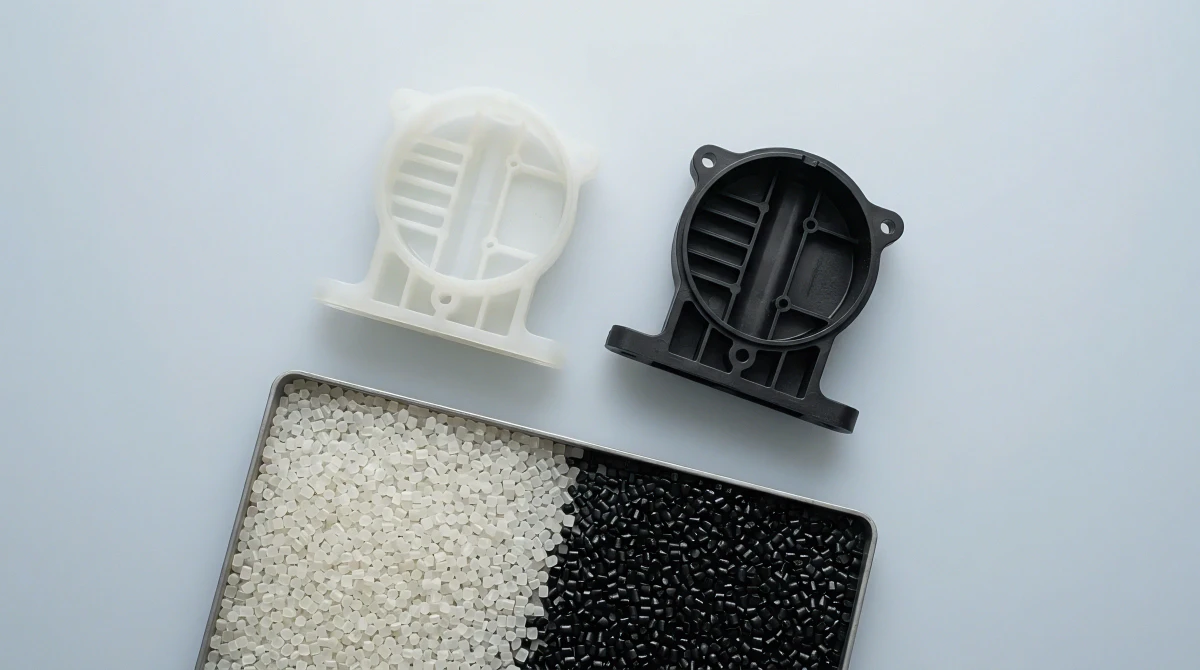
Melt temperature is the temperature of the molten plastic itself, read with a needle pyrometer in an air shot. It is not the setpoint of a heater band. Resin makers print a window for it, and each window comes with a time the melt may sit in the barrel. Too cold and unmelted pellets travel into the part, too hot or too long and the resin degrades.

Measurement

DuPont asks for the reading to be taken from an air shot with a needle probe. The check is repeated through a run, so drift out of the limits is caught. It is repeated again whenever the cycle changes, because a longer or shorter cycle changes how long the melt sits. For semi-crystalline nylons the cylinder profile is relatively flat. No zone is set below the polymer’s melting point. The melt temperature goes on the first article record with how it was measured. A lot record that shows the melt sat in its window is evidence a buyer can ask for.
Read More

Typical Range

Reinforced Zytel nylon 66 runs at 285 to 305 °C (545 to 580 °F), with 295 °C as the optimum for 70G33HS1L. For reinforced nylon 6 the window is 260 to 280 °C (500 to 540 °F). Delrin acetal runs at 215 °C (419 °F) with a tolerance of 5 °C. Makrolon 2407 polycarbonate runs at 280 to 320 °C (536 to 608 °F), with 300 °C as standard. Covestro’s thermally conductive grades run hotter, at 300 to 350 °C (572 to 662 °F), ideally 310 to 330 °C.

Residence and Nozzle

Melt temperature and time in the barrel are read together. DuPont’s Delrin plot shows the allowed residence time falling as the melt gets hotter. Standard Delrin stays stable for more than 30 minutes at 215 °C. The nylon guide draws its cylinder profiles for hold-up times of 3, 7 and 11 minutes. Cylinder temperatures fall as residence grows. Covestro keeps the shot at 2 to 3 screw diameters so its polycarbonate does not degrade. The nozzle runs cooler than the melt for acetal. DuPont sets the nozzle or hot runner at 190 °C (374 °F) for Delrin. A skin of melt stays still against the metal wall there, and higher settings degrade it after a few hours of running.

Shear and Fiber

The screw heats the melt as well as the bands. Back pressure and screw speed set that shear heat. DuPont keeps nylon back pressure near 0.3 MPa (50 psi), while Covestro asks 5.5 to 7 MPa (800 to 1,000 psi) for its conductive polycarbonate. Too little back pressure on that resin gives up useful shear heating in the barrel. For glass-reinforced nylon 66, DuPont proposes a rear zone of at least 290 °C. A low rear zone raises torque and retraction time while it shortens the fibers. The largest loss is in impact properties.

Start-Up and Stops

A cold nylon machine starts with the cylinder 10 °C (20 °F) below the lowest melt temperature. It then soaks for at least 20 minutes before the zones are raised. The first reading of a trial is the melt, not the part. On a short stop the melt is lowered to 30 °C (60 °F) under the recommended value. Frequent air shots then clear resin that is starting to degrade.

Flow and Moisture Effects

A hotter melt lengthens the flow path, and wall thickness sets how much it is needed. Covestro warns that too much melt heat warms the mold locally, so the part sticks and ejects badly. The right melt temperature for its conductive grades balances filling against overheating the tool. An aluminum tool pulls heat from the melt faster than steel at the same mold temperature. A resin set for a steel tool may need its melt or mold temperature rechecked in aluminum. Water and heat act together on nylon. Hotter melts lower the moisture a nylon can carry, and DuPont asks for 0.1 percent above 315 °C (600 °F). Splay on a part points first to wet resin. Melt temperature and residence time are the next checks, before the tool is blamed.
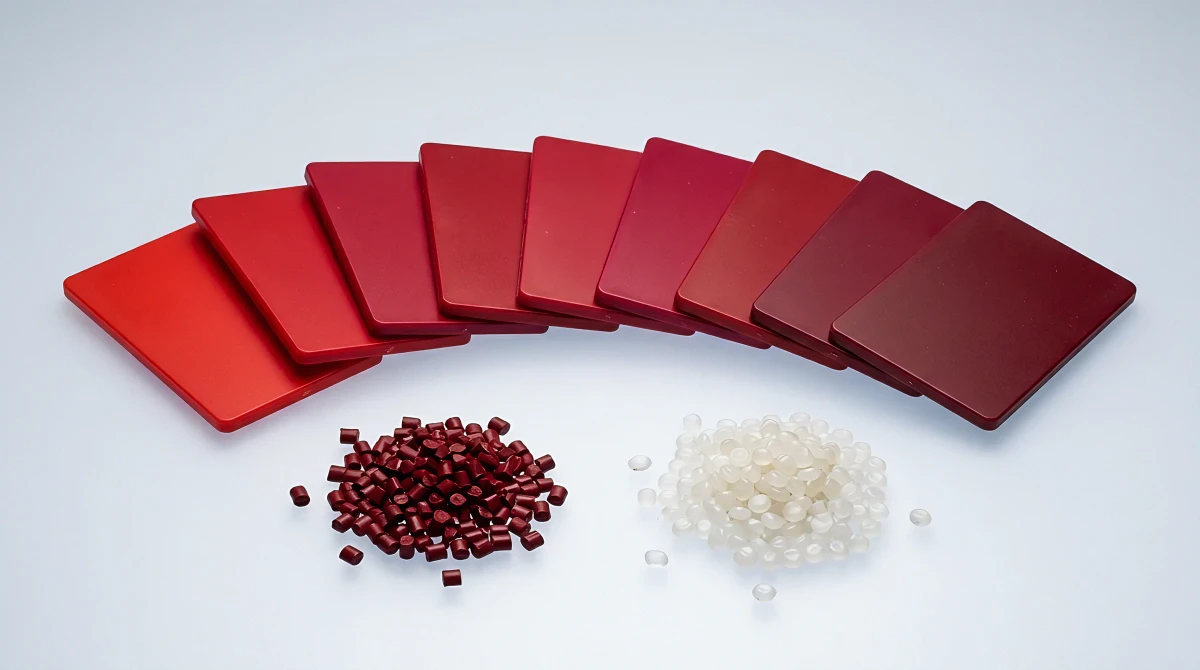
Color Matching Molded Parts With Masterbatch in a Production Run

How masterbatch color is matched, dosed, distributed and measured so that every lot of a molded part matches the standard agreed at the first article.

How Masterbatch Color Is Held Across a RunThree things have to stay constant for color to hold. The masterbatch has to be the same formulation at the same let-down ratio, the melt has to distribute it evenly, and the part has to be measured the same way each time.

Short Shot, Sink and Flash in Injection Molding Traced to Their Cause

Short shots, sinks and flash traced to the melt volume, pressure and steel behind them, with the checks that find the cause before a setting is moved.

What Short Shots, Sink and Flash Have in CommonA short shot is a part the cavity never finished. BASF's troubleshooting brochure for engineering thermoplastics describes it as a part not completely formed, mainly in the areas furthest from the gate or in thin walls.

Gate Location and Gate Freeze in Injection Molding

Where a gate goes, how big it is and how long it stays open, with the weight study that sets hold time from the gate itself.

How Gate Location and Gate Freeze Shape a Molded PartAutodesk's Moldflow design rules open with the claim that gate position strongly affects material orientation and warpage, and that changing the gate is sometimes the only way to control orientation. Every gate injects under the same pressure, and the aim of gating is to avoid overpacking some paths while others are still filling, because unequal packing gives unequal shrinkage.

Draft Angle by Texture Depth on Injection Molded Parts

How much draft a textured wall needs for its depth, under which conditions each published figure holds, and how the mold and the part are checked.

How Much Draft a Texture Depth NeedsStandex Engraving Mold-Tech's technical data sheet gives the current recommendation from the texture maker: 1° of draft for every 0.013 to 0.015 mm (0.0005 to 0.0006 in) of texture depth. Per 0.025 mm (0.001 in) that works out to between 1.7° and 2°.

Polypropylene for Living Hinges in Injection Molding

Polypropylene for living hinges read from design guides and molding columns: grade choice, hinge dimensions, gating across the web, cooling and the tests that prove a hinge.

Why Polypropylene Makes a Living HingeThe MIT design note explains the mechanism. When a partly oriented polypropylene web is cold drawn on its first flex, it stretches by ratios of 2 or 3 to 1, and its tensile strength rises sharply.

ABS and PC/ABS Blends in Injection Molding

ABS and PC/ABS read from the makers' datasheets: drying, processing windows, shrinkage, snap-fit strain, impact and when the blend earns its stricter dryer.

How ABS and PC/ABS Differ in Injection MoldingABS is a terpolymer, and Moldflow's material page describes its structure: a continuous phase of styrene-acrylonitrile with a dispersed phase of polybutadiene rubber. Acrylonitrile brings hardness and chemical and heat resistance, styrene brings processability, gloss and strength, and butadiene brings toughness and impact strength.

Cycle Time and Parts per Hour in a Bridge Injection Molding Run

A cycle is the sum of fill, hold, cooling and press motions, and a supplier's number is only as good as the pack and cooling times behind it.

What Sets Cycle Time and Parts per HourA molding cycle is a loop of seven moves: the mold closes, the cavity fills, the pack and hold phase runs, the part cools, the mold opens, the part is ejected, and the screw recovers for the next shot. Recovery runs while the part cools, which is why DuPont's nylon guide asks for screw speeds adjusted so that screw retraction time is shorter than the cooling phase.

How to Start Up an Injection Mold and Take the First Shots

A new mold is started cold on purpose, filled in stages with short shots, and read for vents, gates and heat before any process is fixed.

The Start-Up Sequence from a Cold Barrel to the First ShotEight moves take a machine from cold to its first complete part. The first four prepare the melt, the next three shape the shot, and the last one is a decision: whether the part describes the tool or only the settings.

Drying Resin and Setting Melt Temperature Before the First Injection Molded Part

Pellets are dried to a measured moisture limit, held there to the hopper, and melted inside a window that the resin maker prints.

What Dry Resin and a Correct Melt Temperature ProtectWater in a nylon melt is not a surface problem. DuPont explains that water carried into the melt triggers hydrolysis, which breaks the polymer down, costs toughness and strength, and makes the melt flow more easily.

Polycarbonate Injection Molding Properties for Clear and Tough Parts

Polycarbonate read from the maker's sheets for a buyer: what it molds like when dry and hot, how thin walls fill, and what to ask of an aluminum tool.

Makrolon 2407 Properties in Metric and Inch UnitsMakrolon 2407 is a low-viscosity, general-purpose, UV-stabilized, easy-release polycarbonate with a melt volume-flow rate of 19 cm³/10 min at 300 °C and 1.2 kg under ISO 1133. Its ISO short name is ISO 7391-PC,MLR,(,,)-18-9.

Glass-Filled Nylon 66 in Injection Molding and What It Does to an Aluminum Tool

How a glass-reinforced nylon behaves dry and conditioned, in the press and on an aluminum tool, and what its datasheet leaves for the buyer to settle.

Properties of 30 Percent Glass-Filled Nylon 66 Dry and ConditionedPA66 with 30 percent glass is one of the most common reinforced engineering grades, and BASF's Ultramid A3WG6 LT BK, a laser-transparent black grade whose sheet is dated 09/2026, is a clear example of how the family reads. The sheet names the polymer PA66-GF30 and gives its typical values for uncolored product at 23 °C.

Acetal Homopolymer Injection Molding Properties and Gate Rules

Delrin 500P read from the maker's sheet and molding tips: why acetal shrinks and needs a packed gate, how hot the melt may run, and what to check on an aluminum tool.

Delrin 500P Properties in Metric and Inch UnitsDelrin 500P NC010 is a medium-viscosity acetal homopolymer, and Delrin prints its ISO values as the reference beside 500CPE on its own product data sheet. The grade has a melt mass-flow rate of 15 g/10 min at 190 °C and 2.16 kg under ISO 1133.

Request an Injection Molding Quote

Send the 2D drawing and the 3D file, with the quantity and the stage of the project. An engineer replies within 1 working day.

The quote form, the mutual NDA and the private folder for your files are on Protolis Atelier, with Injection Molding chosen.

Request a Quote