Heat Deflection

Heat deflection temperature is the temperature at which a molded bar under a stated load, 1.8 or 0.45 MPa, deflects under ISO 75.

Every Heat Deflection article of the Injection Molding Resources, newest first, each written from published standards, research and makers’ data.

Meaning

Heat deflection temperature is the temperature at which a molded bar under a stated load, 1.8 or 0.45 MPa, deflects under ISO 75. Covestro’s sheet calls it temperature of deflection under load. It is a short-term figure on a bar, not a service limit for a part. A part with molded-in stress can soften sooner than the bar does.

Values

Delrin 500P acetal reads 95 °C (203 °F) at 1.8 MPa unannealed and 110 °C (230 °F) annealed. At 0.45 MPa it reads 160 °C (320 °F). Makrolon 2407 polycarbonate reads 124 °C (255 °F) at 1.80 MPa and 136 °C (277 °F) at 0.45 MPa. Zytel 70G33HS1L glass nylon reads 252 °C (486 °F) at 1.8 MPa, close to its 262 °C melting point.
Read More

Effect of Annealing

The acetal sheet’s two figures show annealing at work. A step at 160 °C for 30 minutes per millimeter raises heat deflection at 1.8 MPa by 15 °C. The step relieves stress and stabilizes the part. It also costs oven hours and can warp a complex part that hangs unsupported.

Interpretation

Heat deflection is reported unannealed on a bar unless the sheet says otherwise. A molded part carries stress from its process settings, which no column of the sheet shows. A clear polycarbonate housing near a heat source is judged by its stress and geometry as well as by this figure.

Related Rows

The acetal sheet also lists a Vicat softening temperature of 155 °C (311 °F) under ISO 306/B50. Polycarbonate’s glass transition, at 143 °C, sits above its heat deflection figures.

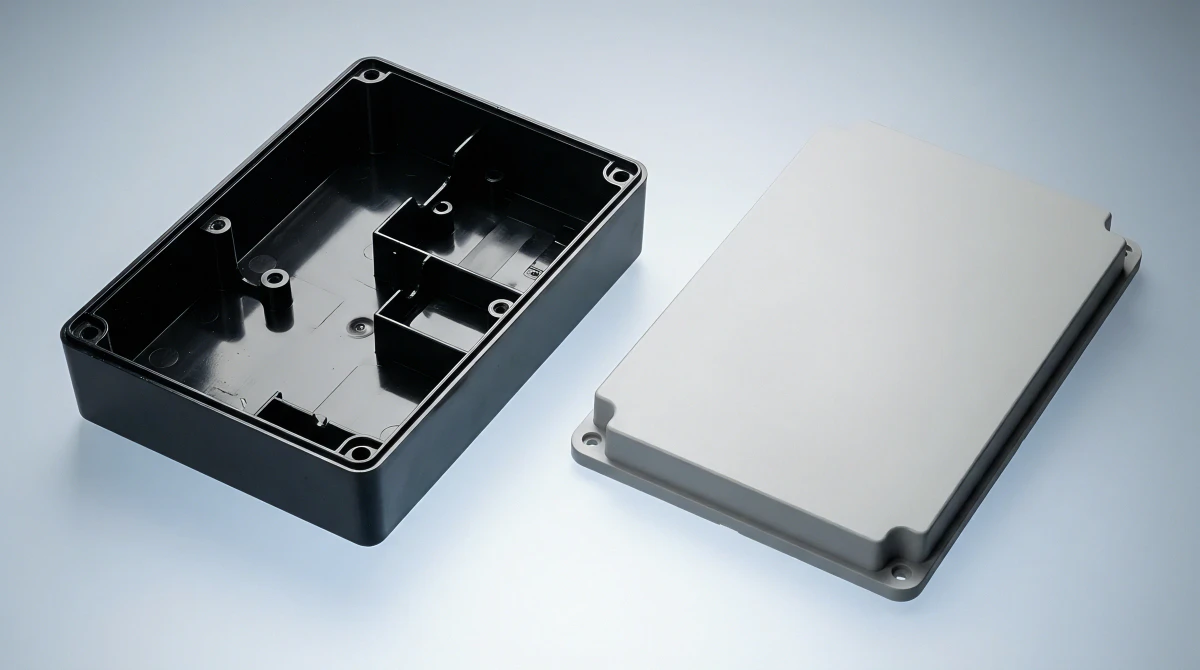
ABS and PC/ABS Blends in Injection Molding

ABS and PC/ABS read from the makers' datasheets: drying, processing windows, shrinkage, snap-fit strain, impact and when the blend earns its stricter dryer.

How ABS and PC/ABS Differ in Injection MoldingABS is a terpolymer, and Moldflow's material page describes its structure: a continuous phase of styrene-acrylonitrile with a dispersed phase of polybutadiene rubber. Acrylonitrile brings hardness and chemical and heat resistance, styrene brings processability, gloss and strength, and butadiene brings toughness and impact strength.
Polycarbonate Injection Molding Properties for Clear and Tough Parts

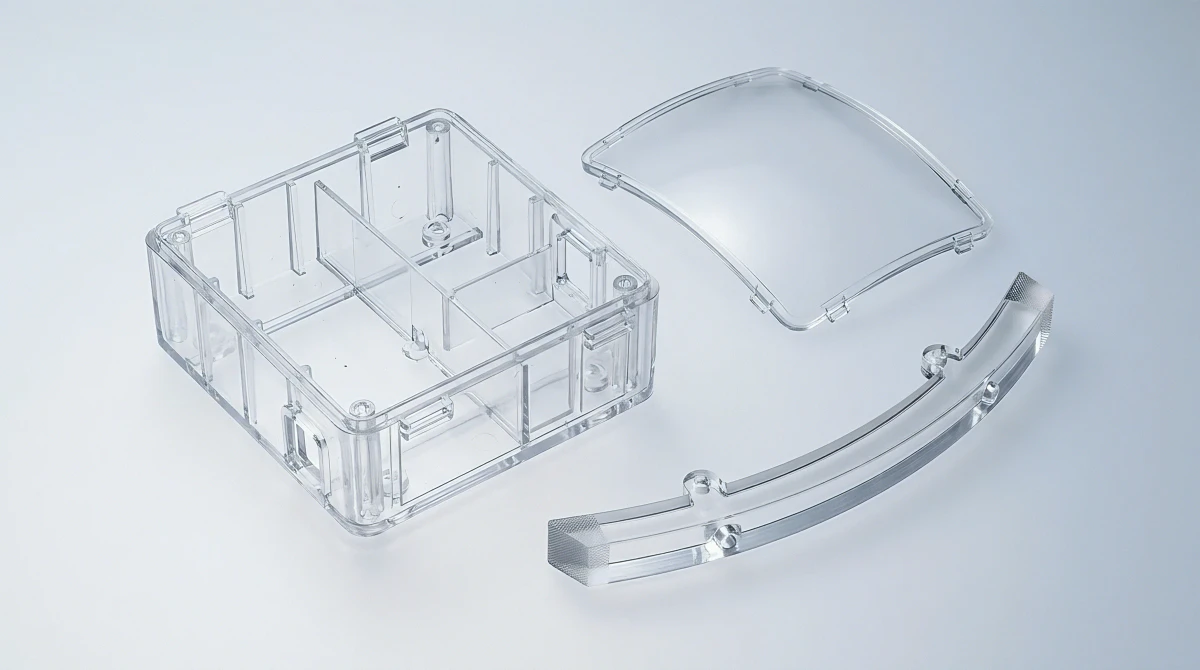
Polycarbonate read from the maker's sheets for a buyer: what it molds like when dry and hot, how thin walls fill, and what to ask of an aluminum tool.

Makrolon 2407 Properties in Metric and Inch UnitsMakrolon 2407 is a low-viscosity, general-purpose, UV-stabilized, easy-release polycarbonate with a melt volume-flow rate of 19 cm³/10 min at 300 °C and 1.2 kg under ISO 1133. Its ISO short name is ISO 7391-PC,MLR,(,,)-18-9.

Acetal Homopolymer Injection Molding Properties and Gate Rules

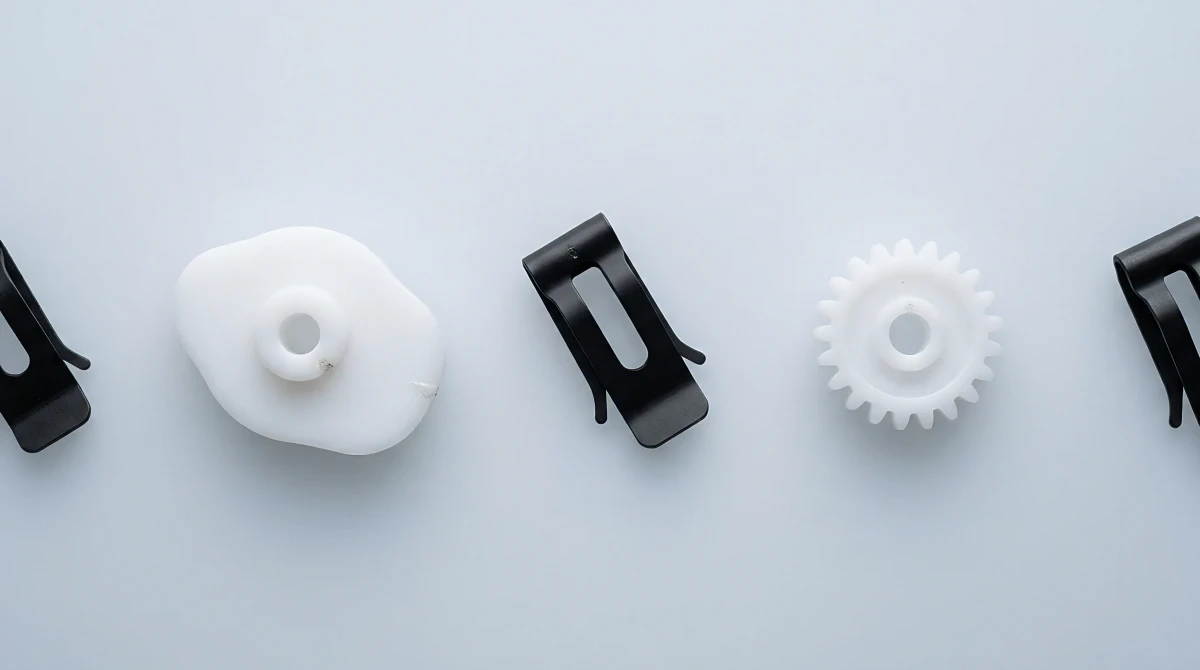
Delrin 500P read from the maker's sheet and molding tips: why acetal shrinks and needs a packed gate, how hot the melt may run, and what to check on an aluminum tool.

Delrin 500P Properties in Metric and Inch UnitsDelrin 500P NC010 is a medium-viscosity acetal homopolymer, and Delrin prints its ISO values as the reference beside 500CPE on its own product data sheet. The grade has a melt mass-flow rate of 15 g/10 min at 190 °C and 2.16 kg under ISO 1133.

Request an Injection Molding Quote

Send the 2D drawing and the 3D file, with the quantity and the stage of the project. An engineer replies within 1 working day.

The quote form, the mutual NDA and the private folder for your files are on Protolis Atelier, with Injection Molding chosen.

Request a Quote