Resin Lot

A resin lot is a quantity of molding resin produced by its maker as one batch and identified by a lot number on its bags or containers.

Every Resin Lot article of the Injection Molding Resources, newest first, each written from published standards, research and makers’ data.

Meaning

A resin lot is a quantity of molding resin produced by its maker as one batch and identified by a lot number on its bags or containers. Recording the lot number against each lot of molded parts links every part to the exact material it was made from.

Lots of Parts

ISO 2859-1 asks that product be gathered into identifiable lots of one type, grade, class, size and composition, made under uniform conditions at about the same time. For a molded part that points to one tool, one resin lot, one set of settings and one run. A lot that blends two setups or two resin lots blends two populations, and a sample drawn from it describes neither.
Read More

Flame-Rated Parts

A flammability rating describes the resin as listed. For a flame-rated part, the resin lot and any regrind percentage are recorded, together with the datasheet revision, on the first article report. For a part made to a glow wire requirement under IEC 60695-2-12, the resin lot, the grade, the color masterbatch and the regrind share are each variations the rating was or was not tested for, so all four are kept in the lot record.

Drying and Process Records

The resin lot sits in the process record beside the drying record, dryer dew point and melt temperature. A change in the lot can show as a change in melt viscosity before it shows on the part, which is what the dynamic pressure drop between two cavity sensors is designed to catch in nylon.

Living Hinges and Color

Resin lot and color are both variables in a polypropylene living hinge. The hinge flex test is repeated whenever the color or the resin lot changes, because a different lot or colorant can change crystallization and the orientation the web keeps.
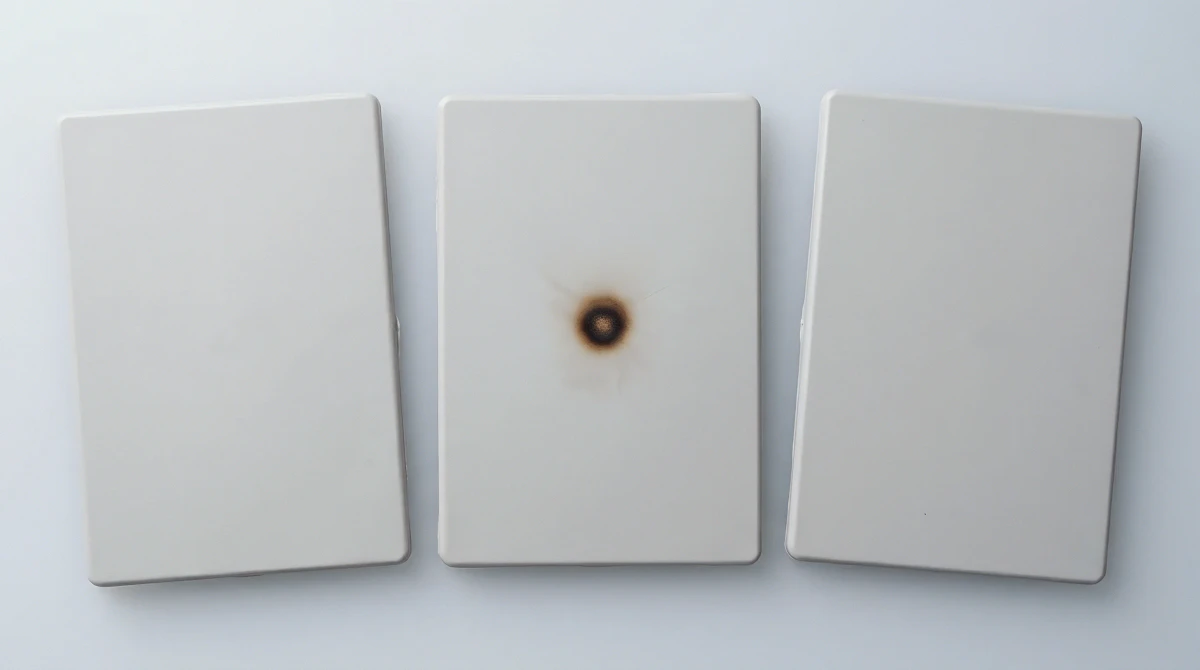
IEC 60695-2-12 Glow Wire Flammability Index for Molded Parts

The glow wire flammability index read for a buyer: what IEC 60695-2-12 measures, how makers print it by thickness, and what a molded part's file can carry from it.

What IEC 60695-2-12 MeasuresThe scope, printed on the IEC webstore and in the 2021 preview, is short. The standard specifies the details of the glow wire test applied to specimens of solid electrical insulating materials, or other solid materials, to determine the glow wire flammability index, GWFI.

Polypropylene for Living Hinges in Injection Molding

Polypropylene for living hinges read from design guides and molding columns: grade choice, hinge dimensions, gating across the web, cooling and the tests that prove a hinge.

Why Polypropylene Makes a Living HingeThe MIT design note explains the mechanism. When a partly oriented polypropylene web is cold drawn on its first flex, it stretches by ratios of 2 or 3 to 1, and its tensile strength rises sharply.

UL 94 Flammability Ratings Explained for Molded Plastic Parts

The UL 94 classes read as a buyer needs them: what each test does, how three common resin sheets print a rating, and what a supplier should show.

What UL 94 Measures and What It Is NotUL 94 is a family of small-scale flame tests on strips and plaques of plastic, run under laboratory conditions. UL's own page on combustion tests for plastics groups the classifications into twelve: HB, V-0, V-1 and V-2, 5VA and 5VB, VTM-0, VTM-1 and VTM-2, and HF-1, HF-2 and HBF for foams.

Request an Injection Molding Quote

Send the 2D drawing and the 3D file, with the quantity and the stage of the project. An engineer replies within 1 working day.

The quote form, the mutual NDA and the private folder for your files are on Protolis Atelier, with Injection Molding chosen.

Request a Quote