Meaning
An undercut is a feature that locks a molded part in the mold against the direction of opening, such as a recess, a bead or a side hole, so that the part cannot be pulled straight off without deforming or without a moving core. Small undercuts can be stripped by flexing the part; larger ones need slides, lifters or collapsible cores.Stripping Limits
DuPont advises against undercuts above 3 % in glass-reinforced nylon, because of its low elongation. Its molding guide also notes that an internal undercut that deforms on ejection may release with a hotter mold or a shorter cycle, and an external undercut with a longer cycle and higher shrinkage, since shrinkage pulls the part away from an external feature.Read More
Texture as an Undercut
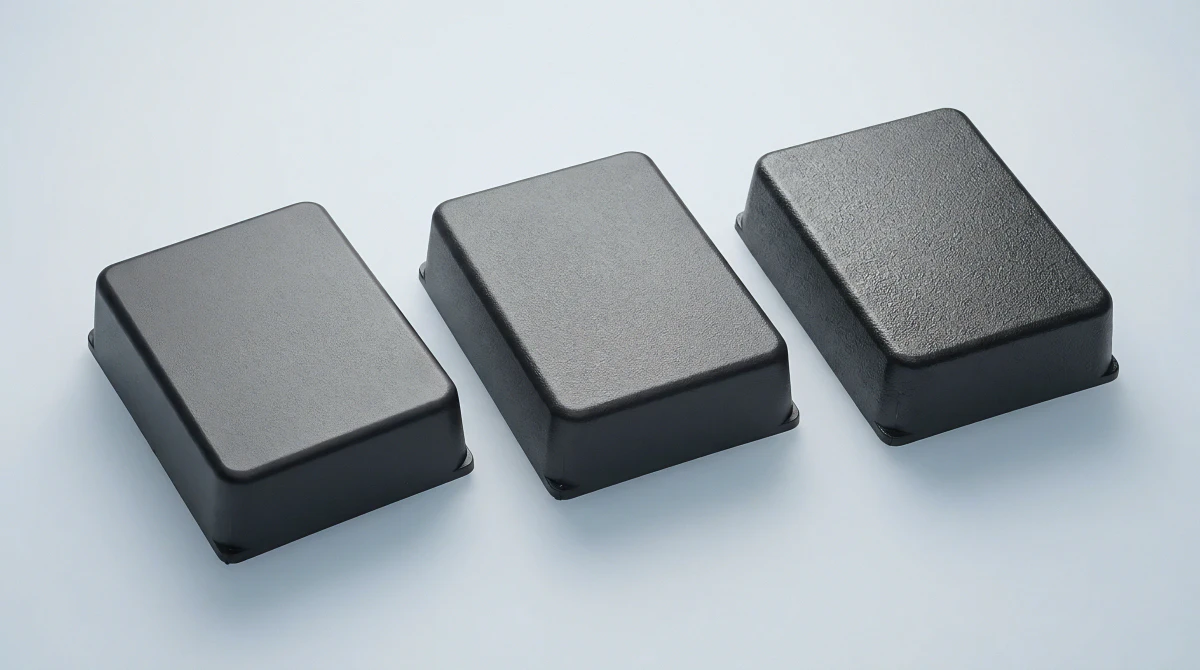
Texture adds small undercuts to every wall it covers. When the part shrinks and the mold opens, the peaks and valleys of the grain drag along the steel unless the wall leans away from the direction of pull, which is why textured walls need draft in proportion to texture depth. Standex Engraving Mold-Tech recommends 1° per 0.013 to 0.015 mm (0.0005 to 0.0006 in) of depth on a wall the part shrinks away from.When Draft Is Not Enough
MoldMaking Technology’s article on engraving cores and cavities notes that engravings deeper than about 0.1 mm (0.004 in) in a cavity side wall, or engravings on walls without enough draft, have to be moved to side cores or split cavities. Both need more space and a larger mold, and both can add scrap and cycle time, so the depth of a marking or texture on a side wall is settled with the draft before the tool is cut.Warpage Compensation
A cavity cut to a compensated, pre-warped shape can turn walls that were drafted correctly into small undercuts, which is one reason compensation software holds the original draft directions while it bends the model.