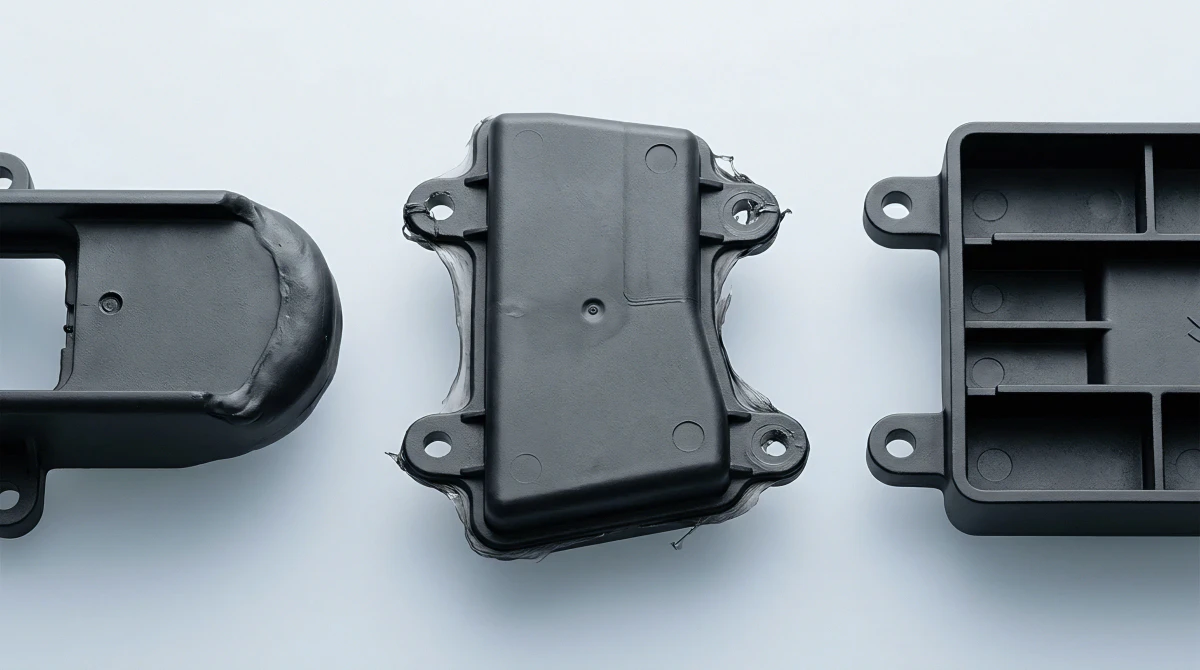
Frosting

Frosting is a dull surface blemish on molded glass-reinforced nylon, caused by melt that starts to freeze before the cavity is full.

Every Frosting article of the Injection Molding Resources, newest first, each written from published standards, research and makers’ data.

Meaning

Frosting is a dull surface blemish on molded glass-reinforced nylon, caused by melt that starts to freeze before the cavity is full. The cause is in the process, not the polish. A hot mold and a quick fill remove most of it. It is often read wrongly as wet resin or poor fiber dispersion.

Cause

DuPont’s nylon guide traces frosting to melt that begins to solidify before filling ends. On a glass-reinforced part, a cavity wall that is too cold or a fill that is too slow are the usual reasons. Chasing the wrong cause can cost a day.
Read More

Remedy

The guide puts reinforced nylons near 100 °C (210 °F) in the mold. Mold temperatures near 100 °C improve surface finish, mold filling, frosting and dimensional stability. It also asks for fills of 1 to 3 seconds, because a quick fill gives a better surface on nucleated, glass-reinforced nylon. The first change is a faster fill and a hotter mold, and gate size is checked second.

Interpretation

Change fill speed alone and look at the surface before touching the dryer or the screw. That order separates frosting from splay, which points to moisture first.

Finish Grade

A polished cavity does not make a glossy glass nylon part on its own. A buyer who specifies SPI A-2 on glass-filled nylon pays for a polish the fibers will partly undo. A hot mold and a quick fill matter more there than the A grade chosen. Where fiber marks show, a coarser grade is the one to test first.

How to Start Up an Injection Mold and Take the First Shots

A new mold is started cold on purpose, filled in stages with short shots, and read for vents, gates and heat before any process is fixed.

The Start-Up Sequence from a Cold Barrel to the First ShotEight moves take a machine from cold to its first complete part. The first four prepare the melt, the next three shape the shot, and the last one is a decision: whether the part describes the tool or only the settings.
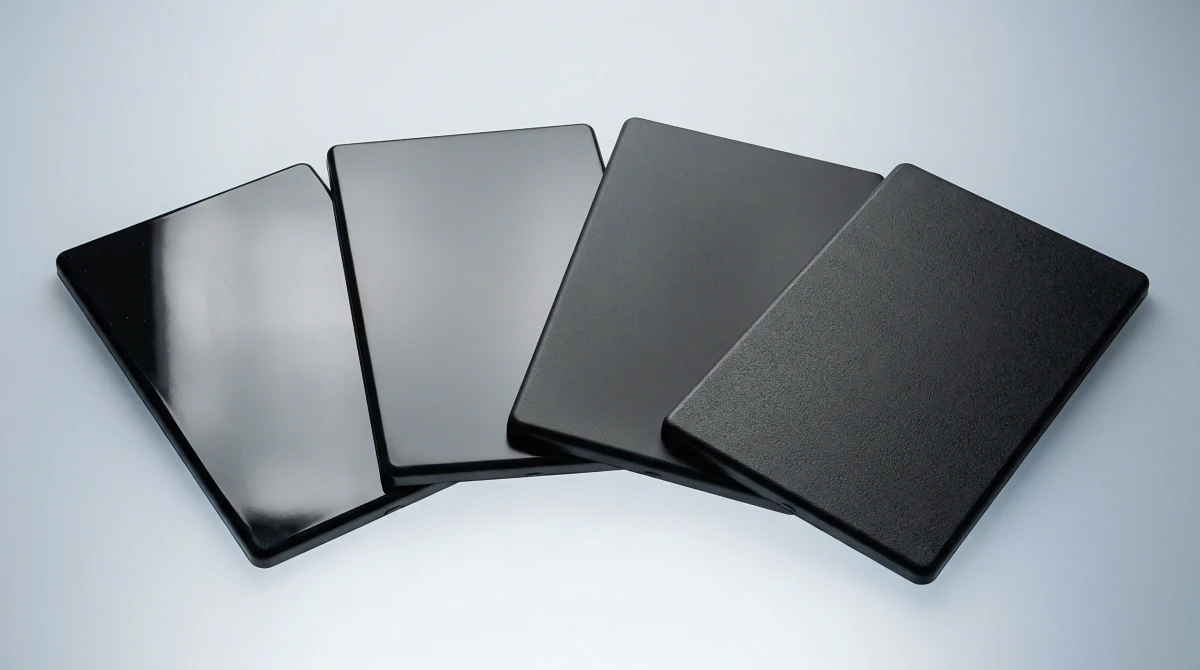
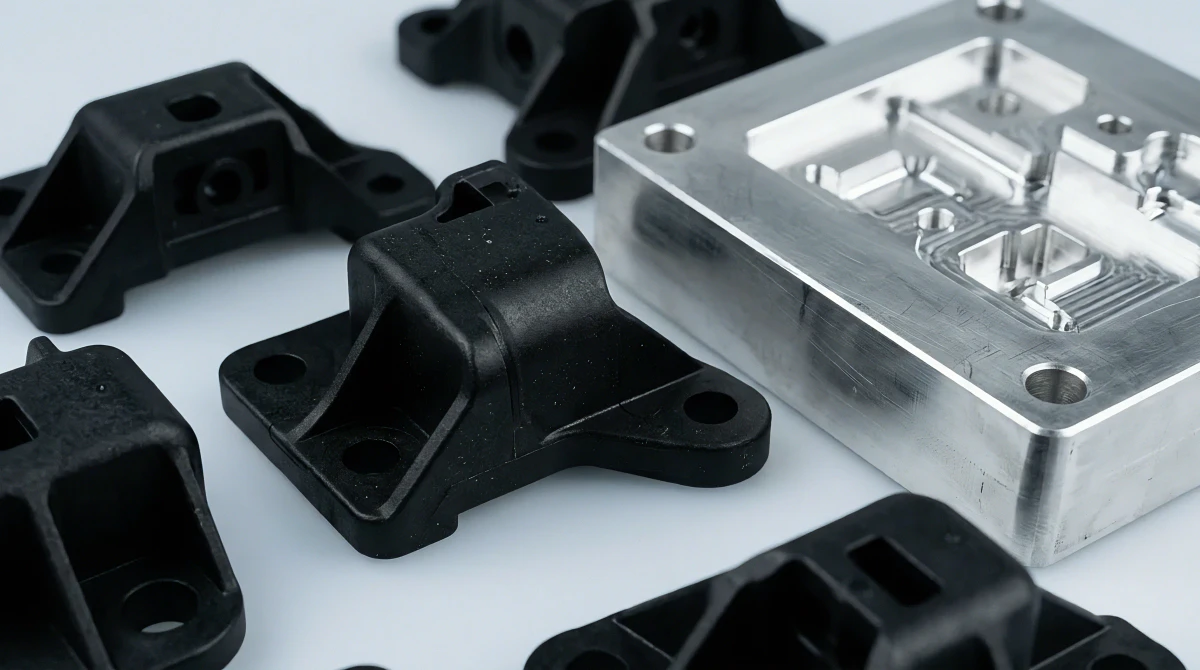
SPI Mold Finish Grades A-1 to D-3 for Injection Molded Parts

The SPI finish grades read for a buyer, with what each method gives, how texture costs draft, and how a finish is written and kept on an aluminum tool.

What the Twelve SPI Finish Grades SpecifyThe SPI system names a finish by a letter and a number. Its letter gives the finishing method, A for diamond buff, B for grit paper, C for stone and D for dry blast, while the number runs from 1, the finest within a letter, to 3, the coarsest.

Glass-Filled Nylon 66 in Injection Molding and What It Does to an Aluminum Tool

How a glass-reinforced nylon behaves dry and conditioned, in the press and on an aluminum tool, and what its datasheet leaves for the buyer to settle.

Properties of 30 Percent Glass-Filled Nylon 66 Dry and ConditionedPA66 with 30 percent glass is one of the most common reinforced engineering grades, and BASF's Ultramid A3WG6 LT BK, a laser-transparent black grade whose sheet is dated 09/2026, is a clear example of how the family reads. The sheet names the polymer PA66-GF30 and gives its typical values for uncolored product at 23 °C.

Request an Injection Molding Quote

Send the 2D drawing and the 3D file, with the quantity and the stage of the project. An engineer replies within 1 working day.

The quote form, the mutual NDA and the private folder for your files are on Protolis Atelier, with Injection Molding chosen.

Request a Quote