Meaning
Conditioning brings a molded part or test specimen to a stated temperature and humidity, for a stated time, before it is measured or tested. It turns a part fresh from the press into a part in a known state: a molded nylon part is dry as molded at ejection and takes on water over the following days. The time since ejection belongs beside every reading.Nylon Parts
DuPont conditions nylon parts that will live in normal air. Unreinforced nylon 66 is brought to roughly 3 percent water by weight, and surface moisture then evaporates, which leaves about 2.5 percent. The time to equilibrium depends on wall thickness, starting moisture and temperature.Read More
Effect on Properties
BASF prints a dry and a conditioned column for its Ultramid A3WG6 glass nylon. Tensile modulus falls from 10,000 to 6,800 MPa, a loss of 32 percent, while strain at break and impact energy rise, so the conditioned part is softer and tougher at once.Shrinkage Specimens
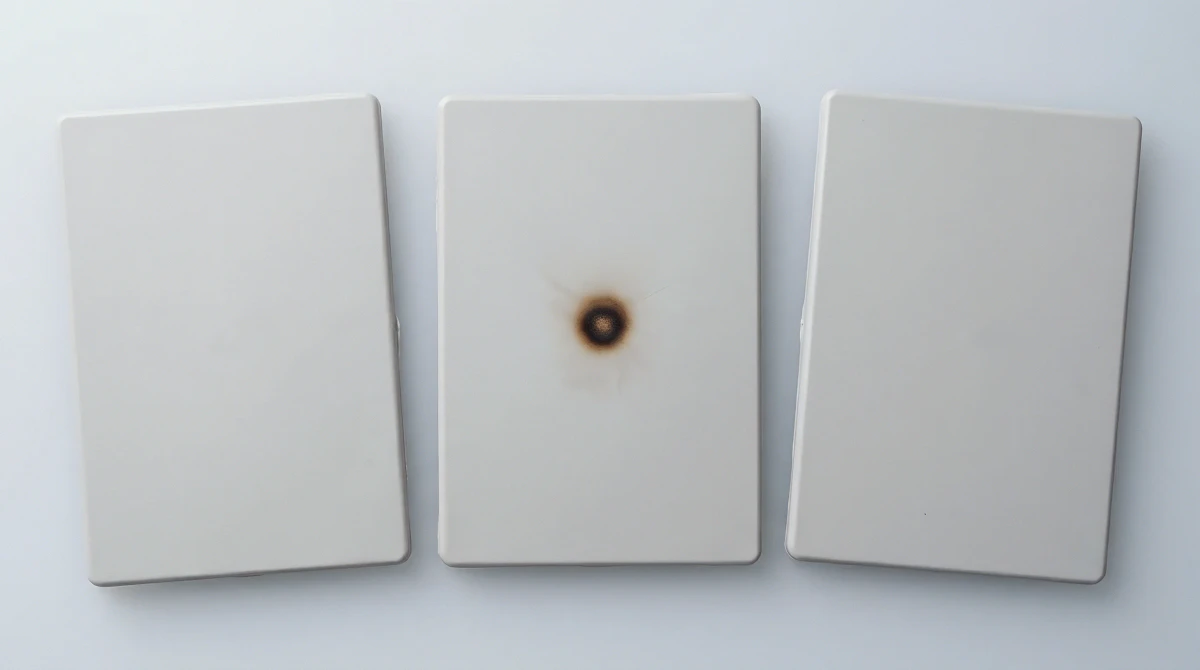
DuPont’s shrinkage plate rests 24 to 48 hours at 23 °C and 50 percent relative humidity before it is measured, and it is still read dry as molded, so the rest settles temperature and time more than water.Flame Testing
UL conditions V, 5V and VTM specimens two days at 23 °C and seven days at 70 °C before the test, so the printed rating is not a reading on a freshly molded strip.First Sample
A first-sample report records the conditioning beside each value, and the inspection plan states whether dry as molded or conditioned governs.