Meaning
Dynamic pressure drop is a cavity-sensor reading that tracks melt viscosity, and so moisture, without stopping the press. DuPont’s nylon guide describes it. It uses two pressure transducers in the cavity. A change in the reading is a change in the melt.Principle
The reading is the pressure at the first sensor at the moment the melt arrives at the second. When melt viscosity shifts, that pressure shifts with it. High moisture lowers melt viscosity, and that is the change the two sensors register. The method is written for nylon, but the principle holds for any resin that is sensitive to water.Read More
Typical Chart
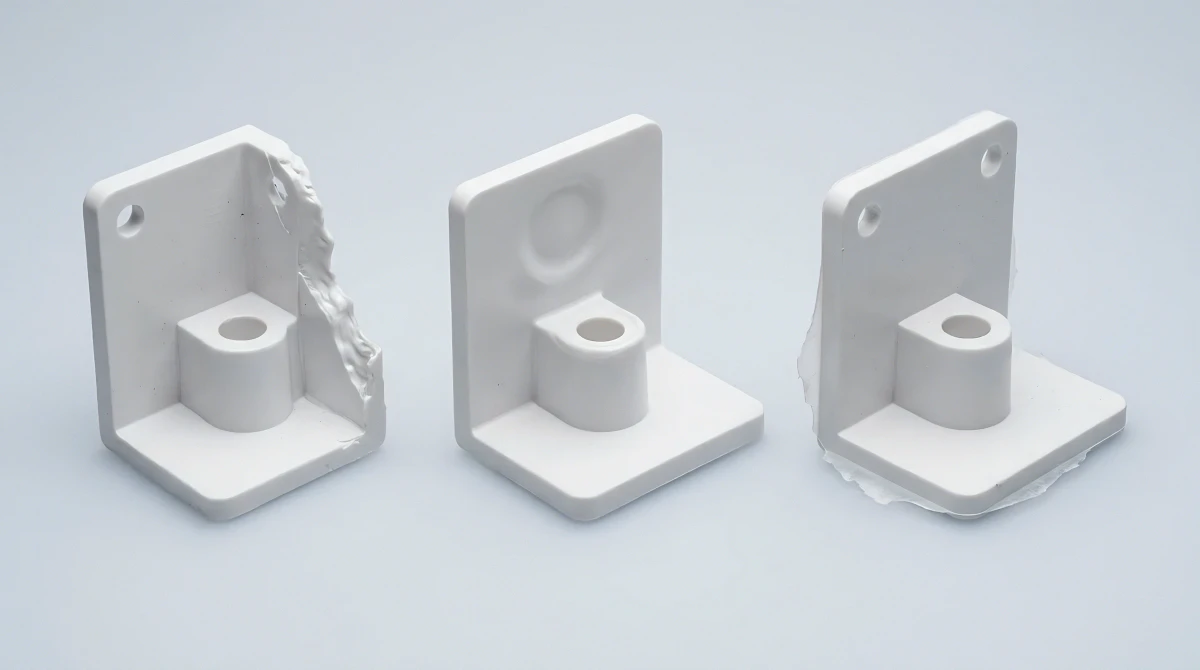
DuPont’s chart for a 2.0 mm (0.08 in) wall shows the dynamic pressure drop for resin at 0.08, 0.15 and 0.22 percent moisture. The three curves separate, so a moisture change can be read from the pressure signal. A moisture meter remains the direct check on the pellets. The pressure signal adds a reading taken on every shot while the press runs. The air shot and splay on the part are the other two ways the process reports moisture.Causes of Change
Hydrolysis and polycondensation both run during processing and shift molecular weight and melt viscosity. Moisture, melt temperature and hold-up time interact, which makes them hard to control one at a time. A pressure signal that moves is therefore a prompt to review all three.Lot Record
The pressure drop sits in a lot’s process record beside resin moisture, dryer dew point, melt temperature and part weight. Those records are cheaper to collect than a measurement of every part. They also say more about why a part is off.