Masterbatch

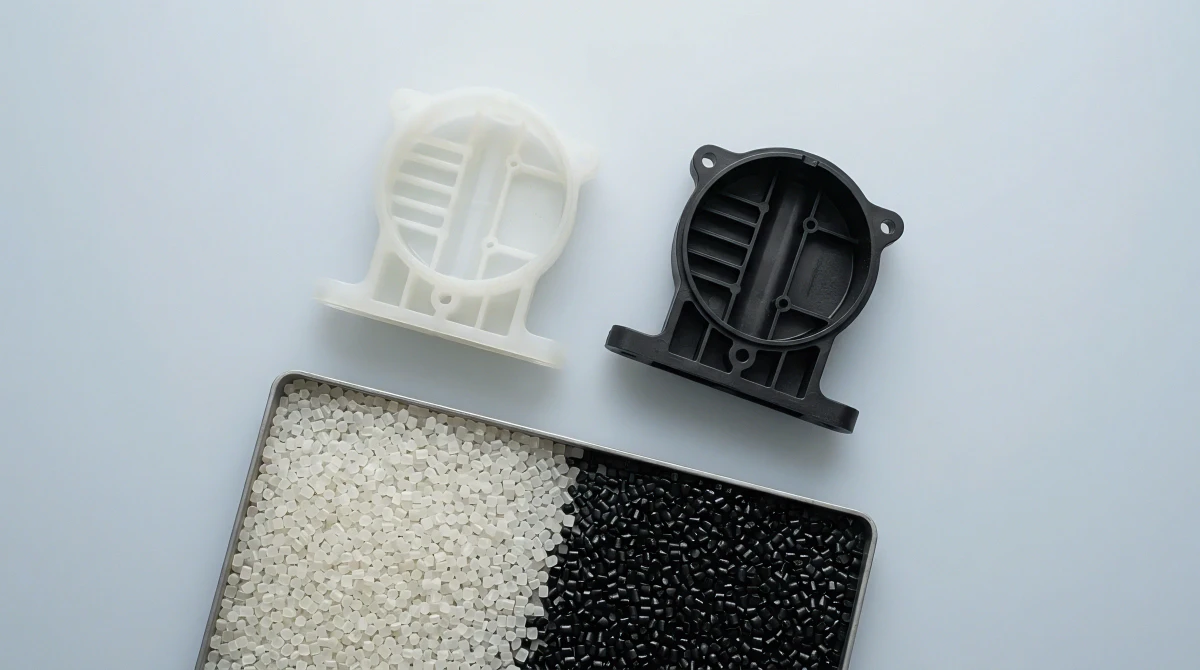
Masterbatch is a concentrated mixture of colorant or additives in a carrier resin, supplied as pellets, powder, wax or liquid, and dosed into natural resin at the press.

Every Masterbatch article of the Injection Molding Resources, newest first, each written from published standards, research and makers’ data.

Meaning

Masterbatch is a concentrated mixture of colorant or additives in a carrier resin, supplied as pellets, powder, wax or liquid, and dosed into natural resin at the press. It moves the color decision from the resin maker to the molding cell and makes small lots of different colors practical from one stock of natural resin.

Let-Down Ratio

Machine Design gives let-down ratios of 50:1 to 200:1 for highly loaded masterbatches. Ampacet publishes addition rates of 1 % for polypropylene, polyethylene, polycarbonate, nylon, acetal, PBT and PET, 1 to 2 % for high-impact polystyrene and polyurethane, and 1 to 3 % for ABS, PVC, alloys, blends and filled polymers. Lower ratios ask more of dosing and distribution in the barrel.
Read More

Forms and Carriers

Resin-specific masterbatches use the same polymer as the let-down resin; universal masterbatches use a carrier compatible with several. Machine Design warns that a polyethylene carrier can migrate to the part surface and peel or stick to the mold, and that colorant behaves like a contaminant, so particle size and dispersion bear on the part’s properties.

Processing

Ampacet asks that masterbatch and resin be premixed with tumble mixers or metering equipment, that masterbatch be added after drying when the drying temperature exceeds 107 °C (225 °F), and that melt temperature stay at or below 316 °C (600 °F). BASF traces colored streaks to poor distribution and lists higher back pressure, lower screw speed, a longer screw or a mixing section as remedies.

Resin Compatibility

Some masterbatch pigments and additives degrade acetal in the melt, so DuPont advises that the color grade and its masterbatch be cleared with the resin maker before an order. Trinseo offers natural ABS grades with a white base suited to masterbatch coloring, with less pigment needed for light colors.

Flame-Rated Parts

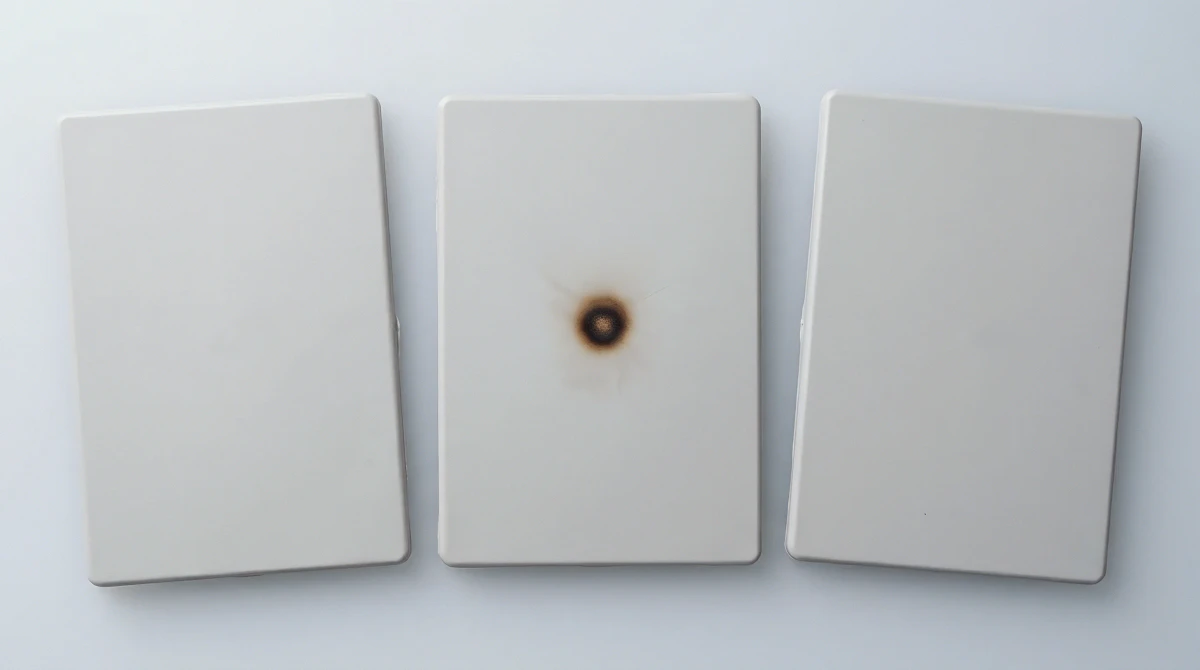
Ampacet states that pigment and carrier may affect a UL rating and does not recommend its universal masterbatch for UL applications. On a part with a glow wire or UL 94 listing, the masterbatch, if any, is recorded with the resin lot as a formulation variation the rating may not cover.
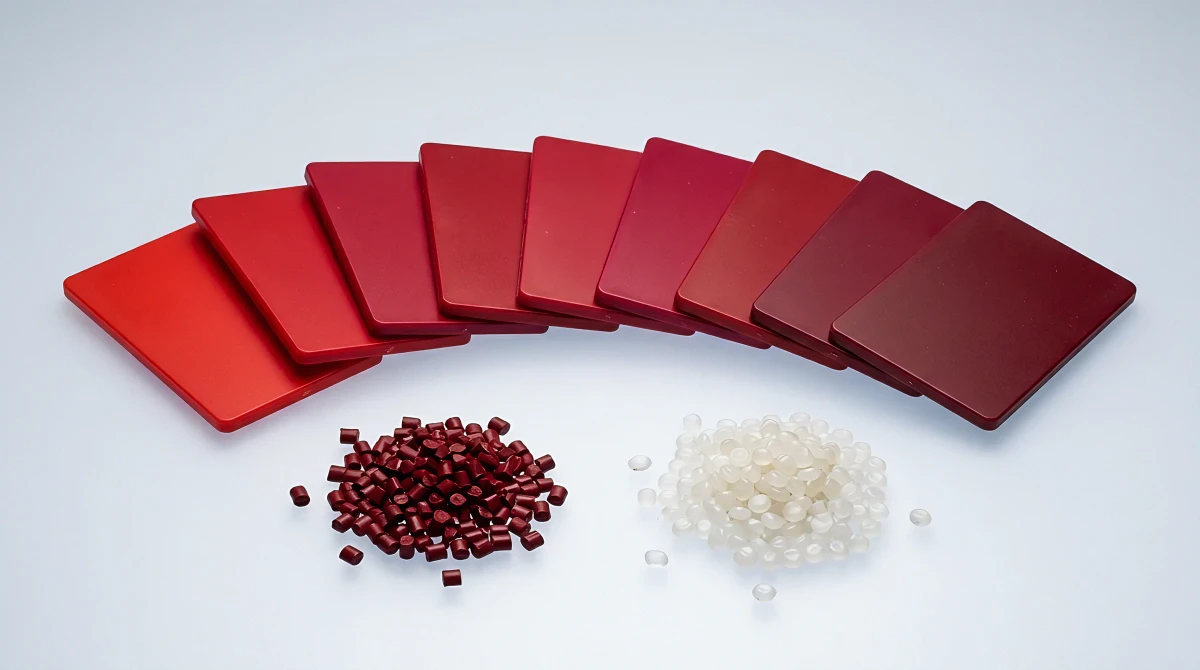
Color Matching Molded Parts With Masterbatch in a Production Run

How masterbatch color is matched, dosed, distributed and measured so that every lot of a molded part matches the standard agreed at the first article.

How Masterbatch Color Is Held Across a RunThree things have to stay constant for color to hold. The masterbatch has to be the same formulation at the same let-down ratio, the melt has to distribute it evenly, and the part has to be measured the same way each time.

IEC 60695-2-12 Glow Wire Flammability Index for Molded Parts

The glow wire flammability index read for a buyer: what IEC 60695-2-12 measures, how makers print it by thickness, and what a molded part's file can carry from it.

What IEC 60695-2-12 MeasuresThe scope, printed on the IEC webstore and in the 2021 preview, is short. The standard specifies the details of the glow wire test applied to specimens of solid electrical insulating materials, or other solid materials, to determine the glow wire flammability index, GWFI.

ABS and PC/ABS Blends in Injection Molding

ABS and PC/ABS read from the makers' datasheets: drying, processing windows, shrinkage, snap-fit strain, impact and when the blend earns its stricter dryer.

How ABS and PC/ABS Differ in Injection MoldingABS is a terpolymer, and Moldflow's material page describes its structure: a continuous phase of styrene-acrylonitrile with a dispersed phase of polybutadiene rubber. Acrylonitrile brings hardness and chemical and heat resistance, styrene brings processability, gloss and strength, and butadiene brings toughness and impact strength.

Drying Resin and Setting Melt Temperature Before the First Injection Molded Part

Pellets are dried to a measured moisture limit, held there to the hopper, and melted inside a window that the resin maker prints.

What Dry Resin and a Correct Melt Temperature ProtectWater in a nylon melt is not a surface problem. DuPont explains that water carried into the melt triggers hydrolysis, which breaks the polymer down, costs toughness and strength, and makes the melt flow more easily.

Acetal Homopolymer Injection Molding Properties and Gate Rules

Delrin 500P read from the maker's sheet and molding tips: why acetal shrinks and needs a packed gate, how hot the melt may run, and what to check on an aluminum tool.

Delrin 500P Properties in Metric and Inch UnitsDelrin 500P NC010 is a medium-viscosity acetal homopolymer, and Delrin prints its ISO values as the reference beside 500CPE on its own product data sheet. The grade has a melt mass-flow rate of 15 g/10 min at 190 °C and 2.16 kg under ISO 1133.

Request an Injection Molding Quote

Send the 2D drawing and the 3D file, with the quantity and the stage of the project. An engineer replies within 1 working day.

The quote form, the mutual NDA and the private folder for your files are on Protolis Atelier, with Injection Molding chosen.

Request a Quote