Post-Mold Shrinkage

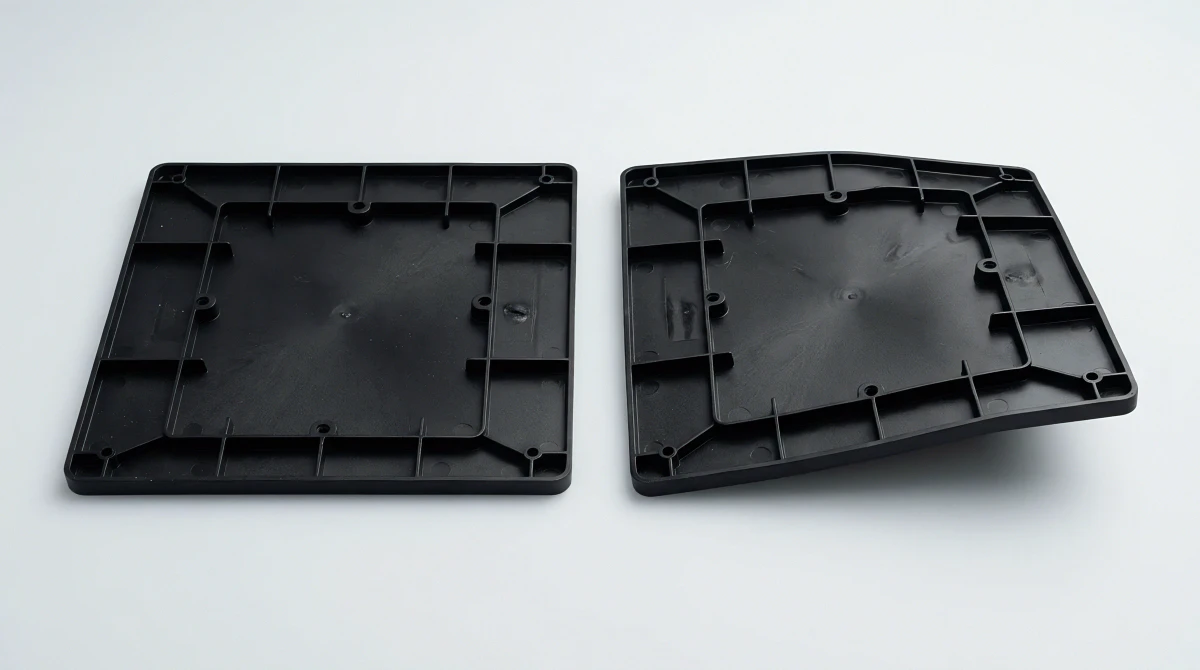
Post-mold shrinkage is the change in size a molded part goes through after it leaves the tool, as it crystallizes further, relaxes or is annealed.

Every Post-Mold Shrinkage article of the Injection Molding Resources, newest first, each written from published standards, research and makers’ data.

Meaning

Post-mold shrinkage is the change in size a molded part goes through after it leaves the tool, as it crystallizes further, relaxes or is annealed. ISO 294-4 covers it beside mold shrinkage. DuPont’s nylon guide defines it as the change measured at 23 ± 2 °C after annealing for a stated time and temperature. The size of a part at the press is therefore not its size a day later.

Process Effect

A hot mold gives low post-mold shrinkage and steady dimensions. A cold mold gives high post-mold shrinkage and sometimes serious internal stress. DuPont adds that such stress can lead to premature failure. A hot-molded part shrinks less on annealing, and a thin wall shrinks more.
Read More

Moisture

In nylon, water swells the part while post-mold crystallization shrinks it. In a well-molded part of moderate wall the swell outweighs the shrinkage. In a part molded cold or thin the shrinkage wins. Mold shrinkage as ISO 294-4 defines it excludes humidity, which belongs to post-mold and total shrinkage.

Dimension States

A part measured soon after molding sits at the shrunken, dry dimension. One conditioned to equilibrium sits larger by the swell, by an amount that depends on direction in glass-filled nylon. One annealed after molding sits smaller by the post-mold shrinkage.

Measurement

Age is one of the three states a dimension depends on, with temperature and moisture. A drawing therefore names the time after molding, for example at least 24 hours, and any annealing. A first sample measured too early is compared with production parts in a different state.

How Temperature Changes the Size of a Molded Plastic Part at the Gauge

How coefficients of expansion turn a few degrees of gauge temperature into hundredths of a millimeter, by resin and direction, and what a drawing should state.

Linear Thermal Expansion of Polycarbonate, Glass-Filled Nylon and AcetalLinear thermal expansion is reported on datasheets as a coefficient, the length change per unit length per degree. The three makers print it by the ISO or TMA method, and they differ in how finely they split it.

Injection Molding Shrinkage Along and Across the Flow by Material

Molding shrinkage read by direction and condition for three resins, with the process settings that move it and the way a first sample turns it into a cavity allowance.

Shrinkage of Polycarbonate, Glass-Filled Nylon 66 and Acetal Along and Across the FlowISO 294-4:2018 sets out the method for measuring mold shrinkage and post-mold shrinkage of injection molded thermoplastic test specimens, parallel and normal to the direction of melt flow. Resin makers print the result in two lines, one per direction.

ISO 20457 Tolerances for Plastic Molded Parts Read for the Buyer

How ISO 20457 is worded for plastic molded parts, what a supplier signs when a drawing cites it, and which items stay outside it for the order to settle.

What ISO 20457 Covers for Injection Molded PartsAccording to the abstract published by the Swedish Institute for Standards (SIS), ISO 20457 specifies possible manufacturing tolerances for plastic moulded parts, and it covers all integral features with general tolerances, using a surface profile tolerance within a specified datum system. It applies to injection moulding, injection compression moulding, transfer moulding, compression moulding and rotational moulding of non-porous parts in thermoplastics, thermoplastic elastomers and thermosets.

Request an Injection Molding Quote

Send the 2D drawing and the 3D file, with the quantity and the stage of the project. An engineer replies within 1 working day.

The quote form, the mutual NDA and the private folder for your files are on Protolis Atelier, with Injection Molding chosen.

Request a Quote