Gate Freeze

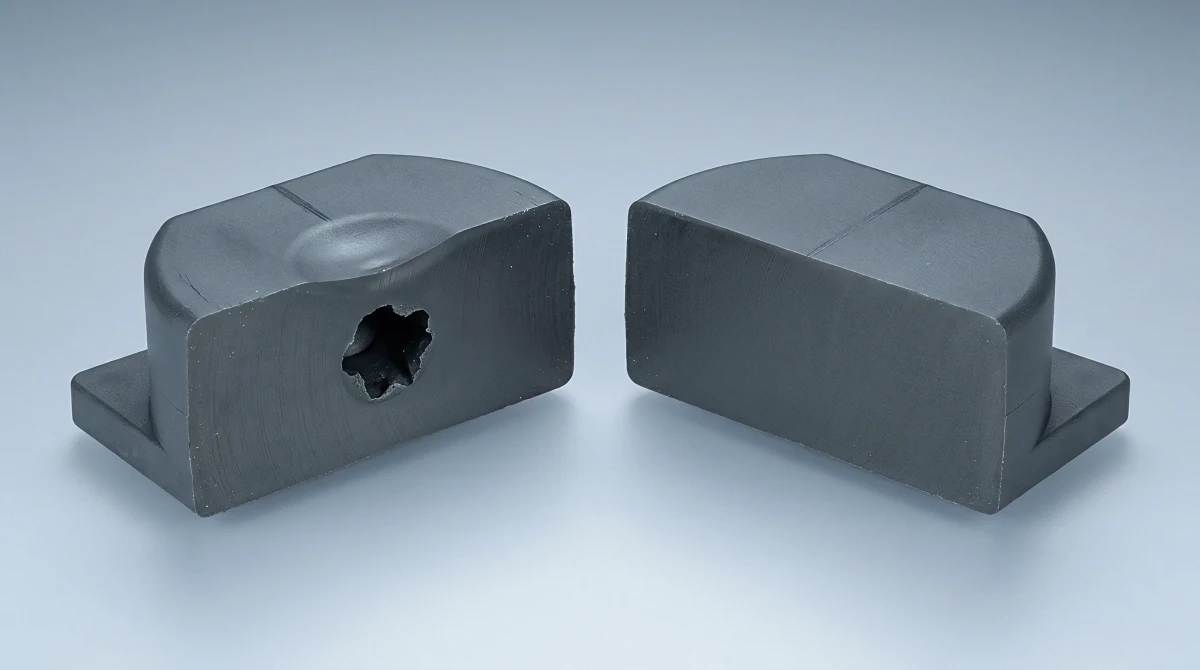
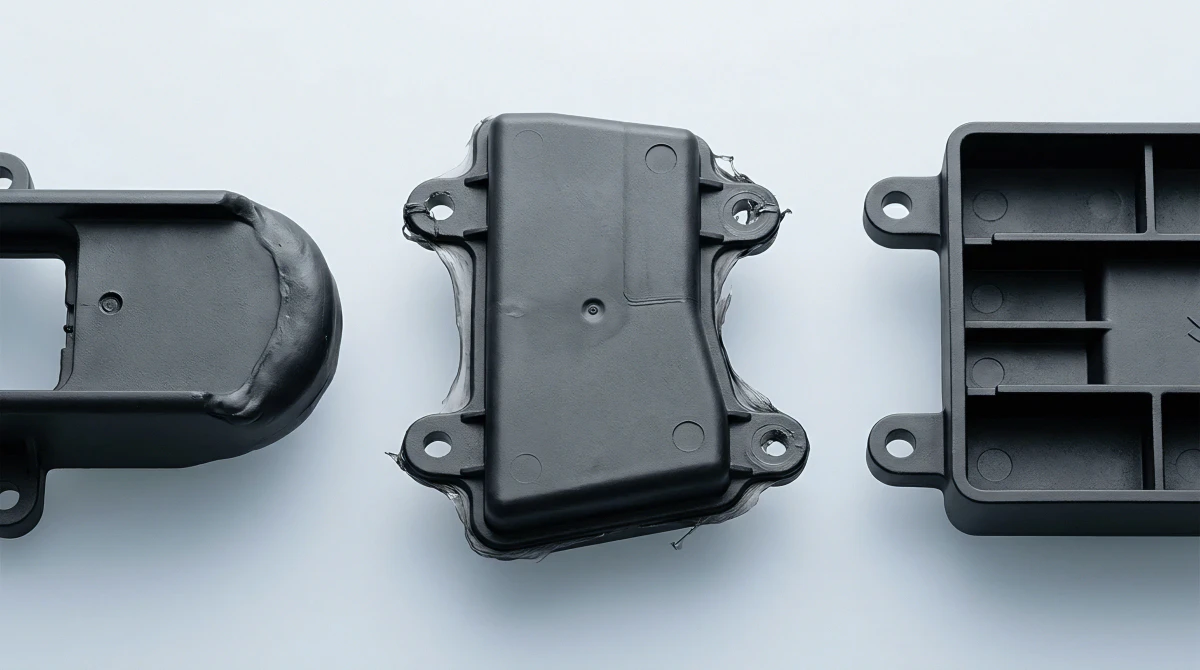
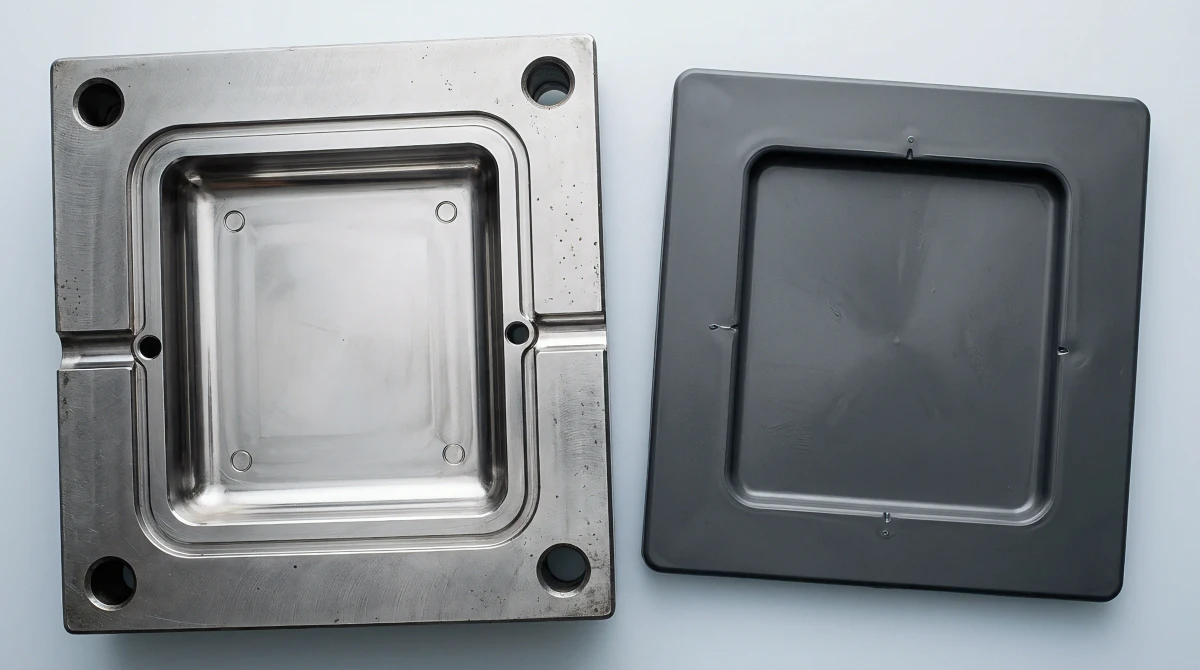
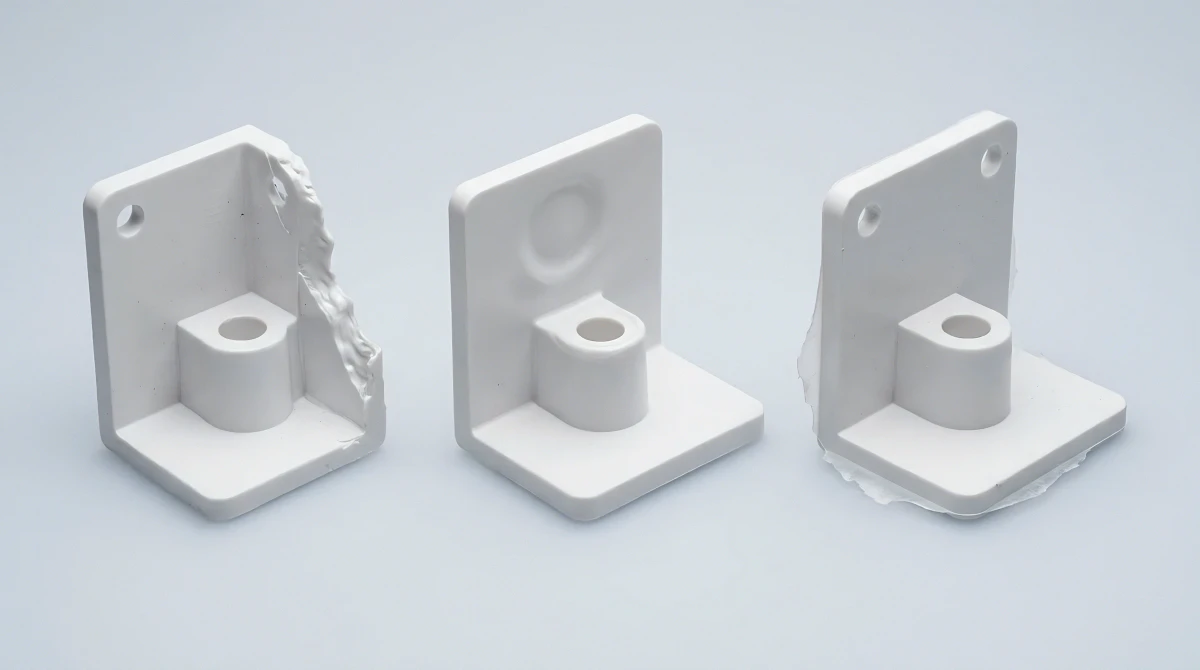
Gate freeze is the moment the plastic in the gate solidifies, sealing the cavity so the hold phase can add no more material.

Every Gate Freeze article of the Injection Molding Resources, newest first, each written from published standards, research and makers’ data.

Meaning

Gate freeze is the moment the plastic in the gate solidifies, sealing the cavity so the hold phase can add no more material. It ends the useful hold time. Its timing against the part’s own freezing decides whether the part is fully packed. A part weight study finds it on the press.

Timing

DuPont’s aim for nylon is a gate that freezes as the part finishes crystallizing, not before. A gate that freezes early seals a part that is still shrinking. One that stays open too long is lost cycle time. Hold time works only when the gate dimensions are adequate for that timing.
Read More

Method

Part weight is plotted against pack time in steps of 0.5 to 1.0 seconds. The point where weight stops rising is the point the gate froze. If weight never plateaus, the gate freezes before the part is packed, and the correction belongs at the gate.

Geometry

Gate thickness of 50 to 75 percent of the part, with a land under 1 mm (0.04 in), keeps a nylon gate open long enough. Acetal crystallizes in the narrow tip of a conical gate before packing ends. A tunnel gate with a land under 0.8 mm (0.03 in) avoids that.

Tool Effect

An aluminum gate region loses heat faster than steel, so the gate can freeze sooner. A conductive tool moves gate freeze earlier without changing the rule behind it. The weight study is repeated when the cavity material or the cooling circuit changes.

Effect on Cycle

Extra hold after the gate has frozen adds seconds without quality. In a cycle quote, the pack time is checked against the point of gate freeze.

Short Shot, Sink and Flash in Injection Molding Traced to Their Cause

Short shots, sinks and flash traced to the melt volume, pressure and steel behind them, with the checks that find the cause before a setting is moved.

What Short Shots, Sink and Flash Have in CommonA short shot is a part the cavity never finished. BASF's troubleshooting brochure for engineering thermoplastics describes it as a part not completely formed, mainly in the areas furthest from the gate or in thin walls.
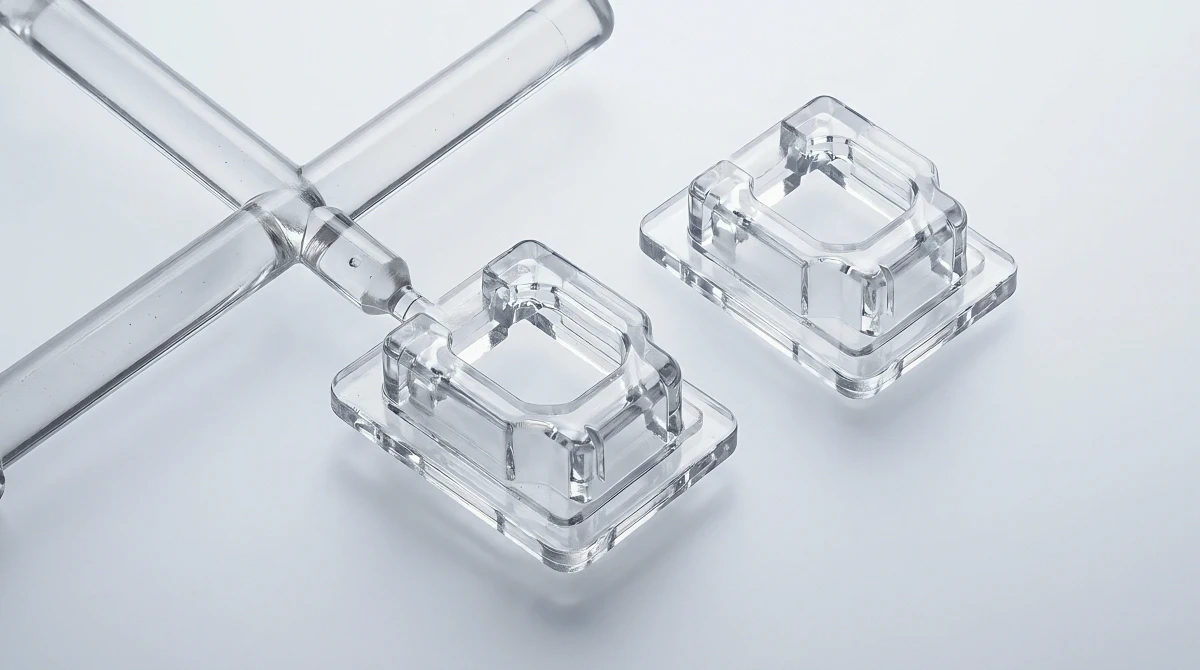
Gate Location and Gate Freeze in Injection Molding

Where a gate goes, how big it is and how long it stays open, with the weight study that sets hold time from the gate itself.

How Gate Location and Gate Freeze Shape a Molded PartAutodesk's Moldflow design rules open with the claim that gate position strongly affects material orientation and warpage, and that changing the gate is sometimes the only way to control orientation. Every gate injects under the same pressure, and the aim of gating is to avoid overpacking some paths while others are still filling, because unequal packing gives unequal shrinkage.

Cycle Time and Parts per Hour in a Bridge Injection Molding Run

A cycle is the sum of fill, hold, cooling and press motions, and a supplier's number is only as good as the pack and cooling times behind it.

What Sets Cycle Time and Parts per HourA molding cycle is a loop of seven moves: the mold closes, the cavity fills, the pack and hold phase runs, the part cools, the mold opens, the part is ejected, and the screw recovers for the next shot. Recovery runs while the part cools, which is why DuPont's nylon guide asks for screw speeds adjusted so that screw retraction time is shorter than the cooling phase.

How to Start Up an Injection Mold and Take the First Shots

A new mold is started cold on purpose, filled in stages with short shots, and read for vents, gates and heat before any process is fixed.

The Start-Up Sequence from a Cold Barrel to the First ShotEight moves take a machine from cold to its first complete part. The first four prepare the melt, the next three shape the shot, and the last one is a decision: whether the part describes the tool or only the settings.

Injection Molding Shrinkage Along and Across the Flow by Material

Molding shrinkage read by direction and condition for three resins, with the process settings that move it and the way a first sample turns it into a cavity allowance.

Shrinkage of Polycarbonate, Glass-Filled Nylon 66 and Acetal Along and Across the FlowISO 294-4:2018 sets out the method for measuring mold shrinkage and post-mold shrinkage of injection molded thermoplastic test specimens, parallel and normal to the direction of melt flow. Resin makers print the result in two lines, one per direction.

Request an Injection Molding Quote

Send the 2D drawing and the 3D file, with the quantity and the stage of the project. An engineer replies within 1 working day.

The quote form, the mutual NDA and the private folder for your files are on Protolis Atelier, with Injection Molding chosen.

Request a Quote