Meaning
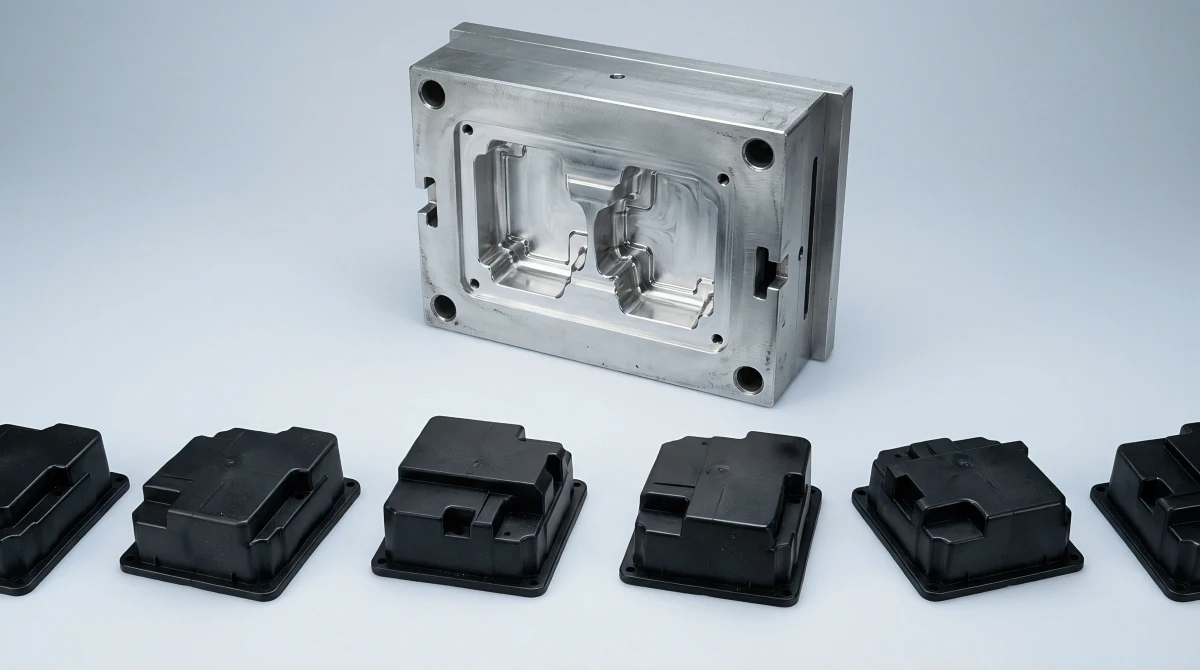
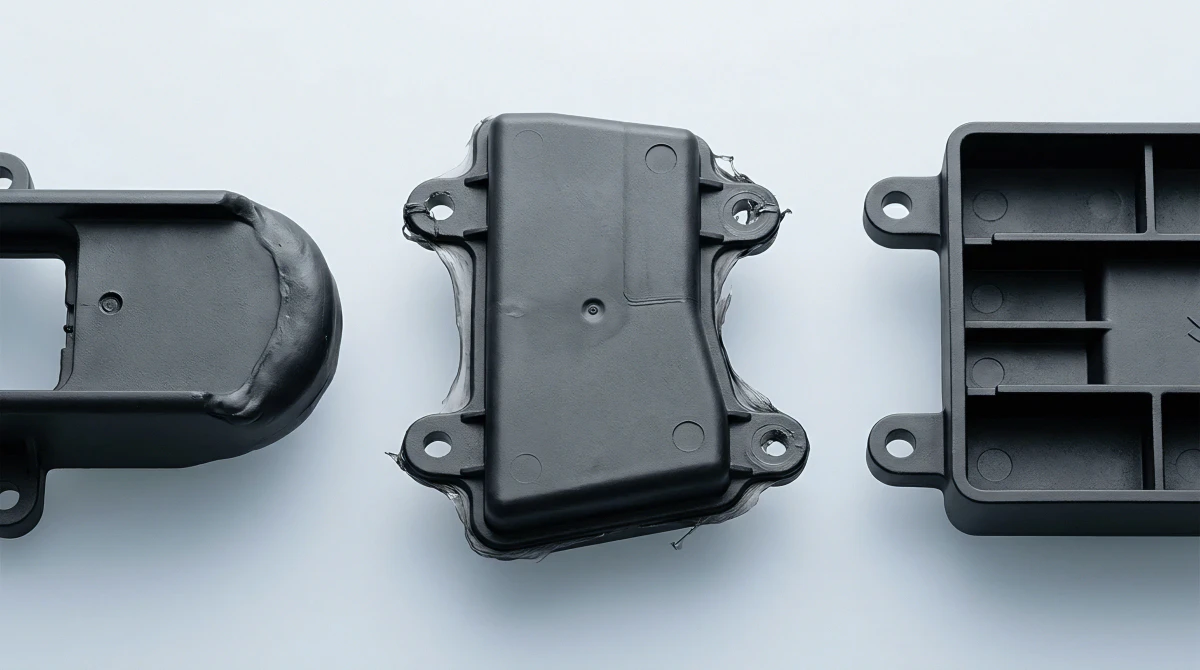
Sticking is a molded part holding to the cavity or core as the mold opens, so it deforms, stays behind or ejects badly. It is a tooling problem with a process component. Draft, polish and mold temperature are the first suspects. Melt heat, moisture and the mold material follow.Cause
When a part stays on the cavity half rather than the core, draft, polish or temperature is at fault. DuPont recommends 0.5° to 1° of draft per side for nylon ribs, bosses and sides. Resins that are softer and more elastic take as much as 2°. A mold that is too warm also holds a part. Covestro reports slight delamination, sticking and residue when its thermally conductive polycarbonate meets too hot a mold.Read More
Process Window
Covestro suggests 65 to 82 °C (150 to 180 °F) to avoid sticking, inside a wider 65 to 100 °C range. High melt temperature heats the mold locally and causes the same fault. The right melt temperature for those grades balances filling against overheating the tool. On nylon, high moisture lowers viscosity, and sticking and flash may follow even while properties still pass.Remedy in the Tool
High-conductivity inserts take heat out where a part grips. Covestro suggests beryllium copper for ribs, deep cores and other areas where sticking is likely. It also sets different temperatures on the two mold halves to hold the part on the intended side. Changing the half temperatures comes first, and draft and ejector position are checked second.Effect on Cycle
An interval saved at cooling can come back as a longer ejection or a cleaning stop. A conductive resin that sheds heat quickly into the tool can make the tool too warm. The cooling circuit and the mold material are therefore part of the same review.Undercuts
DuPont gives undercut advice in the same family of faults. An internal undercut that deforms on ejection may release with a hotter mold or a shorter cycle. An external undercut may release with a longer cycle and higher shrinkage.