Meaning
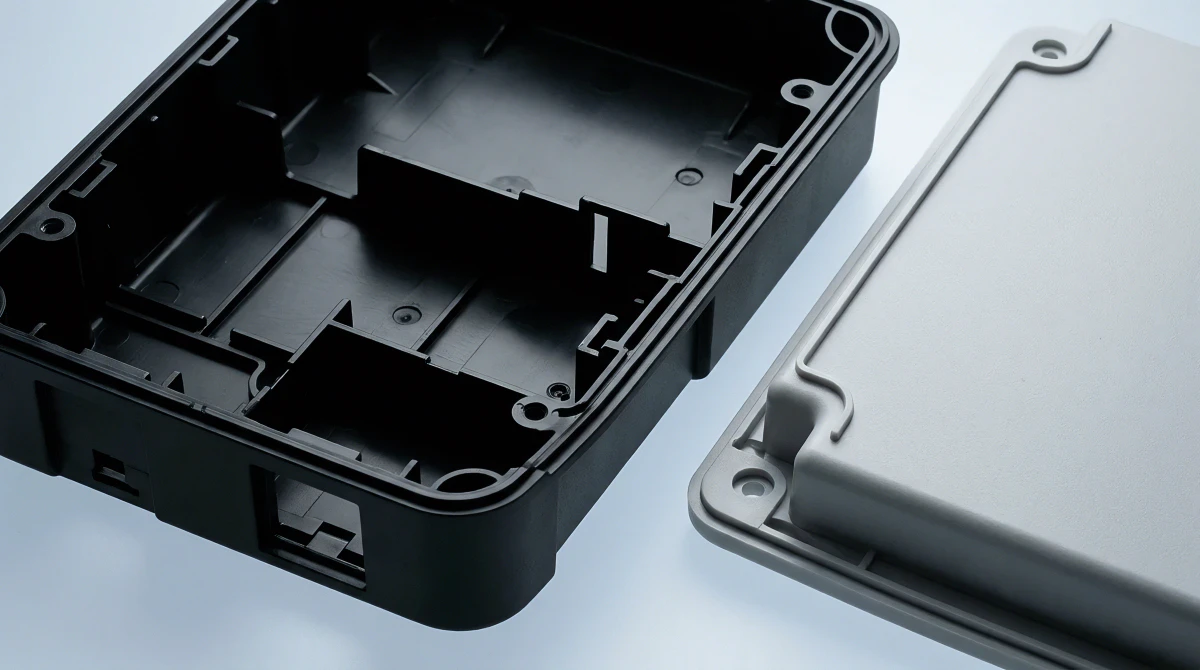
A rib is a thin wall section of a molded part, and it shapes shrinkage, sticking and flame class beyond its size. Ribs restrain the walls they join. They grip the cavity as the part cools. They are often the thinnest sections a flame listing has to cover.Shrinkage
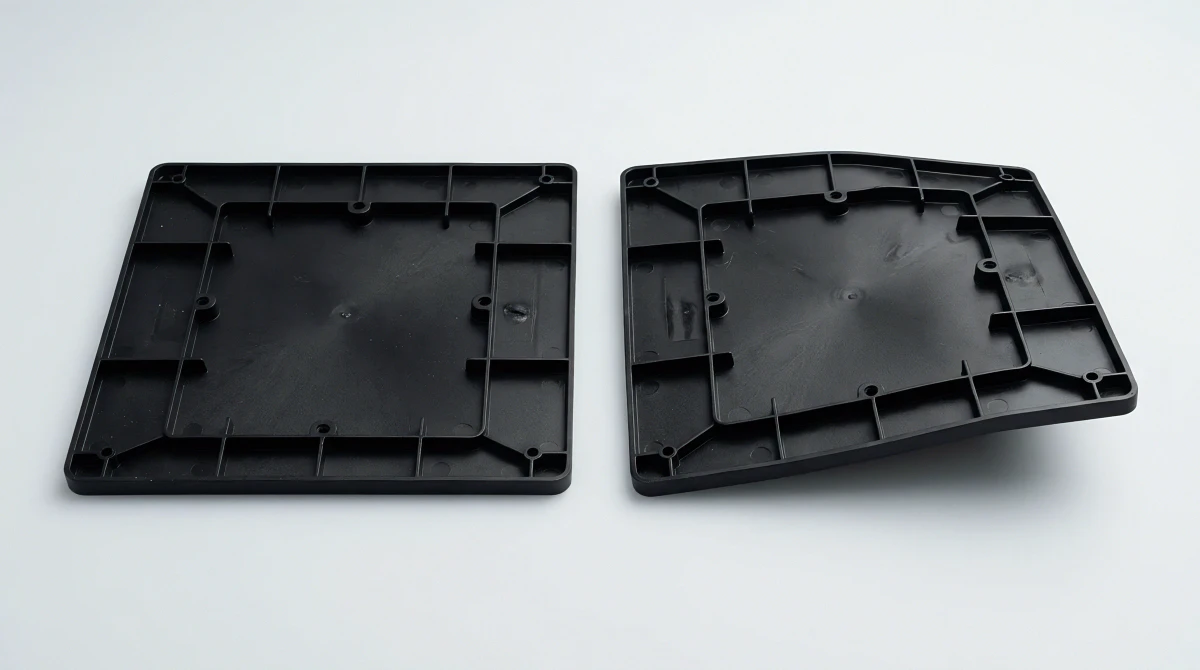
A printed shrinkage pair is a weaker estimate for a part with deep ribs. ISO 294-4 reports free shrinkage, the maximum of any restrained value. A feature held between ribs and walls shrinks less than that figure. A flat, evenly walled part gated at one edge resembles the test plaque, and a ribbed part does not. For acetal, DuPont finds that once packing feeds the crystallization loss, thermal shrinkage no longer depends on wall thickness.Read More
Packing
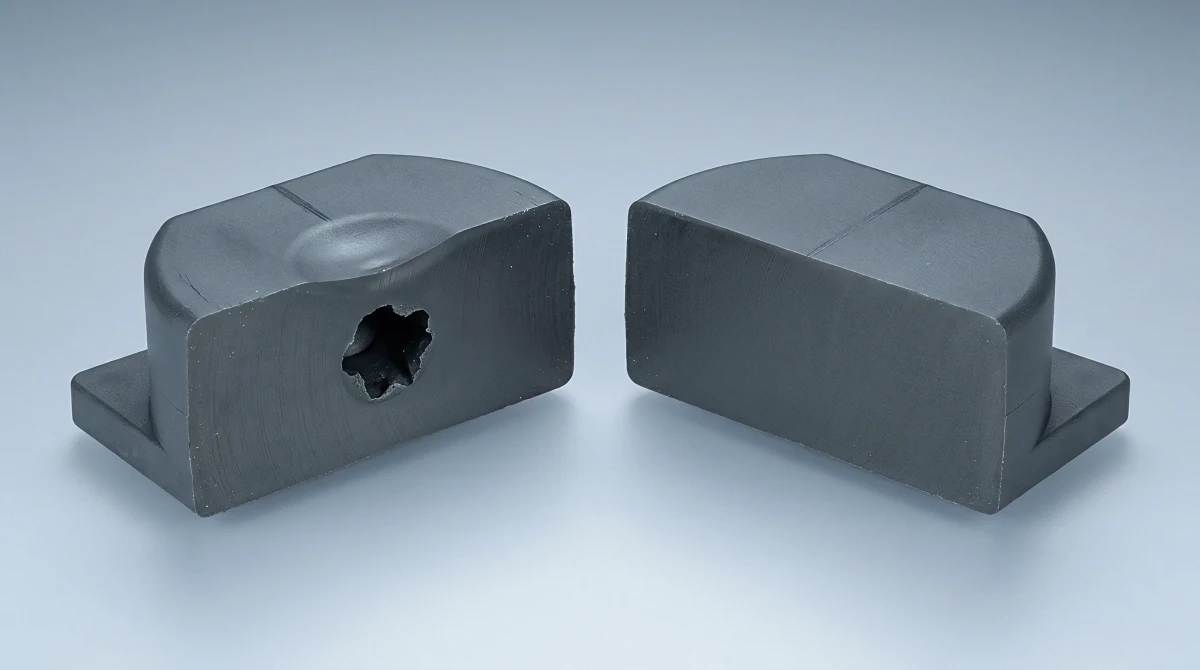
A 2 mm (0.08 in) rib and a 6 mm boss do not need hold in proportion to their walls. Packing time per millimeter rises as thickness grows, so the thick section takes a disproportionate share.Draft and Sticking
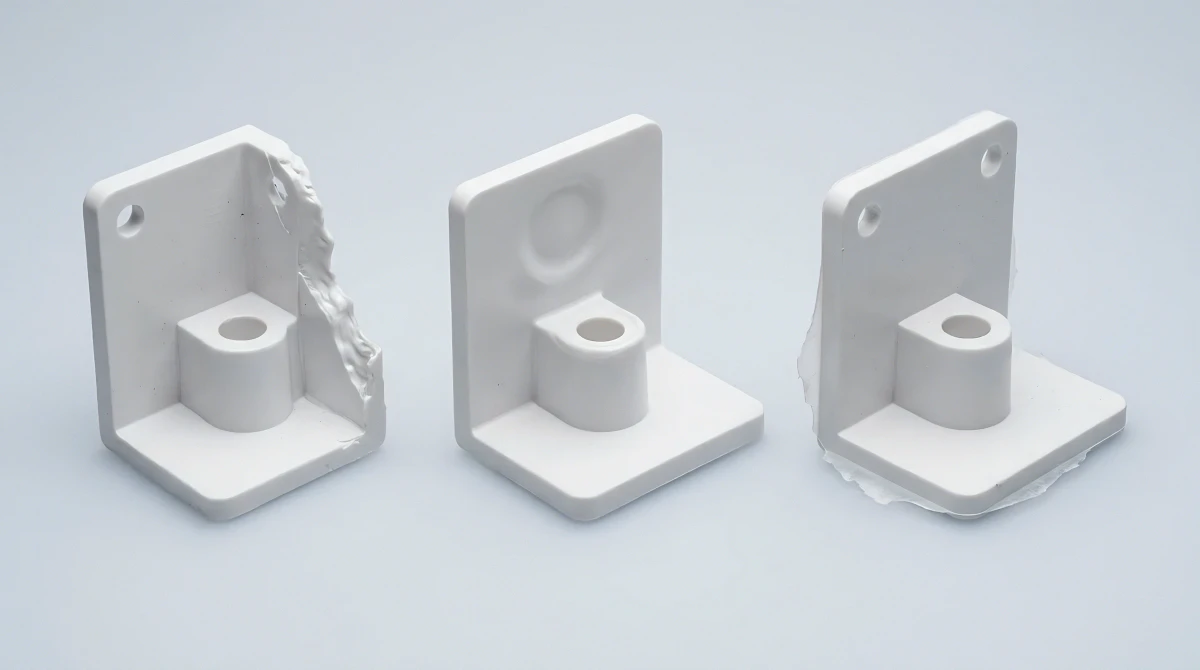
Nylon ribs take 0.5° to 1° of draft per side in DuPont’s guide. A rib that grips the cavity half points to draft, polish or temperature.Flame Class
A UL 94 rating belongs to a thickness, and a molded enclosure has ribs the test strip does not. The rating transfers through the resin and the wall. It is weakest at thin ribs that fall below the thinnest listed wall. A part designed with ribs thinner than the listed minimum is raised before the tool is cut.Rib Size
For Covestro’s conductive polycarbonate, the minimum rib thickness is 1.5 mm (0.059 in), with venting at the apex of the draft.