Vent

A vent is a shallow channel at the parting line or an ejector that lets air leave the cavity while holding back the melt.

Every Vent article of the Injection Molding Resources, newest first, each written from published standards, research and makers’ data.

Meaning

A vent is a shallow channel at the parting line or an ejector that lets air leave the cavity while holding back the melt. Its depth is the critical number. Too shallow and gas burns the part, too deep and the vent flashes. Vents and the relief channels behind them are cut and checked on purpose.

Typical Depth

DuPont’s nylon guide gives vent depths of 0.012 to 0.020 mm (0.0005 to 0.0008 in) for Zytel and Minlon. The land stays at or under 0.8 mm (0.03 in), and the vent is as wide as feasible, typically over 3 mm. Behind the land a relief channel deeper than 0.8 mm opens to about 3 mm after 25 mm. Makrolon 2407 polycarbonate takes vents of 0.025 to 0.075 mm (0.001 to 0.003 in).
Read More

Failure Mode

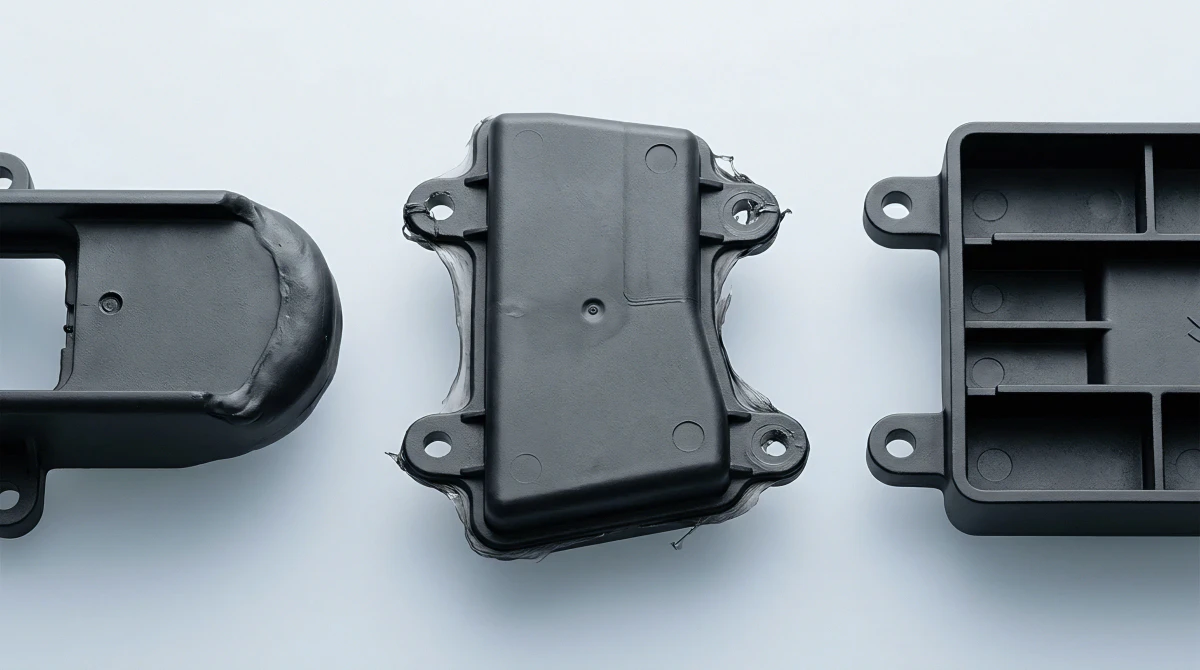
Weak venting gives weak weld lines and burned or discolored spots. It also gives attack on the steel, size variation, surface bubbles and short shots. A vent that clogs shows later as a burn mark at the end of flow. A vent that is too deep shows as flash.

Bridge Tool Practice

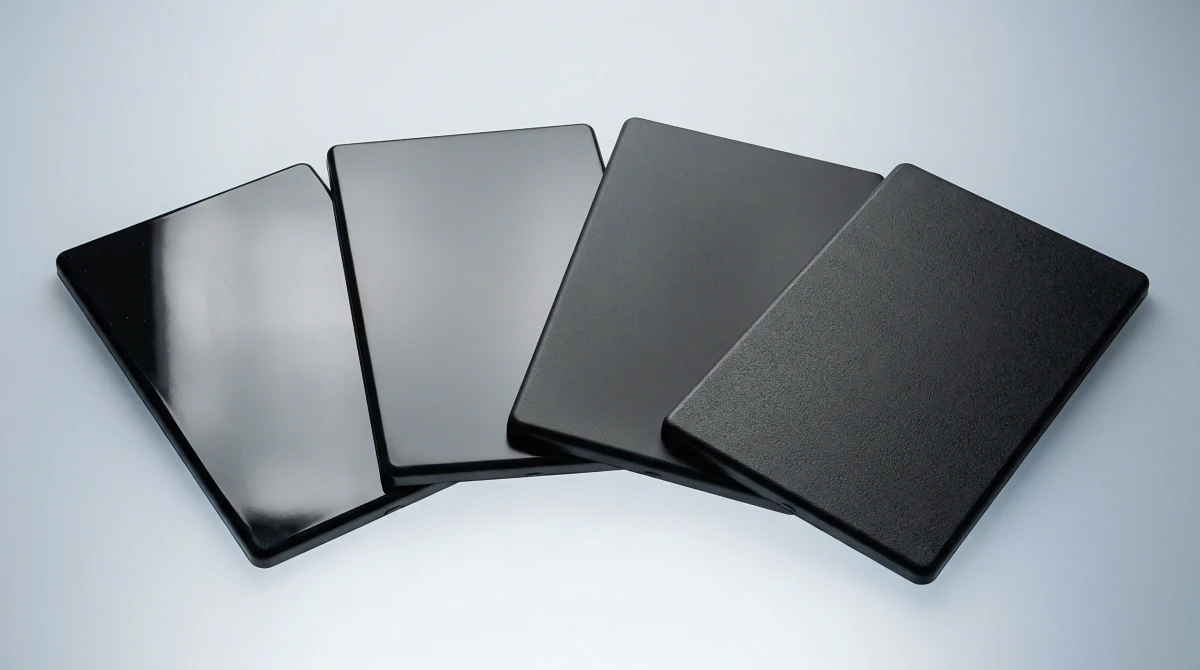
For low-viscosity grades, vents start conservatively shallow and are deepened as required. Cutting an aluminum vent deeper is easier than welding it back. A vent is a deliberate gap in the polish, 1,000 to 6,000 times the Ra of an A-1 surface. A texture that reaches into a vent land changes the venting.

Upkeep

A wear and galling check at each tool removal covers vents along with gates and shutoffs. Burn marks that appear late in a run point to clogged vents or new deposits. The vent is cleaned before the tool is judged worn.

Mold Maintenance and Spare Inserts Across a Bridge Injection Molding Run

How a bridge mold is cleaned, inspected and fitted with inserts across a run, so that wear is recorded, predicted and met with spares instead of stoppages.

What a Bridge Mold Needs Between LotsThe aluminum maintenance column is plain on the first rule: an aluminum mold is taken apart and cleaned thoroughly after every run of parts, and cleaned again before storage, however short the run. It can often run five to seven days before it needs cleaning, the author notes, though some resins and some molds with actions need it after two to three days.
Short Shot, Sink and Flash in Injection Molding Traced to Their Cause

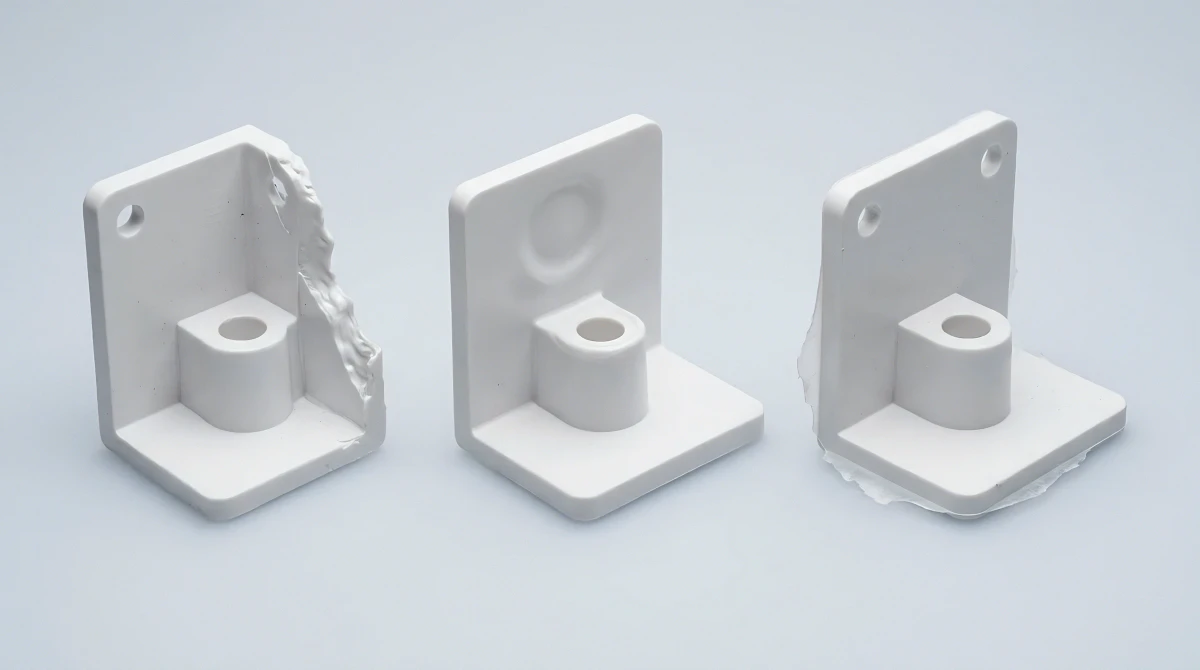
Short shots, sinks and flash traced to the melt volume, pressure and steel behind them, with the checks that find the cause before a setting is moved.

What Short Shots, Sink and Flash Have in CommonA short shot is a part the cavity never finished. BASF's troubleshooting brochure for engineering thermoplastics describes it as a part not completely formed, mainly in the areas furthest from the gate or in thin walls.

Polypropylene for Living Hinges in Injection Molding

Polypropylene for living hinges read from design guides and molding columns: grade choice, hinge dimensions, gating across the web, cooling and the tests that prove a hinge.

Why Polypropylene Makes a Living HingeThe MIT design note explains the mechanism. When a partly oriented polypropylene web is cold drawn on its first flex, it stretches by ratios of 2 or 3 to 1, and its tensile strength rises sharply.

ABS and PC/ABS Blends in Injection Molding

ABS and PC/ABS read from the makers' datasheets: drying, processing windows, shrinkage, snap-fit strain, impact and when the blend earns its stricter dryer.

How ABS and PC/ABS Differ in Injection MoldingABS is a terpolymer, and Moldflow's material page describes its structure: a continuous phase of styrene-acrylonitrile with a dispersed phase of polybutadiene rubber. Acrylonitrile brings hardness and chemical and heat resistance, styrene brings processability, gloss and strength, and butadiene brings toughness and impact strength.

How Many Parts One Aluminum Injection Mold Gives

A mold's life is a toolmaker's rating for a stated resin and cavity count, converted into parts per tool and then into tools per quantity.

What Sets the Number of Parts One Aluminum Mold GivesThree things set it, and they act together. One is the alloy and where in the plate the cavity sits.

How to Start Up an Injection Mold and Take the First Shots

A new mold is started cold on purpose, filled in stages with short shots, and read for vents, gates and heat before any process is fixed.

The Start-Up Sequence from a Cold Barrel to the First ShotEight moves take a machine from cold to its first complete part. The first four prepare the melt, the next three shape the shot, and the last one is a decision: whether the part describes the tool or only the settings.

SPI Mold Finish Grades A-1 to D-3 for Injection Molded Parts

The SPI finish grades read for a buyer, with what each method gives, how texture costs draft, and how a finish is written and kept on an aluminum tool.

What the Twelve SPI Finish Grades SpecifyThe SPI system names a finish by a letter and a number. Its letter gives the finishing method, A for diamond buff, B for grit paper, C for stone and D for dry blast, while the number runs from 1, the finest within a letter, to 3, the coarsest.

Polycarbonate Injection Molding Properties for Clear and Tough Parts

Polycarbonate read from the maker's sheets for a buyer: what it molds like when dry and hot, how thin walls fill, and what to ask of an aluminum tool.

Makrolon 2407 Properties in Metric and Inch UnitsMakrolon 2407 is a low-viscosity, general-purpose, UV-stabilized, easy-release polycarbonate with a melt volume-flow rate of 19 cm³/10 min at 300 °C and 1.2 kg under ISO 1133. Its ISO short name is ISO 7391-PC,MLR,(,,)-18-9.

Request an Injection Molding Quote

Send the 2D drawing and the 3D file, with the quantity and the stage of the project. An engineer replies within 1 working day.

The quote form, the mutual NDA and the private folder for your files are on Protolis Atelier, with Injection Molding chosen.

Request a Quote