Amorphous Resin

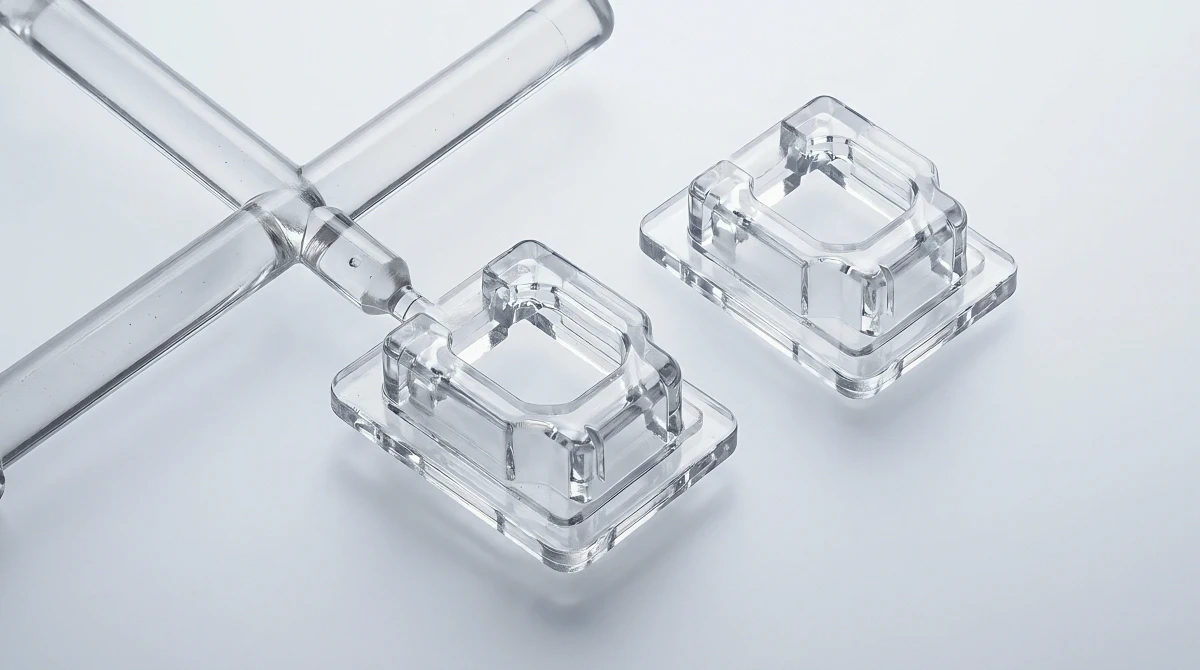
An amorphous resin is a thermoplastic that solidifies without crystallizing, such as polycarbonate.

Every Amorphous Resin article of the Injection Molding Resources, newest first, each written from published standards, research and makers’ data.

Meaning

An amorphous resin is a thermoplastic that solidifies without crystallizing, such as polycarbonate. It shrinks little and nearly equally in every direction. Its failure under a poor process is over-packing, the opposite of a semi-crystalline resin. It also needs time in the mold to become stiff before it can be ejected.

Shrinkage

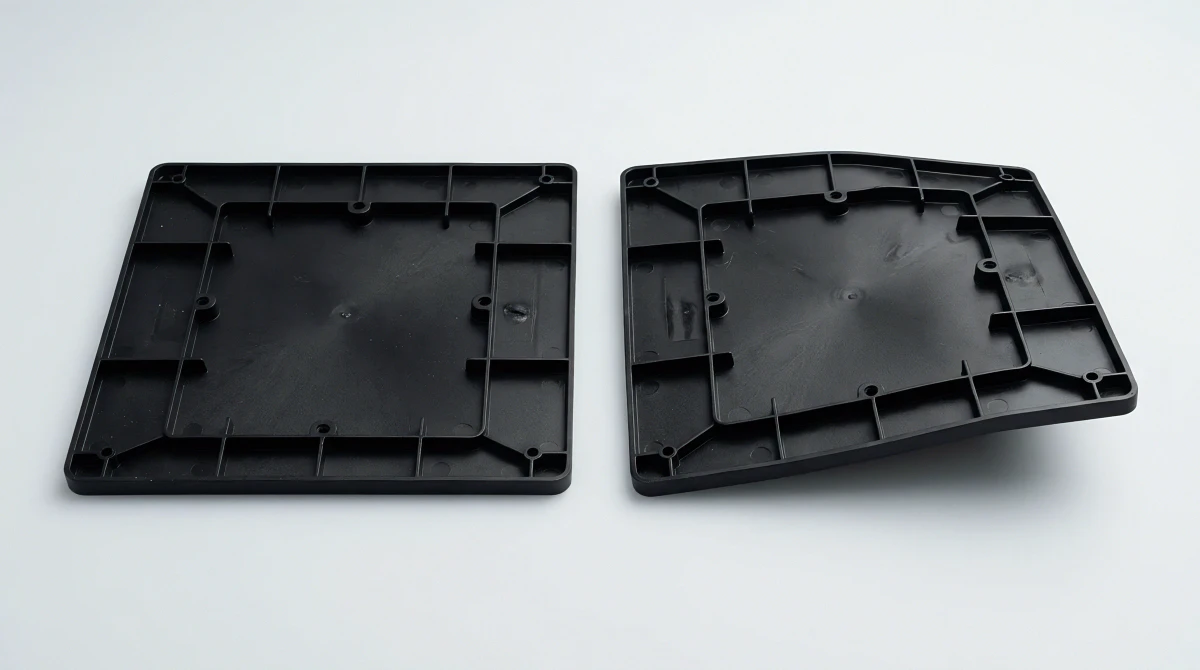
Without a crystallization step, an amorphous resin loses less volume as it cools. Makrolon 2407 prints 0.65 percent along and 0.70 percent across the flow. That gap of 0.05 points keeps a molded shape true, where glass-filled nylon shows 0.8 points. Acetal, which crystallizes, prints 2.0 percent, more than three times as much.
Read More

Failure Mode

DuPont’s Delrin tips contrast the two families. A bad process tends to over-pack an amorphous resin. It tends to under-pack a semi-crystalline one, which then shrinks too much. The amorphous error shows as flash and stress near the gate, while the crystalline one shows as sink, voids and size. Both are found with the same part weight study.

Gate

A conical gate suits amorphous resins, according to the same tips. A crystalline resin freezes in the narrow tip of that gate before packing ends. The tunnel gate rules written for acetal therefore do not carry over to polycarbonate, and the reverse holds too.

Cooling and Cycle

An amorphous resin packs briefly and then waits through a long cooling stage. It is in the amorphous case that the cooling circuit and the mold material matter most. A crystalline resin such as acetal can leave the mold hot once packing is complete. The whole acetal cycle is therefore shorter. DuPont’s fourth acetal trial shows what the amorphous habit costs a crystalline part. Cooling 15 seconds in the mold widened its diameter spread from ±0.02 to ±0.07 mm and lengthened the cycle to 41 seconds.
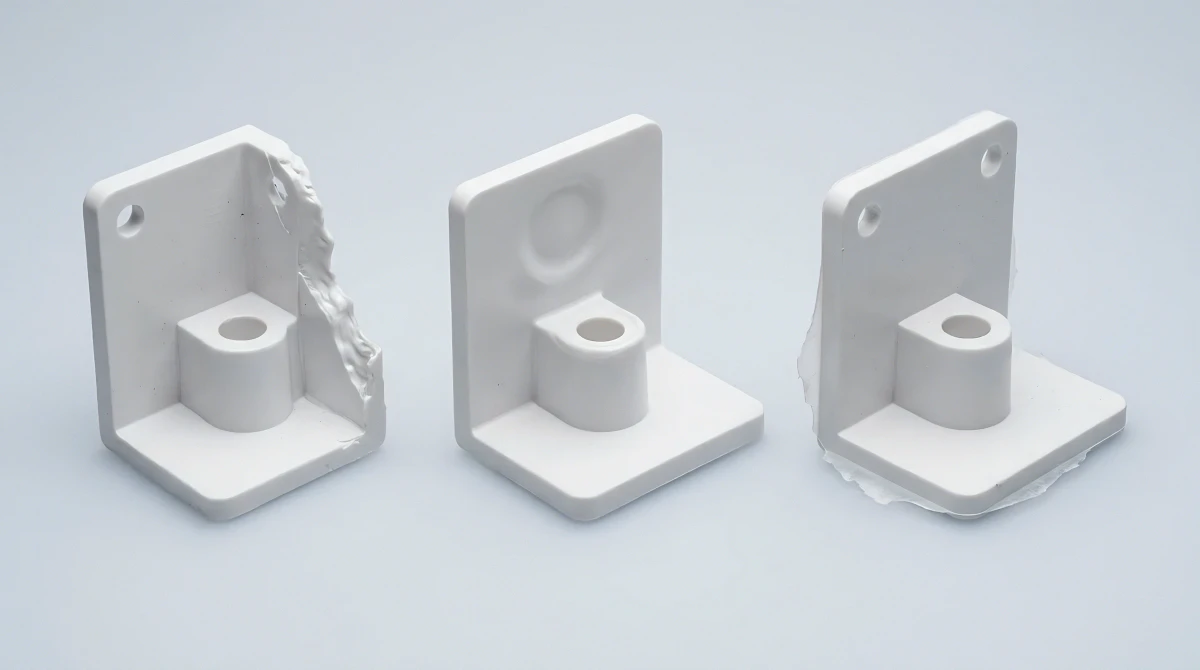
Short Shot, Sink and Flash in Injection Molding Traced to Their Cause

Short shots, sinks and flash traced to the melt volume, pressure and steel behind them, with the checks that find the cause before a setting is moved.

What Short Shots, Sink and Flash Have in CommonA short shot is a part the cavity never finished. BASF's troubleshooting brochure for engineering thermoplastics describes it as a part not completely formed, mainly in the areas furthest from the gate or in thin walls.

Gate Location and Gate Freeze in Injection Molding

Where a gate goes, how big it is and how long it stays open, with the weight study that sets hold time from the gate itself.

How Gate Location and Gate Freeze Shape a Molded PartAutodesk's Moldflow design rules open with the claim that gate position strongly affects material orientation and warpage, and that changing the gate is sometimes the only way to control orientation. Every gate injects under the same pressure, and the aim of gating is to avoid overpacking some paths while others are still filling, because unequal packing gives unequal shrinkage.

Polypropylene for Living Hinges in Injection Molding

Polypropylene for living hinges read from design guides and molding columns: grade choice, hinge dimensions, gating across the web, cooling and the tests that prove a hinge.

Why Polypropylene Makes a Living HingeThe MIT design note explains the mechanism. When a partly oriented polypropylene web is cold drawn on its first flex, it stretches by ratios of 2 or 3 to 1, and its tensile strength rises sharply.

ABS and PC/ABS Blends in Injection Molding

ABS and PC/ABS read from the makers' datasheets: drying, processing windows, shrinkage, snap-fit strain, impact and when the blend earns its stricter dryer.

How ABS and PC/ABS Differ in Injection MoldingABS is a terpolymer, and Moldflow's material page describes its structure: a continuous phase of styrene-acrylonitrile with a dispersed phase of polybutadiene rubber. Acrylonitrile brings hardness and chemical and heat resistance, styrene brings processability, gloss and strength, and butadiene brings toughness and impact strength.

Cycle Time and Parts per Hour in a Bridge Injection Molding Run

A cycle is the sum of fill, hold, cooling and press motions, and a supplier's number is only as good as the pack and cooling times behind it.

What Sets Cycle Time and Parts per HourA molding cycle is a loop of seven moves: the mold closes, the cavity fills, the pack and hold phase runs, the part cools, the mold opens, the part is ejected, and the screw recovers for the next shot. Recovery runs while the part cools, which is why DuPont's nylon guide asks for screw speeds adjusted so that screw retraction time is shorter than the cooling phase.

How to Start Up an Injection Mold and Take the First Shots

A new mold is started cold on purpose, filled in stages with short shots, and read for vents, gates and heat before any process is fixed.

The Start-Up Sequence from a Cold Barrel to the First ShotEight moves take a machine from cold to its first complete part. The first four prepare the melt, the next three shape the shot, and the last one is a decision: whether the part describes the tool or only the settings.

How Tightly Acetal Parts Hold Dimension in Injection Molding

Acetal dimension spread measured on one part under four press settings, with the gate and cooling rules behind it and a tolerance budget for a 50 mm feature.

Outer Diameter Spread Under Four Packing and Cooling SettingsThe test part in DuPont's tips is a tribological sample used for wear and friction testing, a part whose outer diameter has to be as dimensionally precise as possible. DuPont molded it under four settings, measured the outer diameter and reported the mean with its variation.

Acetal Homopolymer Injection Molding Properties and Gate Rules

Delrin 500P read from the maker's sheet and molding tips: why acetal shrinks and needs a packed gate, how hot the melt may run, and what to check on an aluminum tool.

Delrin 500P Properties in Metric and Inch UnitsDelrin 500P NC010 is a medium-viscosity acetal homopolymer, and Delrin prints its ISO values as the reference beside 500CPE on its own product data sheet. The grade has a melt mass-flow rate of 15 g/10 min at 190 °C and 2.16 kg under ISO 1133.

Request an Injection Molding Quote

Send the 2D drawing and the 3D file, with the quantity and the stage of the project. An engineer replies within 1 working day.

The quote form, the mutual NDA and the private folder for your files are on Protolis Atelier, with Injection Molding chosen.

Request a Quote