Polycarbonate

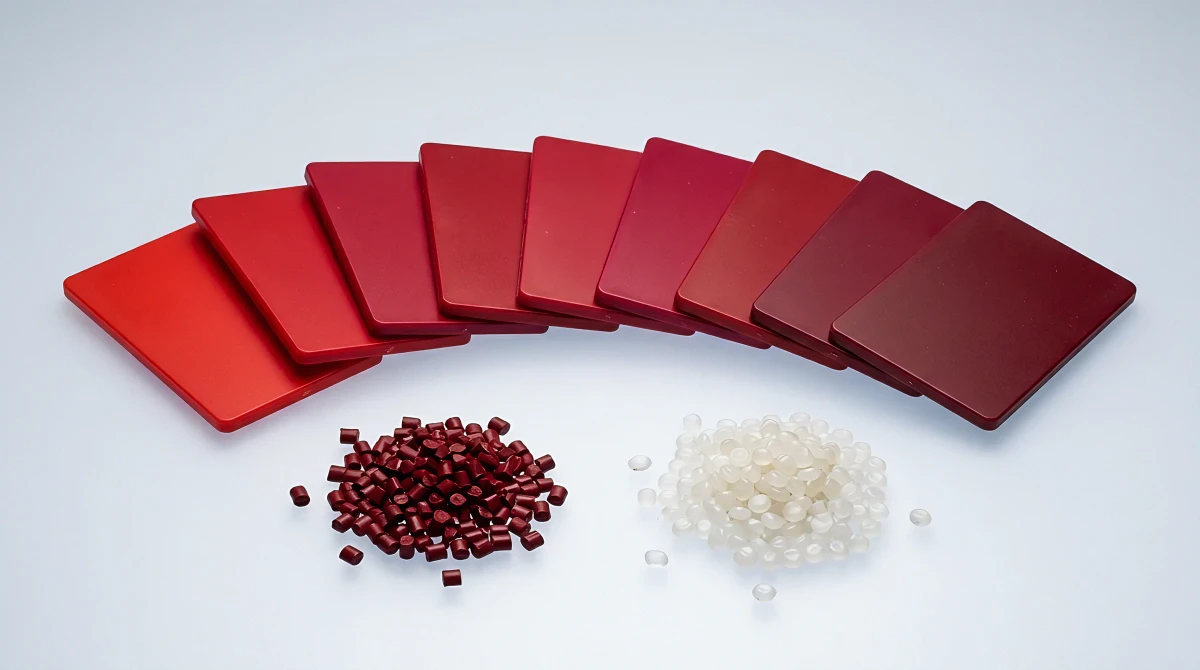
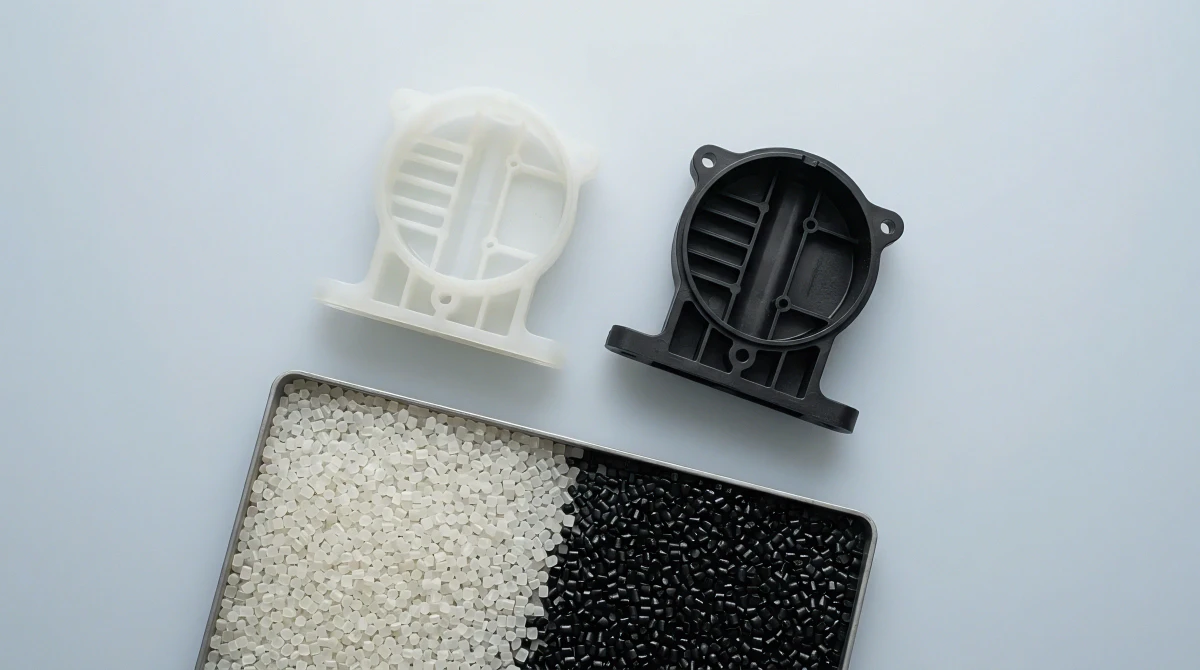
Polycarbonate is a tough, transparent amorphous thermoplastic molded hot from carefully dried pellets.

Every Polycarbonate article of the Injection Molding Resources, newest first, each written from published standards, research and makers’ data.

Meaning

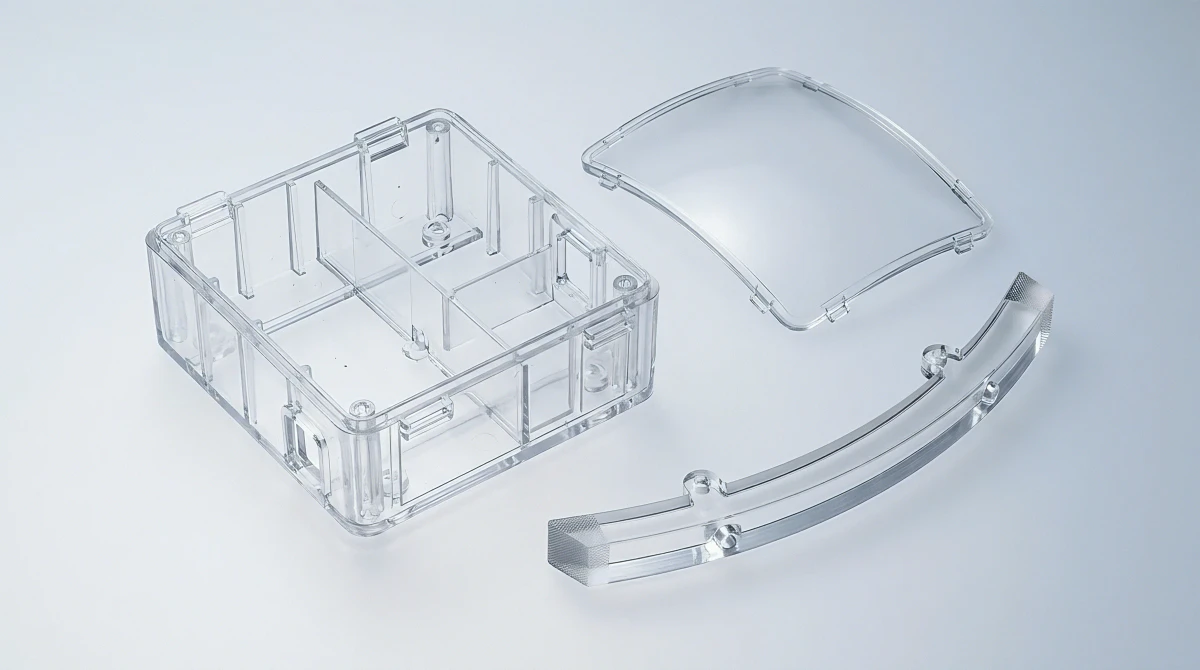
Polycarbonate is a tough, transparent amorphous thermoplastic molded hot from carefully dried pellets. Makrolon 2407, a low-viscosity general-purpose grade that is UV-stabilized and easy-release, is the grade read in these resources. Its clear parts pass 89 percent of visible light through a 2 mm wall. It shrinks little and almost equally in both directions, which keeps a molded shape true.

Drying

Polycarbonate carries 0.12 percent water at equilibrium in room air. The Makrolon 2407 sheet sets a ceiling of 0.02 percent in the pellet at the press. Its recommendation is dry-air drying at 120 °C (248 °F) for 4 hours. Covestro’s processing sheet for its thermally conductive grades asks for a desiccant dryer. That dryer runs at 121 °C (250 °F) with a -29 °C (-20 °F) dew point for at least 4 hours. A limit ten times tighter than nylon’s marks a resin that cannot be dried casually.
Read More

Molding Window

Makrolon 2407 runs at a melt of 280 to 320 °C (536 to 608 °F), with 300 °C (572 °F) as standard. The mold runs at 70 to 110 °C (158 to 230 °F). Hold pressure is 50 to 75 percent of injection pressure, and back pressure 100 to 200 bar (1,450 to 2,900 psi). The shot uses 30 to 70 percent of the cylinder, which keeps residence time within the resin’s tolerance. Vents are cut 0.025 to 0.075 mm (0.001 to 0.003 in) deep. Wall thickness controls fill in polycarbonate more than any machine setting. For Covestro’s thermally conductive grades the thinnest practical nominal wall is 1.5 mm (0.059 in). Going from 1.5 to 2.0 mm lengthens the flow path by 50 to 100 percent, depending on conditions and grade. Ribs keep at least 1.5 mm with venting at the apex of the draft. A 1.2 mm wall at the end of a 150 mm flow path is a different molding problem from the same part at 2.0 mm.

Shrinkage and Expansion

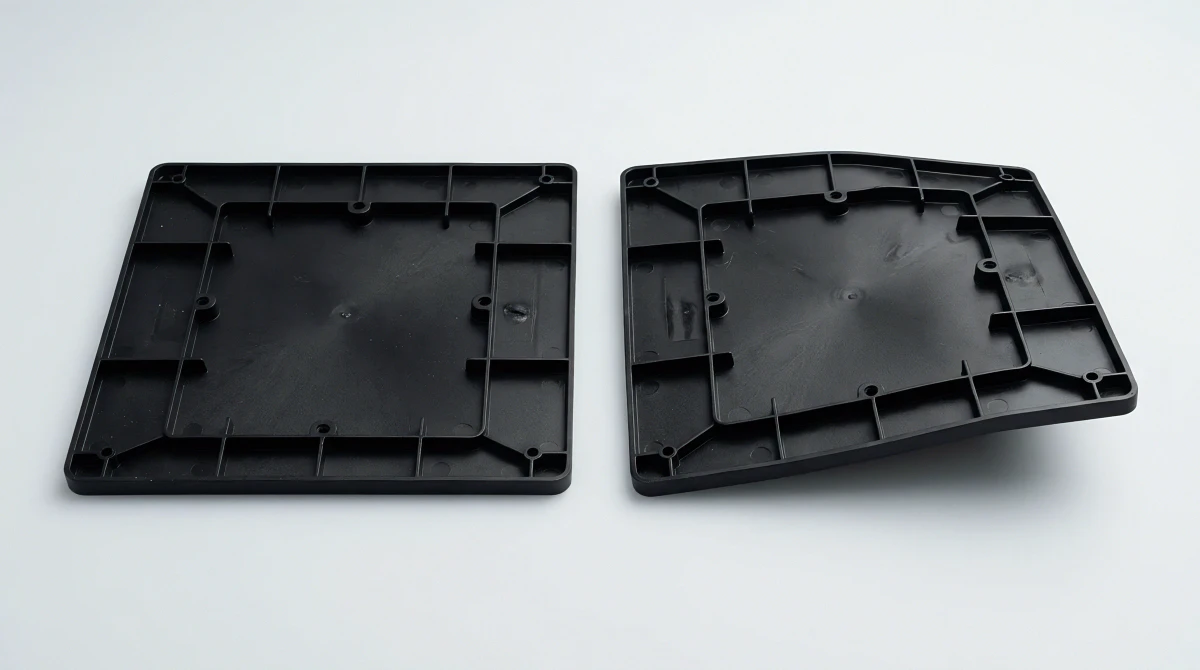
The sheet prints 0.65 percent along the flow and 0.70 percent across it under ISO 294-4. Covestro adds a practical range for parts of 0.5 to 0.7 percent under ISO 2577. A cavity cut for 0.6 percent at 100.60 mm gives a part between 99.90 and 100.10 mm. That 0.2 mm band comes from the range alone. The direction gap of 0.05 points compares with 0.8 points for glass-filled nylon. The linear expansion is 0.65E-4 per K between 23 and 55 °C, equal in both directions. A 100 mm (3.94 in) length grows 0.065 mm for every 10 °C. A part measured at 33 °C in a warm room reads 0.065 mm long with no change in the part.

Clarity

Luminous transmittance is 89 percent at 1 and 2 mm, 88 percent at 3 mm and 87 percent at 4 mm. Haze is below 0.8 percent at 3 mm, and the refractive index is 1.584. A molded surface copies the cavity, so a clear part is only as clear as its polish. The SPI A-1 and A-2 grades are the ones listed for optically clear and transparent parts.

Toughness and Heat

Notched Charpy impact is 65 kJ/m² at 23 °C with a partial break. At -30 °C it falls to 14 kJ/m² with a complete break. Strain at break reaches 120 percent, and yield sits at 6.0 percent strain. The glass transition is 143 °C (289 °F), and heat deflection at 1.80 MPa is 124 °C (255 °F). The tensile creep modulus falls from 2,200 MPa at 1 hour to 1,900 MPa at 1,000 hours. A snap fit is sized inside the 6.0 percent yield strain, and a loaded boss on the long-term modulus.

Flame and Use Limits

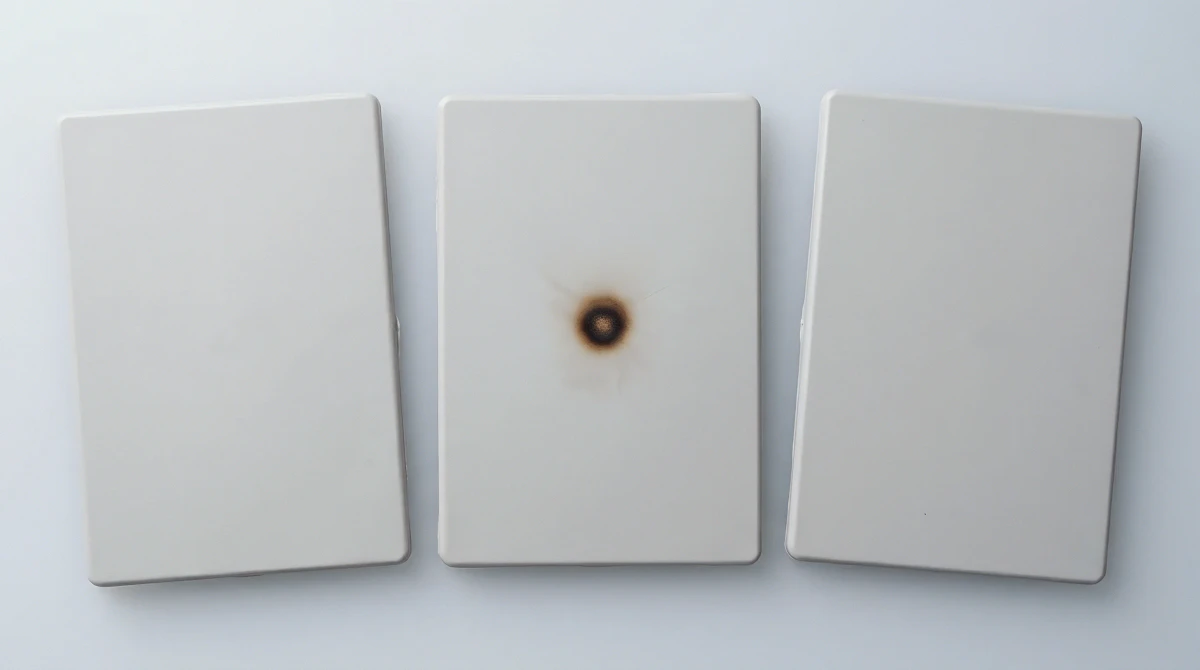
This grade is UL 94 V-2 at 0.75 mm and HB at 2.7 mm, so the class falls as the wall rises. Its oxygen index is 27 percent, and its glow wire flammability index runs from 850 °C at 0.75 mm to 930 °C at 3.0 mm. A part that needs V-0 in a thin wall takes a flame-retardant grade. Covestro states that Makrolon 2407 is not designated for medical devices, food contact or cosmetic uses. Such use is agreed with the maker in advance.
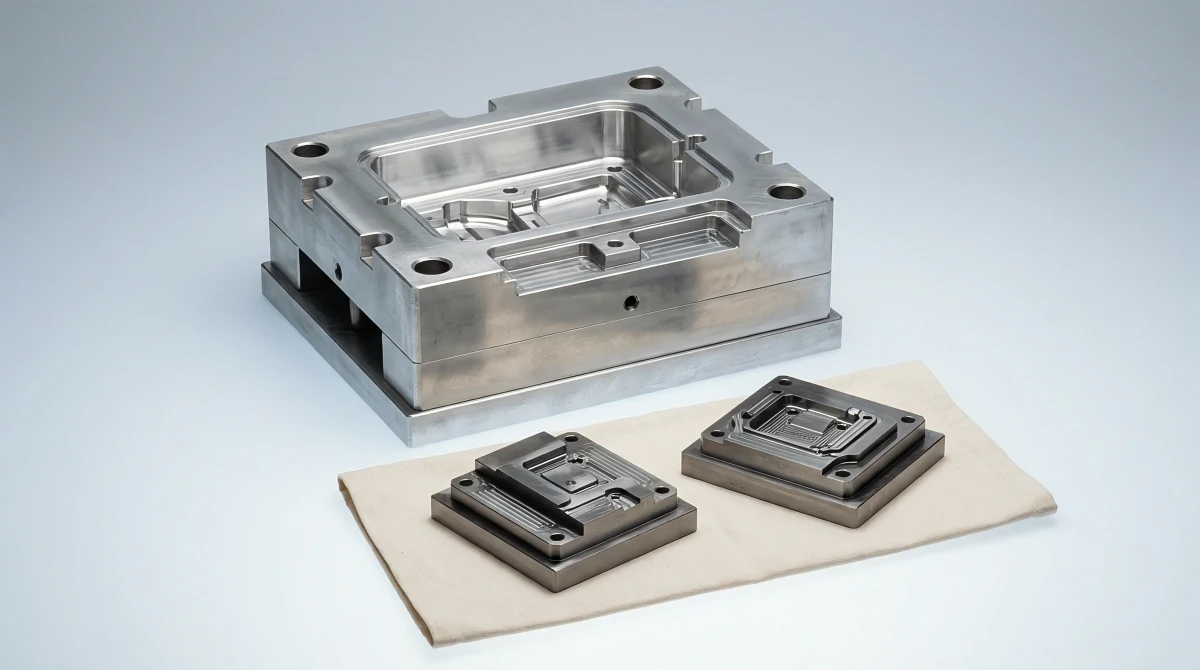
Mold Maintenance and Spare Inserts Across a Bridge Injection Molding Run

How a bridge mold is cleaned, inspected and fitted with inserts across a run, so that wear is recorded, predicted and met with spares instead of stoppages.

What a Bridge Mold Needs Between LotsThe aluminum maintenance column is plain on the first rule: an aluminum mold is taken apart and cleaned thoroughly after every run of parts, and cleaned again before storage, however short the run. It can often run five to seven days before it needs cleaning, the author notes, though some resins and some molds with actions need it after two to three days.

Color Matching Molded Parts With Masterbatch in a Production Run

How masterbatch color is matched, dosed, distributed and measured so that every lot of a molded part matches the standard agreed at the first article.

How Masterbatch Color Is Held Across a RunThree things have to stay constant for color to hold. The masterbatch has to be the same formulation at the same let-down ratio, the melt has to distribute it evenly, and the part has to be measured the same way each time.

IEC 60695-2-12 Glow Wire Flammability Index for Molded Parts

The glow wire flammability index read for a buyer: what IEC 60695-2-12 measures, how makers print it by thickness, and what a molded part's file can carry from it.

What IEC 60695-2-12 MeasuresThe scope, printed on the IEC webstore and in the 2021 preview, is short. The standard specifies the details of the glow wire test applied to specimens of solid electrical insulating materials, or other solid materials, to determine the glow wire flammability index, GWFI.

ABS and PC/ABS Blends in Injection Molding

ABS and PC/ABS read from the makers' datasheets: drying, processing windows, shrinkage, snap-fit strain, impact and when the blend earns its stricter dryer.

How ABS and PC/ABS Differ in Injection MoldingABS is a terpolymer, and Moldflow's material page describes its structure: a continuous phase of styrene-acrylonitrile with a dispersed phase of polybutadiene rubber. Acrylonitrile brings hardness and chemical and heat resistance, styrene brings processability, gloss and strength, and butadiene brings toughness and impact strength.

Drying Resin and Setting Melt Temperature Before the First Injection Molded Part

Pellets are dried to a measured moisture limit, held there to the hopper, and melted inside a window that the resin maker prints.

What Dry Resin and a Correct Melt Temperature ProtectWater in a nylon melt is not a surface problem. DuPont explains that water carried into the melt triggers hydrolysis, which breaks the polymer down, costs toughness and strength, and makes the melt flow more easily.

How Temperature Changes the Size of a Molded Plastic Part at the Gauge

How coefficients of expansion turn a few degrees of gauge temperature into hundredths of a millimeter, by resin and direction, and what a drawing should state.

Linear Thermal Expansion of Polycarbonate, Glass-Filled Nylon and AcetalLinear thermal expansion is reported on datasheets as a coefficient, the length change per unit length per degree. The three makers print it by the ISO or TMA method, and they differ in how finely they split it.

Injection Molding Shrinkage Along and Across the Flow by Material

Molding shrinkage read by direction and condition for three resins, with the process settings that move it and the way a first sample turns it into a cavity allowance.

Shrinkage of Polycarbonate, Glass-Filled Nylon 66 and Acetal Along and Across the FlowISO 294-4:2018 sets out the method for measuring mold shrinkage and post-mold shrinkage of injection molded thermoplastic test specimens, parallel and normal to the direction of melt flow. Resin makers print the result in two lines, one per direction.

UL 94 Flammability Ratings Explained for Molded Plastic Parts

The UL 94 classes read as a buyer needs them: what each test does, how three common resin sheets print a rating, and what a supplier should show.

What UL 94 Measures and What It Is NotUL 94 is a family of small-scale flame tests on strips and plaques of plastic, run under laboratory conditions. UL's own page on combustion tests for plastics groups the classifications into twelve: HB, V-0, V-1 and V-2, 5VA and 5VB, VTM-0, VTM-1 and VTM-2, and HF-1, HF-2 and HBF for foams.

SPI Mold Finish Grades A-1 to D-3 for Injection Molded Parts

The SPI finish grades read for a buyer, with what each method gives, how texture costs draft, and how a finish is written and kept on an aluminum tool.

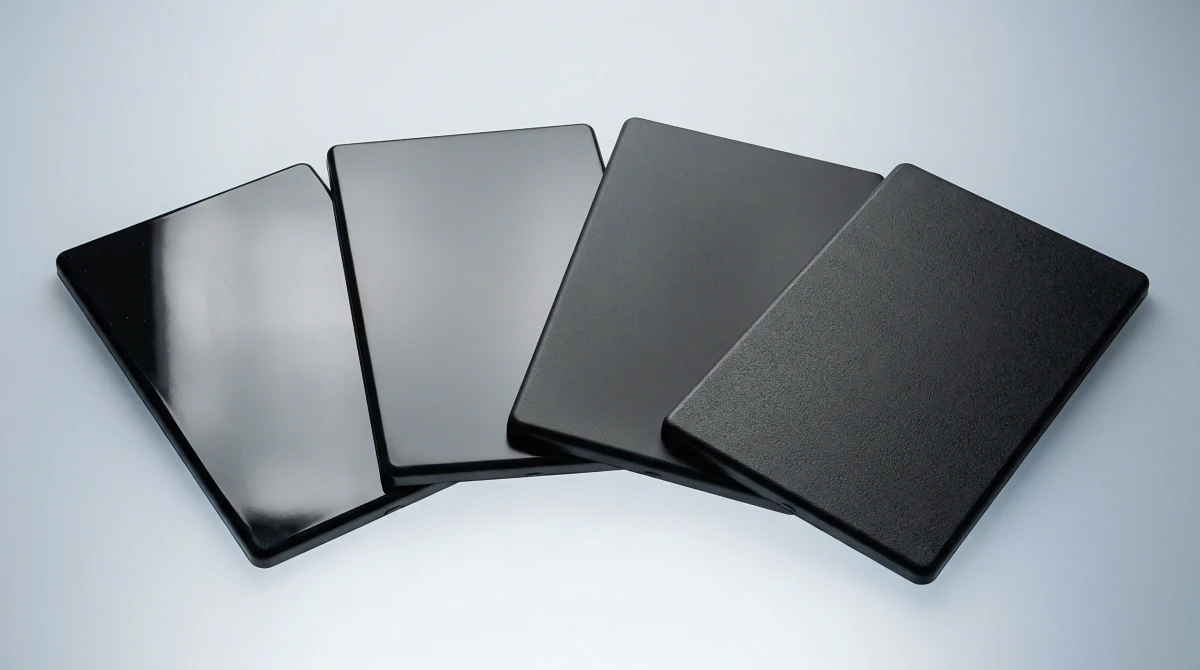
What the Twelve SPI Finish Grades SpecifyThe SPI system names a finish by a letter and a number. Its letter gives the finishing method, A for diamond buff, B for grit paper, C for stone and D for dry blast, while the number runs from 1, the finest within a letter, to 3, the coarsest.

ISO 20457 Tolerances for Plastic Molded Parts Read for the Buyer

How ISO 20457 is worded for plastic molded parts, what a supplier signs when a drawing cites it, and which items stay outside it for the order to settle.

What ISO 20457 Covers for Injection Molded PartsAccording to the abstract published by the Swedish Institute for Standards (SIS), ISO 20457 specifies possible manufacturing tolerances for plastic moulded parts, and it covers all integral features with general tolerances, using a surface profile tolerance within a specified datum system. It applies to injection moulding, injection compression moulding, transfer moulding, compression moulding and rotational moulding of non-porous parts in thermoplastics, thermoplastic elastomers and thermosets.

Polycarbonate Injection Molding Properties for Clear and Tough Parts

Polycarbonate read from the maker's sheets for a buyer: what it molds like when dry and hot, how thin walls fill, and what to ask of an aluminum tool.

Makrolon 2407 Properties in Metric and Inch UnitsMakrolon 2407 is a low-viscosity, general-purpose, UV-stabilized, easy-release polycarbonate with a melt volume-flow rate of 19 cm³/10 min at 300 °C and 1.2 kg under ISO 1133. Its ISO short name is ISO 7391-PC,MLR,(,,)-18-9.

Request an Injection Molding Quote

Send the 2D drawing and the 3D file, with the quantity and the stage of the project. An engineer replies within 1 working day.

The quote form, the mutual NDA and the private folder for your files are on Protolis Atelier, with Injection Molding chosen.

Request a Quote